

Daily Dose Of Jazz…
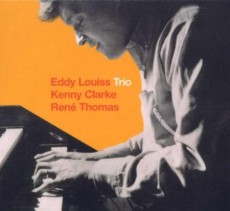
Eddy Louiss was born May 2, 1941 in Paris, France. Throughout his life his primary instrument was the Hammond organ, but as a vocalist, he was a member of Les Double Six of Paris from 1961 through 1963. He would worked with Kenny Clarke, Rene Thomas and Jean-Luc Ponty and was a member of the Stan Getz Quartet with Thomas and Bernard Lubat. This group recorded Getz’s album Dynasty in 1971.
In duet, Eddy recorded with pianist Michel Petrucciani in 1994 and with accordionist Richard Galliano in 2002. His later recordings, for example, Sentimental Feeling and Récit proche combined jazz with rock and world music.
Louiss spent most of his career leading his own group in France, but twice has made particularly notable recordings, both on organ. He played piano with Johnny Griffin in the mid-’60s, and in 1964, he was awarded the Prix Django Reinhardt.
Hammond organist Eddy Louiss, who left the world a catalogue of some twenty recordings as a leader, passed away on June 30, 2015.

Give A Gift Of Jazz – Share

Daily Dose Of Jazz…
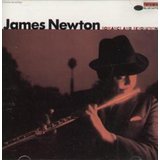
James W. Newton was born May 1, 1953 in Los Angeles, California and grew up immersed in the sounds of African-American music, including urban blues, rhythm and blues, and gospel. As a tee he played electric bass guitar, alto saxophone, and clarinet. In high school he took up the flute, influenced by Eric Dolphy. In addition to taking lessons in classical music on flute, he also studied jazz with Buddy Collette and completed his formal musical training at California State University, Los Angeles.
From 1972 to 1975, along with David Murray, Bobby Bradford and Arthur Blythe, he was a member of drummer and later critic Stanley Crouch’s band Black Music Infinity. Three years later in 1978 he lived in New York, leading a trio with pianist and composer Anthony Davis and cellist Abdul Wadud, that lasted until 1981. These three played extended chamber jazz and Third Stream compositions by Newton and Davis. With Davis, he founded a quartet and toured successfully in Europe in the early 1980s.
Following his European tour James performed with a wide variety of musicians, including John Carter, Mingus Dynasty, Leroy Jenkins and Chico Freeman. He would go on to release four solo improvisations for flute recordings, work with musicians from other cultures including Jon Jang, Gao Hong, Kadri Gopalnath and Shubhendra Rao. He has performed with the New York Philharmonic, Brooklyn Philharmonic, the San Francisco Ballet, California EAR Unit and the L’Orchestre du Conservatoire de Paris among others around the world. He served for five years as Musical Director/Conductor of the Luckman Jazz Orchestra.
As an educator Newton has taught at the University of California Irvine, the California Institute of the Arts, and California State University Los Angeles. In 1989 he became a published author with a method book entitled The Improvising Flute and in 2007 he published Daily Focus For The Flute.
He is an accomplished composer of classical works for chamber ensemble and orchestra, electronic music, jazz and opera, the latter composing The Songs of Freedom. He has received a Guggenheim and Rockefeller Fellowships, Montreux Grande Prix Du Disque, and Down Beat International Critics Jazz Album of the Year and has been voted the top flutist for 23 consecutive years in Down Beat magazine’s International Critics Poll. Post bop flautist James Newton continues to perform, record, tour and compose.
Inspire A Young Mind
More Posts: flute
Daily Dose Of Jazz…
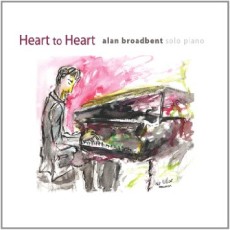
Alan Leonard Broadbent was born on April 23, 1947 in Auckland, New Zealand. He studied piano and music theory in his own country, but in 1966 came to the United States to study at Berklee College of Music.
Broadbent’s first professional gig was in a jazz trio with bassist Kevin Haines and drummer Tony Hopkins at Club 81 in Auckland in the mid-1960s. His first two albums as a leader in 1985, Song of Home and Further Down the Road, were recorded on the Tartar label with bassist Andy Brown and Frank Gibson, Jr. on drums. These two albums showcased his signature of reinterpretation of standards.
His first U.S. release in 1986, Everything I Love, recorded more standards on the Discovery label replaces Brown with bassist Putter Smith replaces Brown on bass; Frank Gibson, Jr. continues with the trio. By the early Nineties Alan was asked to be a part of Natalie Cole’s Unforgettable album, and toured as her pianist and conductor. At this time he wrote an orchestral arrangement for her second video with her father, When I Fall in Love, winning him his first Grammy for Best Orchestral Arrangement Accompanying a Vocal.
During the 1990s Broadbent he joined Charlie Haden’s Quartet West and it was during this period he won his second Grammy, an orchestral accompaniment written for Shirley Horn of Leonard Bernstein’s Lonely Town. As a soloist and with his jazz trio, Broadbent has been nominated for Grammys twice for best instrumental performance, in the company of such artists as Herbie Hancock, Sonny Rollins and Keith Jarrett.
Alan is Diana Krall’s conductor for her occasional orchestra concerts and conducted on her Live in Paris DVD. He has arranged for Glenn Frey, wrote six string arrangements for Paul McCartney with the London Symphony, worked with Warne Marsh, Woody Herman, Chet Baker, Irene Kral, Sheila Jordan, Bud Shank and numerous others and has toured the UK, Poland and France. In 2008 he was appointed a Member of the New Zealand Order of Merit for services to jazz.
Pianist, arranger and composer Alan Broadbent has two-dozen albums out as a leader in trio, duet nd solo performance and another seventeen as a sideman to date. He continues to perform, record and tour.
Give A Gift Of Jazz – Share
More Posts: piano
Daily Dose Of Jazz…
Dick Pearce was born April 19, 1951 in Forest Gate, London, England. Dick began playing cornet at the age of 12 in the Boys’ Brigade and joined Ewell village’s local brass band a year later. At 15 he became interested in jazz and attended a Sunday morning rehearsal band run by the dance bandleader Ken Macintosh. Soon after, he joined Bill Ashton’s National Youth Jazz Orchestra where he met many like-minded young musicians.
At 17 he spent three and a half extremely disillusioned years in the army (The Household Cavalry) supposedly as a bandsman. He’d played Haydn’s Trumpet Concerto for his audition and expected to receive musical tuition after signing on the dotted line, but for most of his service he found himself sitting on a horse playing bugle calls. Discharged from the army in April 1972, he began playing with some of the ‘freer’ bands of that time – led by Graham Collier, Dudu Pukwana, Pat Evans and Keith Tippet.
In the mid to late 70s he was drawn towards the harmonically structured improvisation of post-Bebop playing with jazz groups led by the likes of Don Rendell, Michael Garrick and Mike Westbrook, while also playing with his own generation of young jazz musicians.
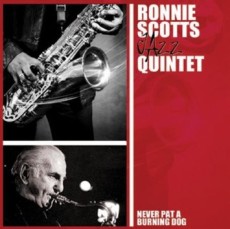
In 1980 Dick joined The Ronnie Scott Quintet, with whom he travelled all over the world for the following 14 years. The band included pianist John Critchinson, double bassist Ron Mathewson, drummer Martin Drew and Ronnie Scott on tenor sax. In 1990 the quintet became a sextet with the addition of Mornington Lockett on tenor sax.
In more recent years trumpeter Dick Pearce has been playing with Alan Barnes, Don Weller’s Tribute to Cannonball Adderley Band. The Don Weller Big Band. The Tim Richards Great Spirit, the John Williams New Perspectives. Stan and Clarke Tracey’s Ellingtonia, Pete Downes Trio with Dick Pearce and John Critchinson’s tribute to Ronnie Scott band.
Give The Gift Of Knowledge
More Posts: trumpet
Daily Dose Of Jazz…
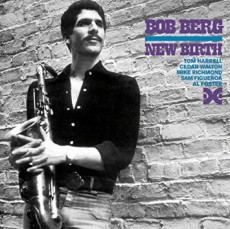
Robert Berg was born on April 7, 1951 in Brooklyn, New York. He started his musical education at the age of six when he began studying classical piano. He began playing the saxophone at the age of thirteen and went on to graduate from Juilliard. He was influenced heavily by the late 1964–67 period of John Coltrane’s music.
A student from the hard bop school, Bob played from 1973 to 1976 with Horace Silver and then from 1977 to 1983 with Cedar Walton. Berg became more widely known through his short period in the Miles Davis band but left the band in 1987 after recording only one album, You’re Under Arrest.
After leaving Davis’s band, Berg released a series of solo albums and performed and recorded frequently in a group co-led with guitarist Mike Stern. On these albums he played a more accessible style of music, mixing funk, jazz and even country music with many other diverse compositional elements to produce albums that were always musical. He often played at the 7th Avenue South NYC club.
He worked with Chick Corea, Steve Gadd and Eddie Gomez in a quartet. Bob’s tenor saxophone sound was a synthesis of rhythm and blues players such as Junior Walker and Arnett Cobb with the lyricism, intellectual freedom and soul of Wayne Shorter, Joe Henderson and Coltrane. Over the course of his short career he recorded a dozen albums as a leader and performed sideman duties on another 30 albums with Randy Brecker, Tom Coster, Kenny Drew, Moncef Genoud, Billy Higgins, Dizzy Gillespie, Sam Jones and Wolfgang Muthspiel.
Saxophonist Bob Berg, who was known for his extremely expressive playing and tone, passed away on December 5, 2002 as a result of a traffic accident. His car was struck by a cement truck that slid on the ice in East Hampton, New York while driving near his home with his wife Arja.
Give A Gift Of Jazz – Share
More Posts: saxophone