

Daily Dose Of Jazz…
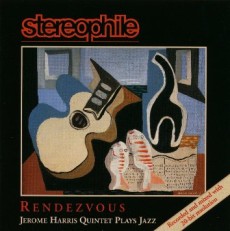
Jerome Harris was born April 5, 1953 in Flushing, New York and was already a skilled musician by the time he entered Harvard University with the intent of becoming a psychiatrist. During his college years he became known as a guitarist on campus who played in a variety of bands, from R&B to free jazz, including a fusion band with fellow student, drummer Akira Tana.
After graduation he decided to focus on music full-time and first began appearing on recordings during the late ’70s. He came to prominence in 1978 playing bass guitar and guitar with tenor saxophonist Sonny Rollins, with whom he would perform and record intermittently until the mid-1990s. Jerome went on to work with drummers Jack DeJohnette, Paul Motian, Bob Moses, David Krakauer, Ray Anderson, Amina Claudine Myers, Don Byron and Marty Ehrlich among others.
He has recorded four albums as a bandleader for Muse, Polygram, New World and Stereophile record labels. His recording sideman duties have been wth Robert Dick, Bill Frisell, Julius Hemphill, Hank Roberts, Pheeroah Aklaff, Kenny Werner, Malias, Ned Rothenberg, George Russell and Bob Stewart, to name a few.
In addition to performing he played a major role in a 1999 New York City tribute concert to Joni Mitchell, in which he wrote many of the transcriptions and arrangements. He has toured internationally in various ensembles to Japan with Rollins, the Middle East and India with Jay Hoggard, Africa with Oliver Lake and the United States with Bob Previte’s Latin for Travelers. Guitarist and bassist Jerome Harris continues to perform, record and tour.

Dose A Day-Blues Away

More Posts: guitar
Daily Dose Of Jazz…
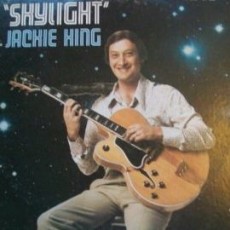
Jackie King was born on March 22, 1944 in San Antonio, Texas and took his first music lessons from his guitarist father, starting on mandolin and quickly switching to guitar, playing left handed. By the time he was 12, he was performing professionally around his hometown.
In the 1960s, childhood friend Doug Sahm convinced him to join him in San Francisco’s burgeoning psychedelic music scene. With saxophonist Martin Fierro, he formed the Shades of Joy, a jazz-rock fusion group that released a pair of albums, including music for the soundtrack of the cult film El Topo.
In demand as a sideman and session player, King backed Chet Baker and Sonny Stitt and recorded on albums by Merl Saunders and other artists. At the invitation of jazz guitarist and educator Howard Roberts, he joined the teaching staff of the Guitar Institute of Technology in Los Angeles, California. A year later he started his own Southwest Guitar Conservatory in San Antonio. And after seven years, he closed the school to devote more time to his performing career as a soloist and with Nelson’s band.
Jackie received an honorary master’s degree from San Francisco State University, served on the board of the Music Teachers’ Association of California, taught jazz guitar clinics, lectured at the Berklee School of Music and was featured in a series of instructional books and DVDs. He also wrote articles in Jazz Times, All About Jazz and Just Jazz Guitar.
During his career, he shared stages with such guitarists as Jerry Garcia, Stevie Ray Vaughan, Les Paul, Barney Kessel, Tal Farlow, Pat Martino, Herb Ellis and Lenny Breau. In 1999, he released the solo album “Moon Magic” and recorded an as yet unreleased album with jazz pianist Marian McPartland.
Guitarist, songwriter and educator Jackie King, who was equally at home playing jazz, rock or country music, passed away on January 27, 2016 after suffering a heart attack at his home in San Rafael, California. He was 71.
Jazz Is Global – Share
More Posts: guitar
Daily Dose Of Jazz…
Gary Giddins was born on March 21, 1948 in Brooklyn and raised on Long Island, New York. He graduated from Grinell College in Iowa in 1970 and began freelance work as a music and film critic. By 1974 he landed a position as a columnist with the Village Voice writing a column called Weather Bird, a position he held until 2003.
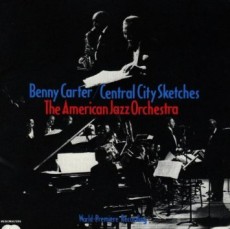
In 1986 Gary along with John Lewis, pianist and music director of the Modern Jazz Quartet, created the American Jazz Orchestra, which presented concerts using a jazz repertory with musicians such as Tony Bennett.
Of his many accolades and honors in writing, film and broadcasting Giddins has won a Grammy for liner notes on Sinatra: The Voice, six ASCAP–Deems Taylor Awards, Jazz Times Readers Poll, a Guggenheim Fellowship, a Peabody Award in Broadcasting, the National Book Critics Circle Award, the Ralph J. Gleason Music Book Award, ARSC Award for Excellence in Historical Sound Research and the Bell Atlantic Award for Visions of Jazz: The First Century in 1998.
He has authored Bing Crosby: A Pocketful of Dreams-The Early Years 1903-1940, Weatherbird: Jazz at the Dawn of Its Second Century, Faces in the Crowd, Natural Selection, and biographies of Louis Armstrong and Charlie Parker.
Jazz and film critic, author, and director, Gary Giddins is currently the Executive Director of the Leon Levy Center for Biography at the Graduate Center of the City University of New York.
Give A Gift Of Jazz – Share
Daily Dose Of Jazz…
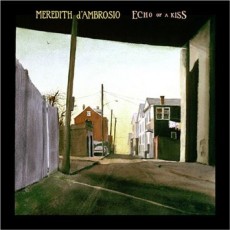
Meredith D’Ambrosio was born into a musical family in Boston, Massachusetts on March 20, 1941. She studied piano and voice from age six and ultimately studied at the Boston Museum School in 1958-59, pursuing a career in painting as well as music.
Meredith was offered the chance to tour Japan with John Coltrane but turned down the offer. Her first major recording for Spring Records didn’t happen for more than a decade later with her husband Eddie Higgins. Two more albums followed her debut recording three years later in the early Eighties for Shiah and Palo Alto Records. She has since released a dozen albums on the Sunnyside Records label from 1985 to 2006. During this period she recorded with Lee Konitz, Fred Hersch, Ben Riley, Erik Friedlander, Jay Leonhart and Gene Bertoncini among others.
She was voted in the Top Five for Talent Deserving Wider Recognition category for Female Vocalist in Down Beat International Critics Jazz Poll from 1982 to 1985 and from 1987-1991. In 1994, D’Ambrosio was the featured guest on Marian McPartland’s syndicated radio program Piano Jazz. Although she worked primarily as a jazz singer and pianist, she is also well known as a composer, lyricist, and teacher.
A respected visual artist, watercolorist, creator of eggshell mosaics and calligrapher, she took off from recording to concentrate on painting, touring, performing at festivals and teaching. She re-emerged in 2012 recording By Myself, a collection of 14 songs by the late composer Arthur Schwartz, her only album of 19 dedicated to a single composer and her solo piano accompaniment. Vocalist Meredith D’Ambrosio continues to perform, record, tour, teach and paint.
Inspire A Young Mind
Daily Dose Of Jazz…
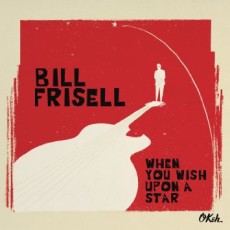
Bill Frisell was born William Richard Frisell on March 18, 1951 in Baltimore, Maryland, but spent most of his youth in the Denver, Colorado area. He studied clarinet with Richard Joiner of the Denver Symphony Orchestra as a youth, graduated from Denver East High School, and went to the University of Northern Colorado to study music. His original guitar teacher in Denver was Dale Bruning, then after studying with Johnny Smith and graduating from Northern Colorado, Bill went to Berklee College of Music and studied with Jon Damian and Jim Hall.
Frisell’s major break came when guitarist Pat Metheny was unable to make a recording session, and recommended Frisell to Paul Motian who was recording Psalm in 1982 for ECM Records. This led to his becoming ECM’s in-house guitar player, and worked on several albums. His first solo release was In Line, featuring solo guitar and duets with bassist Arild Andersen.
Frisell’s first group to receive much acclaim was a quartet with bassist Kermit Driscoll, drummer Joey Baronon and Hank Roberts on cello. Many other albums with larger ensembles were recorded with this trio as the core after the departure of Roberts.
In the 1980s he lived in Hoboken, New Jersey and his access to New York City had him active in the city’s music scene. He forged an early partnership with John Zorn, was a member of the quick-change band Naked City, and became known for his work in Motian’s trio, along with saxophonist Joe Lovano. By 1988 he moved to Seattle, Washington and in the early 1990s Bill made two of his best-reviewed albums: his survey of Americana with Have A Little Faith and This Land, a complementary set of originals.
Frisell has recorded with Jan Garbarek, Douglas Septemberon, Ryuchi Sakamoto, Rickie Lee Jones, Elvis Costello, Suzanne Vega, Arto Lindsay, Loudon Wainwright III, Vic chestnut, Van dyke Parks, Buddy Miller, Ron Sexsmith, Chip Taylor, Fred Hersch, John Pizzarelli, Matt Chamberlain, Tucker Martine and Lee Townsend among others.
He has branched out by performing soundtracks to silent films of Buster Keaton, provided music for his friend Gary Larson’s TV version of The Far Side, contributed music to the 2000 film Finding Forrester, and has won a Grammy in 2005. Over the past decade guitarist Bill Frisell, who also plays clarinet and tenor saxophone, has continuously performed, recorded and toured.
Take A Dose On The Road
More Posts: guitar