

Daily Dose Of Jazz…
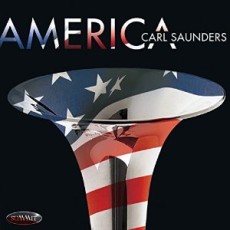
Carl Saunders was born August 2, 1942 in Indianapolis, Indiana and his first five years were mostly spent on the road with his uncle, trumpeter-bandleader Bobby Sherwood. Sherwood’s orchestra had hits with “Elks Parade” and “Sherwood’s Forest”.His mother, Gail (Bobby’s sister) sang for the Sherwood Orchestra and with Stan Kenton, among others. By the time he was five, he and his mother settled in Los Angeles; living with Carl’s aunt Caroline and her husband, tenor-saxophonist Dave Pell. At the time, Saunders heard the records of Pell’s Octet and was influenced by the style and phrasing of trumpeter don Fagerquist.
Saunders began playing trumpet in the seventh grade and he quickly found that he had a natural ability, mostly learning to play by ear and never having any lessons. He played in school bands, and after he graduating high school, went to work with Stan Kenton’s Orchestra, spending much of 1961-62 on the road.
After spending part of 1962-63 traveling once again with Bobby Sherwood playing drums, Carl settled in Las Vegas and over the next 20 years played with Ella Fitzgerald, Tony Bennett, Frank Sinatra, Paul Anka, Robert Goulet, Si Zentner, Harry James, Maynard Ferguson, Benny Goodman, Dan Terry and Charlie Barnet, to name a few.
A move to Los Angeles in 1984 saw Saunders playing lead trumpet with bill Holman’s Orchestra, a position he still holds. He has also worked with Supersax, the Bob Florence and Gerald Wilson big bands, the Phil Norman Tentet, as well as Buddy Rich, and Clare Fischer. In 1994, he became a member of the Dave Pell Octet and leads his own groups –quartet, sextet and big band.
As an educator the trumpeter enjoys working with kids and conducting clinics. Carl currently has seven albums released and plans to continue playing, composing and recording the straight ahead jazz that he loves most.

Give A Gift Of Jazz – Share
More Posts: mellophone
Hollywood On 52nd Street
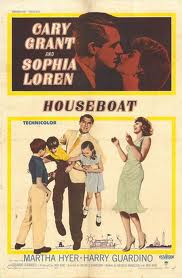
Almost In Your Arms is the love song from the 1958 romantic comedy Houseboat starring Cary Grant, Sophia Loren, Martha Hyer, Paul Peterson, Charles Herbert and Mimi Gibson. Jay Livingston and Ray Evans composed and wrote the music and lyrics.
The Story: Estranged husband Tom Winters returns home from Europe after his wife’s death and takes his three unwilling children to Washington DC where he works for the State Department. Unhappy, Robert runs away and is found by Cinzia Zaccardi, the daughter of a famous Italian conductor, who is also running away. Unbeknownst, Winters offers her a job as a maid and eventually she accepts. Sister-in-law offers Tom and the children her guest house which is destroyed by a train, the driver sells Winters his broken down houseboat, all move in and the fun begins. Eventually Tom and Cinzia get married and the rest is happily-ever-after.
Sponsored By

www.whatissuitetabu.com
More Posts: hollywood,instrumental,vocal

Daily Dose Of Jazz…
Janis Siegel was born July 23, 1952 in Brooklyn, New York. She first recorded in 1965 with a group called Young Generation for Red Bird records. By ’72 when the original Manhattan Transfer disbanded, founder Tim Hauser revamped adding Siegel and went on to international fame singing jazz, jazz-fusion, pop, R&B and doo-wop.
Her first solo album, “Experiment in White”, was released in 1981 followed by her sophomore project “At Home” that garnered a nomination for a Grammy Award for Best Female Jazz Vocalist. Siegel’s ongoing tenure with the Manhattan Transfer has won her 10 Grammy Awards and inducted into the Vocal Group Hall of Fame in 2003.
In 1985, Siegel joined Jon Hendricks, Bobby McFerrin and Dianne Reeves in the group called Sing, Sing, Sing; has recorded eleven albums as a solo artist working with such jazz luminaries as Russell Malone, Joey DeFrancesco, Hank Crawford, Matt Wilson Victor Lewis and Michael Brecker among others. She has recorded twenty-eight albums as a member of The Manhattan Transfer.
Vocalist Janis Siegel is currently a member of Bobby McFerrin’s Voicestra, while simultaneously performing with The Manhattan Transfer and continuing a solo career.
Put A Dose In Your Pocket
More Posts: vocal
Daily Dose Of Jazz…
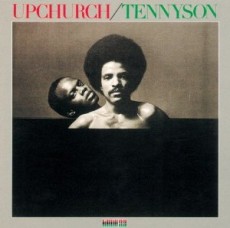
Phil Upchurch was born July 19, 1941 in Chicago, Illinois where he learned to play the guitar and bass. He stared his career in the ‘50s working with Jerry Butler before becoming house guitarist for Chess Records. He also worked with The Kool Gents, The Dells, Gene Chandler, Howlin’ Wolf, Muddy Waters and The Spaniels before going on to work with Curtis Mayfield, Otis Rush and Jimmy Reed.
Returning to Chicago he played and recorded with Woody Herman, Stan Getz, Groove Holmes, B.B. King and Dizzy Gillespie. In 1961, when billed as the Philip Upchurch Combo, his recording of “You Can’t Sit Down” sold over one million copies, and was awarded a gold record.
In the mid-Sixties he was house guitarist for labels such as Sue and Cadet and after a tour in the Army, in 1967 Phil he recorded with Richard Evans, John Lee Hooker, Grover Washington, Jr. and Cannonball Adderley.
In the 70s he worked with Ramsey Lewis and Quincy Jones, led his own quartet with Tennyson Stephens, through the Eighties played with George Benson, Mose Allison, Gary Burton, Joe Williams, Natalie Cole, Carmen McRae and Michael Jackson.
By the 1990s he was working with Jimmy Smith and Jack McDuff, recorded for Ichiban, Palladium and Ridgetop labels and remains an active session musician and bandleader.
Inspire A Young Mind
More Posts: guitar
Hollywood On 52nd Street
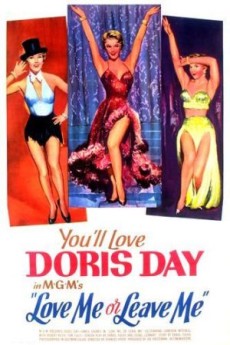
I’ll Never Stop Loving You, composed by Nicholas Brodzsky and Sammy Cahn wrote the lyrics for the 1955 film Love Me or Leave Me. The film is a biographical romantic musical drama that retells the life story of Ruth Etting, a singer who rose from dancer to movie star.
Doris Day stars as Etting, James Cagney as gangster Martin “Moe the Gimp” Snyder, her first husband and manager, and Cameron Mitchell as pianist/ arranger Myrl Alderman, her second husband.
Sponsored By
www.whatissuitetabu.com