

Hollywood On 52nd Street
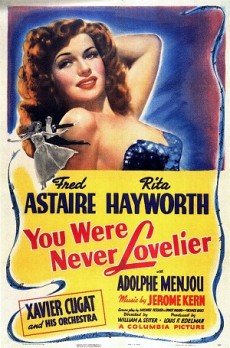
Dearly Beloved and I’m Old Fashioned 1942 song written by Johnny Mercer and Jerome Kern, introduced by Fred Astaire in the 1942 musical romance comedy film You Were Never Lovelier. Set in Buenos Aires, Astaire’s co-stars are Rita Hayworth, Adolphe Menjou and Xavier Cugat. Jerome Kern composed the music with Johnny Mercer writing the lyric.
The Story: The Acunas are a rich Argentine family, with four daughters and the tradition of marrying them off in order, oldest first. When sister #1 gets married, sisters #3 and #4 pressure Maria, sister #2, to get married because they have their husbands picked out already. But Maria hasn’t yet met a man she likes and knowing this her father secretly sends his daughter flowers and anonymous love letters, creating a “mystery man” for her to fall in love with. But Robert Davis, an American dancer looking for work, stumbles into the picture. Maria falls for him, but the father does not approve.
Sponsored By

www.whatissuitetabu.com
Daily Dose Of Jazz…
Eric Watson was born July 5, 1955 in Wellesley, Massachusetts. After graduating from Oberlin Conservatory he moved to Paris and by 1982 he recorded his first trio album with Paul Motian and Ed Schuller followed by two solo albums.
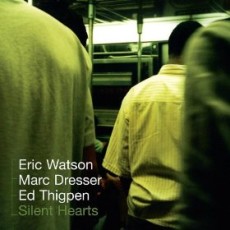
He worked in a long-time duo with double-bass player John Lindberg that became extended with Albert Mangelsdorff and Ed Thigpen. He has played and recorded with Steve Lacy, Linda Sharrock and Joelle Leandrein1991. His trio with Mark Dressler and Ed Thigpen recorded “Silent Hearts” in 1998 that became the basis for the “Full Metal Quartets” a year later with saxophonist Bennie Wallace.
Eric’s current small catalogue of seven recordings includes a solo piano project “Sketches of Solitude” in 2002 that became one of the best-selling jazz albums in France. Between 2003 and 2005 he toured Europe, Asia, and Australia with tenor saxophonist Christof Lauer.
His dance score The Peking Ballet was commissioned by Radio City Music Hall to a record summer attendance of 200,000. Watson has presented commissioned works at the Lyon Opera, the State Theatre in Poitiers, he has written for Martial Solal and the Orchestra National de Jazz and for Australian violinist Jane Peters.
In 2001, Eric Watson was appointed artistic director of La Villette Jazz Festival, is musical consultant to the director of the Cité de la Musique, and in 2003 he was appointed as a Chevalier des Arts et des Lettres.

Dose A Day – Blues Away
Daily Dose Of Jazz…
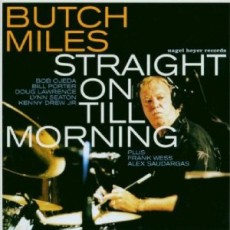
Butch Miles was born Charles J. Thorton, Jr. on July 4, 1944 in Ironton, Ohio. He began playing snare drum at the age of 9 and went on to major in music at West Virginia State University from 1962–1966. After his matriculation he toured with the Iris Bell Trio.
Miles joined the Count Basie Orchestra in 1975 and the association lasted for four years and then returned for ten years from 1997–2007. He led his own group, Jazz Express, in the 1980s and ’90s.
Besides performing with the Count Basie Orchestra, Butch has played with Dave Brubeck, Ella Fitzgerald, Sammy Davis Jr., and Frank Sinatra among others as well as hitting the stage of the Newport and Montreux Jazz Festivals.
HE cites Buddy Rich, Gene Krupa and Jo Jones as favorite drummers and is currently a professor in the School of Music at Texas State University-San Marcos.
Inspire A Young Mind
More Posts: drums
Daily Dose Of Jazz…
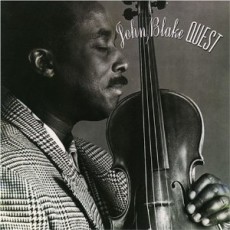
John Blake, Jr. was born in Philadelphia, Pennsylvania on July 3, 1947 and began studying violin in that city’s public school system and at the Settlement Music School. Graduating from West Virginia University, his postgraduate work was at the Institute for Advanced Studies in Montreux, Switzerland prior to receiving a grant to study studied East Indian music.
Classically trained, Blake first gained recognition on early-’70s recordings he made with Archie Shepp and in the mid-70s became established with a global audience during three years recording and touring as a member of Grover Washington, Jr.’s popular “crossover” jazz band. He then spent five years working extensively as a member of various ensembles led by pianist McCoy.
John is a four-time winner of the Down Beat Critics’ Poll Violinist Deserving Wider Recognition category he was also one of the top two jazz violinists in the 49th, 50th, and 51st Down Beat Readers’ Poll. He has performed and/or recorded with are the Duke Ellington Orchestra, Turtle Island String Quartet, Quartet Indigo, the Steve Turre Sextet, the Billy Taylor Trio, Avery Sharpe, Cecil McBee, Jay Hoggard and James Newton.
In addition to being a prominent violinist leading his own quartet, sideman and session player, John is an accomplished composer, arranger and producer as well as an author, educator and lecturer who presents hundreds of workshops annually to musicians at all levels. Violinist John Blake continues to perform, record and tour and lecture.
Give A Gift Of Jazz – Share
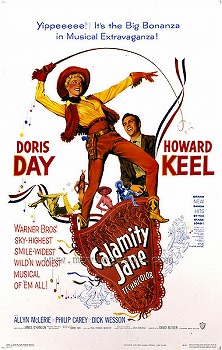
Hollywood On 52nd Street
Secret Love, a popular song written in 1953 with music by Sammy Fain and lyrics by Paul Francis Webster was first performed by Doris Day in the film Calamity Jane that also starred Howard keel. It received an Academy Award for Best Original Song and Day recorded the best-selling record of the song, which reached #1 on both the Billboard and Cash Box charts in 1954.
Calamity Jane is a Wild West themed film musical released in 1953 devised by Warner Brothers in response to Annie Get Your Gun. It was loosely based on the life of the real Wild West heroine and explores an alleged romance between her and Wild Bill Hickok. The film starred Doris Day as the title character and Howard Keel as Hickok.
Secret Love won the Academy Award for Best Original and was also nominated for Scoring of a Musical Picture and Best Sound Recording.