

Daily Dose Of Jazz…
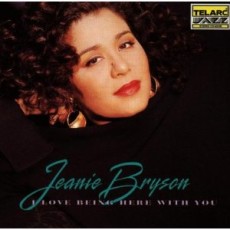
Jeanie Bryson was born March 10, 1958 in New York City, the daughter of songwriter Connie Bryson and Dizzy Gillespie. While matriculating through Rutgers University and studying with jazz pianist Kenny Barron, she began to be increasingly influenced by jazz.
Bryson has performed throughout North and South America, Europe, Israel and Japan and has received international critical acclaim. In addition to her own recordings on Telarc, Bryson has recorded with Etta Jones, Larry Coryell, Grover Washington Jr., Terence Blanchard and Kenny Burrell among others.
Her vocals are a combination of jazz, pop and Latin music and her repertoire is firmly rooted in The Great American Songbook and she has paid tribute to the legacies of Peggy Lee and Dinah Washington. Her “Déjà Blue” project showcased the velvet, sweet, laid-back and melodic voice.
While she continues to perform Jeanie is working on her newest project, “The Dizzy Gillespie Songbook”, a loving and fitting tribute that celebrates her father’s life, his music, and his legacy. She continues to perform and record.
More Posts: vocal
Daily Dose Of Jazz…
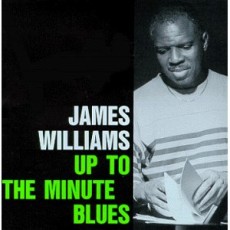
James Williams was born on March 8, 1951 in Memphis, Tennessee and grew up listening to the sounds of Ray Charles, Stevie Wonder, Marvin Gaye and King Curtis. He started playing piano at age 13 and hometown hero Phineas Newborn was his primary influences of jazz piano. He served as organist at the Eastern Star Baptist Church for six years early in his career. He went on to matriculate through Memphis State University with fellow piano students Mulgrew Miller and Donald Brown. It was here that he began playing jazz.
After graduating he immersed himself in the city’s jazz community, performing with Frank Strozier, Jamil Nasser, George Coleman, Harold Mabern, Jr., and other local greats. In 1973 he became a faculty member at the Berklee College of Music, played with Alan Dawson’s group alongside visiting musicians such as Milt Jackson, Art Farmer and Sonny Stitt. His first album as a leader came in 1977 and the next year he joined Art Blakey’s Jazz Messengers, remaining there for four years.
In the early 1980s in Boston he played with Thad Jones, Joe Henderson, Clark Terry, Chet Baker and Benny Carter but by 1984 James was in New York City gigging with Dizzy Gillespie, Freddie Hubbard and Kenny Burrell, Ray Brown, Tony Williams, Elvin Jones and Art Farmer, to name a few.
He would form his own group, the “Intensive Care Unit”, with Christian McBride, Billy Pierce and Tony Reedus. It was during this period in 1984 that he penned and recorded one of his most famous jazz compositions on the Sunnyside label is “Alter Ego”.
By 1999 he was Director of Jazz Studies at William Paterson University, where he remained until his death of liver cancer on July 20, 2004, age 53.
More Posts: piano
Daily Dose Of Jazz…
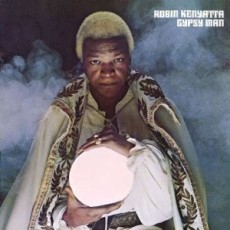
Robin Kenyatta was born Robert Prince Haynes on March 6, 1942 in Moncks Corner, South Carolina but grew up in New York City, learning to play the alto saxophone. He played with Bill Dixon in the 1960s and playing with his project “The October Revolution in Jazz”. Later that decade he played with Jazz Composer’s Orchestra, Roswell Rudd, Sonny Stitt, Archie Shepp and Buddy Miles among others.
By the 1970s he was playing with Alan Silva and Andrew Hill; for a brief time he experimented with instrumental pop music during this decade as well. He moved to Europe during the Seventies, finding it easier to make a living as a jazz musician.
Later in his career he would play with musicians such as Dizzy Gillespie, B. B. King, Dr. John and George Benson; played the Montreux Jazz Festival and went with his own groups on a European tour.
Kenyatta would go on to lead a jazz school in Lausanne, Switzerland during this period. In 2002 Kenyatta returned to the USA becoming active as a director of music in Boston. He died on October 28, 2004 at the age of 62 in Lausanne, leaving behind a catalogue of thirteen albums as a leader and eight as a sideman.
More Posts: saxophone
Daily Dose Of Jazz…
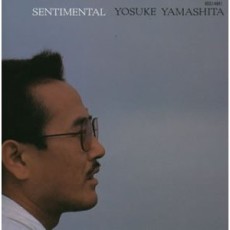
Yōsuke Yamashita was born February 26, 1942 in Tokyo, Japan. He first began to play piano professionally at the age of 17 in 1959 and attended the Kunitachi College of Music from 1962 to 1967. It was during his college matriculation that he released his first recording in 1963, becoming a pioneer of avant-garde and free jazz.
In 1969, Yosuke formed the Yosuke Yamashita Trio, which has been through various incarnations, each introducing and highlighting the skill of the new member. In the 1980s, Yosuke formed the “New York Trio” with bassist Cecil McBee and drummer Pheeroan akLaff.
In 1994 he was invited to perform at the 50th anniversary concert of the Verve jazz label at Carnegie Hall. Yamashita then moved into film scoring in 1998, scoring “The Girl Of The Silence”, Dr. Akagi”, “Inflatable Sex Doll of the Wastelands” and the Shohei Imamura film “Kanzo Sensei”, earning him the “Minister of Education Award,” amongst others.
As an educator he has been a visiting professor of music at Senzoku Gakuen College of Music, Nagoya University of Arts and the Kunitachi College of Music in addition to published work on improvisation and music. He has been nominated for the Japanese Academy Prize for Outstanding Achievement in Music.
Yōsuke Yamashita, jazz pianist, composer, essayist and writer has been praised by critics for his unique piano style and in 2003 he was conferred the Imperial Medal of Honor by the Japanese government for his contributions to the arts and academia. He continues to perform and record.
More Posts: piano
Daily Dose Of Jazz…
Henry Threadgill was born February 15, 1944, in Chicago, Illinois and first performed as a percussionist in his high school marching band before taking up the baritone saxophone and later a large portion of the woodwind instruments. He soon settled upon the alto saxophone and flute as his main instruments.
He was one of the original members of the legendary AACM – Association for the Advancement of Creative Musicians in Chicago, working under the guidance of Muhal Richard Abrams before leaving to tour with a gospel band. In 1967, he enlisted in the Army, playing with a rock band in Vietnam through 1968. Discharged in 1969 he returned to Chicago, formed a trio that eventually became “Air”, one of the most celebrated and critically acclaimed avant-garde jazz groups of the 1970s and 1980s.
Threadgill had moved to New York City and began pursuing his own musical visions, exploring musical genres in innovative ways with his first nonet X-75. In the early Eighties, Threadgill created the Henry Threadgill Sextet, his first critically acclaimed ensemble as a leader, with two drummers as a single unit. He has recorded three albums under X-75 for About Time Records, reformed his sextet and released three albums on the Novus label.
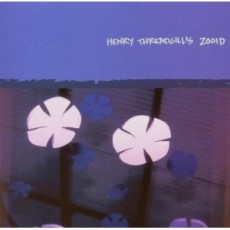
Since the 90s Threadgill has continued to compose, create, perform and record music with various group configurations such as “Very Very Circus” and “Zooid” utilizing electric guitars, French horn, Latin percussion, accordion, cello and tuba.