

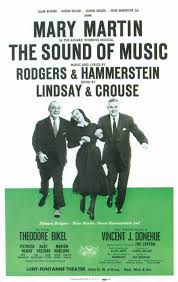
From Broadway To 52nd Street…
The Sound Of Music brought up the curtain of the Lunt Fontanne Theatre on November 16, 1959 and finished with a blockbuster run of 1443 performances. The show starred Mary Martin and Theodore Bikel. The song My Favorite Things composed by Richard Rodgers and Oscar Hammerstein went on to become a jazz standard. The show won a Tony Award for Best Musical.
The Story: Based on the Trapp family story the musical takes us on their journey to escape the Nazis. Set in Salzburg, Austria just before World War II, Maria Rainer, one of the postulates from Nonnberg Abbey is wrestling with her decision to joining monastic life or pursue more secular endeavors. With the help of the Mother Abbess she is placed in the home of Captain Georg von Trapp to act as governess to his seven children. As war looms over their happy existence they escape to Switzerland over the Alps.
Details of the von Trapp history were changed for the musical. They lived in a villa outside Salzburg, Maria was a tutor for one child, the names and ages were altered, and the family spent time in Austria after Maria and the Captain were married. Opposing the Nazi regime, he declined a commission in the German Navy, left Austria for Italy, then on to London and finally to the United States. The escape over the mountains on foot provided more drama for the play.
Broadway History: Broadway theatre,commonly called simply Broadway, is theatrical performances presented in one of the 40 professional theatres with 500 or more seats located in the theater District and Lincoln Center along Broadway in the Manhattan borough of New York City. Along with London’s West End theatres, Broadway theatres are widely considered to represent the highest level of commercial theatre in the English-speaking world.
Sponsored By
www.whatissuitetabu.com
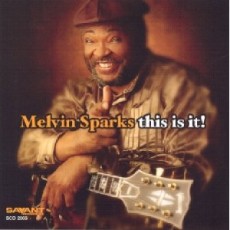
Daily Dose Of Jazz…
Melvin Sparks was born on March 22, 1946 in Houston, Texas. He got his first guitar when he was eleven and two years later he was sitting in with B.B. King. By 1963 he had joined the “Upsetters”, an R&B show band that backed Little Richard, Sam Cooke and other big names. Following this he did a year stint with Jack McDuff from 1966-67, then became quite in demand for his ability to improvise.
Sparks released his first album as a leader on Prestige in 1970 followed by a number of recording dates for the Prestige and Savant record labels and also appeared as a sideman and guest artist on several recordings with musicians including Lou Donaldson, Houston Person, Jimmy McGriff, Hank Crawford, Charles Earland, Sonny Stitt, Leon Spencer and Johnny Hammond Smith.
His Grant Green influenced guitar style placed him firmly in the soul jazz, hard bop and jazz blues genres. Melvin Sparks died on March 13, 2011 in Mount Vernon, New York from complications from diabetes.
More Posts: guitar
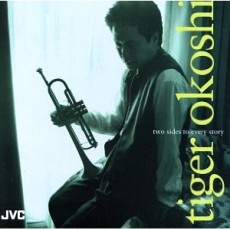
Daily Dose Of Jazz…
Toru “Tiger” Okoshi was born in Ashiya, Japan on March 21, 1950. An autodidact on trumpet, he studied at Kwansei Gakuin University prior to moving to the United States in 1972. He then matriculated through the Berklee School of Music.
Okoshi first gained attention with his collaboration in the Seventies with Gary Burton, then played with the Mike Gibbs Orchestra at Carnegie Hall in 1974. Following this came a tour with Buddy Rich and in the early 90s he played in George Russell’s Living Time Orchestra and recorded with Rakalam Bob Moses.
Tiger has recorded regularly as a leader and sideman with Jay Anderson, Peter Erskine, Bela Fleck, Gil Goldstein, Mike Stern, Jack DeJohnette, Kenny Barron, Mino Cinelu and Bernard Purdie among others. He is currently a professor at Berklee.
More Posts: trumpet
Daily Dose Of Jazz…
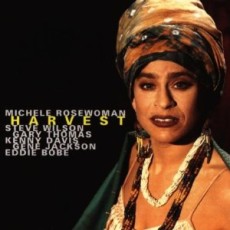
Michele Rosewoman was born on March 19, 1953 in Oakland, California. She began playing the piano at age six and as a teenager studied with organist/pianist Ed Kelly. After extensive work locally leading several jazz groups she also played with Baikida Carroll, Julius Hemphill and Julian Priester. In 1977 Michele moved to New York where she involved herself in the avant-garde scene playing and recording as a sidewoman with Oliver Lake, Billy Bang, Greg Osby, Ralph Peterson and the members of M Base among others.
Rosewoman is most notable for her work and recordings with her Quintessence ensemble as well as several trio and quartet sessions. Steeped in Cuban percussion and African music and since the early 80s for her Afro Cuban jazz big band “New Yor-Uba Ensemble” featuring Orlando “Puntilla” Rios.
Michele has played with such jazz masters as Freddie Waits, Rufus Reid, Billy Hart, Reggie Workman and Latin music greats such as Celia Cruz, Chocalate, Nicky Marrero, Paquito D’Rivera, and Daniel Ponce among others. She continues to perform and record around the world.
More Posts: piano
Daily Dose Of Jazz…
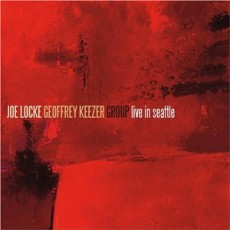
Joseph Paul Locke was born on March 18, 1959 in Palo Alto, California but grew up in Rochester, New York. A self-taught improviser, he benefited from his early studies in classical percussion and composition at the Eastman School of Music and played with Mongo Santamaria, Pepper Adams, and Dizzy Gillespie before graduating from high school.
Since moving to New York City in 1981, Locke has performed with Grover Washington, Jr., Kenny Barron, Dianne Reeves, Eddie Daniels, Jerry Gonzales’ Fort Apache Band, Rod Stewart, Beastie Boys, Eddie Henderson, Hiram Bullock, Bob Berg, Ron Carter, Jimmie Scott, Geoffrey Keezer, The Mingus Big Band and Randy Brecker among many others.
Joe has toured extensively throughout the world, both as leader and guest soloist. In 2006, 2008 and 2009 Joe Locke received the “Mallet Instrumentalist of the Year” Award, presented by the Jazz Journalist Association. His ability to play cool and funky, heady and relaxed has had him voted the #1 vibist in Down Beat Magazine’s Critic’s Poll and Brazil’s International Jazz Poll.
Locke has recorded nearly 36 projects as a bandleader, including a tribute to the music of Henry Mancini and since 2012 has released a symphonic album, an orchestra project Wishing On A Star, and Lay Down My Heart: Blues & Ballads, Vol. 1. As a producer and sideman, Joe appears on more than 65 recordings and continues to compose, perform and record.
More Posts: vibraphone