

Daily Dose Of Jazz…
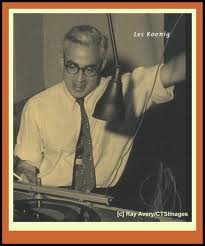
Lester Koenig founded the jazz label, Contemporary Records, in Los Angeles in 1951. It was known for seminal recordings embodying the West Coast sound, but also released recordings by jazz artists known throughout the world. Under his leadership, Contemporary recorded such artists as Sonny Rollins, Ornette Coleman, Cecil Taylor, Art Farmer, Benny Golson, the Curtis Counce Group featuring Harold Land, Jack Sheldon, Carl Perkins and Frank Butler; also Ben Webster, Miles Davis, Benny Carter, Chet Baker, Art Pepper, Phineas Newborn, Woody Shaw, Shelly Manne, Hampton Hawes, Barney Kessell and Leroy Vinnegar.
Les maintained extremely high audio standards. In 1956 he hired Roy DuNann from Capitol Records, who, out of the label’s shipping room turned studio, turned out some of the best sounding records of the 50s and 60s using German and Austrian condenser microphones that produced very high output of these microphones, especially close-in on jazz musicians’ dynamic playing. DuNann would achieve his signature sound for the label, a crisp, clear and balanced without distortion or unpleasant “peak presence” by keeping his microphone setups very simple, generally one per musician, and he avoided the use of pre-amplifiers.
In the mid 1960s the company fell into relative limbo, but limited new recordings were made in the late 1970s including a series of albums by Art Pepper recorded at the Village Vanguard in New York. After Koenig’s death in 1977, his son, John ran the label for seven years and continued the legacy producing albums by George Cables, Joe Henderson, Bobby Hutcherson and Chico Hamilton to name a few.
Fantasy Records purchased the Contemporary label and catalogue in 1984 but not before ushering in a number of major figures in the music business such as Nesuhi Ertegun, who went on to exec at Atlantic Records, and writers Nat Hentoff and Leonard Feather among others.
More Posts: producer
From Broadway To 52nd Street
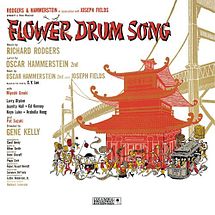
Flower Drum Song opens the curtains of the St. James Theatre on December 1, 1958 and runs for 600 performances. The music composed by Richard Rodgers and Oscar Hammerstein for actors Pat Suzuki, Juanita Hall, Miyoshi Umeki, Larry Blyden, Jack Soo, Arabella Hong, Ed Kenney and Keye Luke leave the world with the jazz classic Love, Look Away.
The Story: Wang Chi-yang, a wealthy 63-year-old man Chinese refugee lives in San Francisco’s Chinatown with his two sons. He has a cough, which symbolizes his authority and his resistance to American culture and refusal to adopt Western ways. He is also at odds with his sister-in-law and his sons who are assimilating. Older son Wang Ta woos nightclub dancer Linda, but discovering she has many men dumps her. Linda’s seamstress friend Helen cannot find a man and gets Ta drunk, seduces him, has a short-lived affair. Ta eventually abandons her and then she commits suicide.
Impatient at Ta’s inability to find a wife, Wang arranges a marriage for his son. However, before she arrives, Ta meets a young woman, May Li, and with his father’s approval he and May Li fall in love. He vows to marry her after she is falsely accused of stealing a clock. Wang struggles to understand the conflicts that have torn his household apart; his hostility toward assimilation is isolating him from his family. In the end Wang decides to go to a Chinese-run Western clinic, symbolizing that he is beginning to accept American culture.
Jazz History: Hard bop, an extension of bebop or “bop” music that incorporates influences from rhythm and blues, gospel and blues especially in the saxophone and piano playing. Hard bop was developed in the mid-1950s, partly in response to the vogue for cool jazz in the early 1950s. The hard bop style coalesced in 1953 and 1954, paralleling the rise of rhythm and blues. Miles Davis’ performance of “Walkin” the title track of his album of the same year, at the very first Newport Jazz Festival in 1954, announced the style to the jazz world. The quintet Art Blakey and the Jazz Messengers fronted by Blakey featured pianist Horace Silver and trumpeter Clifford Brown, who were leaders in the hard bop movement along with Davis.
Sponsored By

www.whatissuitetabu.com

From Broadway To 52nd Street
West Side Story opened at the Winter Garden Theatre on September 26, 1957. Stephen Sondheim and Leonard Bernstein composed and wrote the score for the musical that ran 732 performances. Larry Kert, Carol Lawrence, Chita Rivera, Mickey Cain and Ken Leroy were the stars of the show that gave the jazz world such classics as Somewhere, I Feel Pretty, Tonight, Maria and Cool.
The Story: On the streets of West Side Manhattan in the late summer of 1957, there is mounting racial tension between rival white American and Puerto Rican gangs to maintain control of the neighborhood – the Jets and the Sharks. An interracial relationship blossoms between Tony and Maria who see past their ethnic differences. However, Maria’s brother Bernardo and leader of the Sharks does not want this love-match to succeed. Destined to be short-lived, a rumble between the two gangs ensues, Maria begs Tony to stop it, the fight escalates from lists to knives and Tony ultimately kills Bernardo.
When Bernardo’s girlfriend Anita learns of his death she is overcome with emotion and seeking out Maria, who already knows, discovers Tony is with her. Tony leaves for refuge at Doc’s drugstore after which they learn that Chino was seeking revenge for Bernardo by shooting Tony. Maria begs Anita to go tell Tony but after a mock rape at the hands of the Jets, Anita delivers a different message – that Maria is dead. In shock Tony runs out screaming for Chino to come kill him. On the playground Tony and Maria see each other but before they can embrace Chino shoots and kills Tony.
Broadway History: The Off-Off-Broadway movement began in 1958 as a reaction to Off-Broadway, and a “complete rejection of commercial theatre”.[2] Among the first venues for what would soon be called “Off-Off-Broadway” were coffeehouses in Greenwich Village, particularly the Caffe Cino at 31 Cornelia Street, operated by the eccentric Joe Cino, who early on took a liking to actors and playwrights and agreed to let them stage plays there without bothering to read the plays first, or to even find out much about the content. Also integral to the rise of Off-Off-Broadway were Ella Stewart at La MaMa and Al Carmines at the Judson Poets’ Theater, located at Judson Memorial Church, Playbox Studio, New York Theatre Ensemble, The Old Reliable, The Dove Company and the Nuyorican Poets Cafe.
Sponsored By
www.whatissuitetabu.com
Daily Dose Of Jazz…
Kenny Werner was born on November 19, 1951 in Brooklyn, New York and by four was a member of a song and dance group. He started piano lessons at seven and by the time he turned 11, he recorded a single with a fifteen-piece orchestra and appeared on television playing stride piano. He attended the Manhattan School of Music as a concert piano major and later transferred to the Berklee School of Music.
Upon graduation he travelled working in Brazil and Bermuda before returning to New York where he formed a trio with drummer Gary Berkowitz and bassist Alex Peglise. In 1977 he recorded first LP that featured of the music of Bix Beiderbecke, Duke Ellington, James P. Johnson and George Gershwin and later that year with Charles Mingus on “Something Like A Bird”.
By the early 80s he toured extensively and recorded with Archie Shepp, recorded his own solo album of original compositions titled “Beyond the Forest of Mirkwood”, followed by a recording of the sounds heard coming from his Brooklyn-based studio – a hotbed of late-night jam sessions, titling the record after his address, 298 Bridge Street. In 1984 he joined the Mel Lewis Orchestra, began performing more in Europe and New York City as a leader and in duos with such notables as Rufus Reid, Ray Drummond, Jaki Byard also doing stints in the groups of Eddie Gomez, Tom Harrell, Joe Lovano and many others.
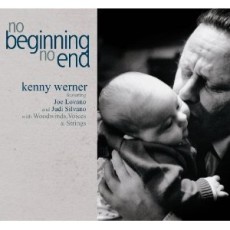
Since 1989 he has served as pianist, arranger and musical director for the noted film, television and Broadway star, Betty Buckley, has performed and recorded with Toots Thielemans mostly in duo settings but in trio with Oscar Castro-Neves and quartet with Airto Moreira. He has been nominated for a Grammy, has received performance grants from the NEA, a Guggenheim Fellowship Award for the 2010 release “No Beginning No End”, was commissioned to compose and conduct a memorial piece for Duke Ellington, and has been honored with the distinguished Composer award.
Kenny has a catalogue of twenty albums and another six as a sideman composer chops have had him writing compositions for the Mel Lewis Orchestra, the Vanguard Jazz Orchestra, Cologne Radio Jazz Orchestra, the Danish Radio Jazz Orchestra, the Metropole Orchestra and the Umo Jazz Orchestra and most recently has joined Quincy Jones. He is a published author of “Effortless Mastery” that features the physical, technical, psychological and spiritual aspects of being an artist and this publication has garnered him requests as a teacher and clinician from universities around the world, while maintaining an Artist-in-Residence at New York University.
Daily Dose Of Jazz…
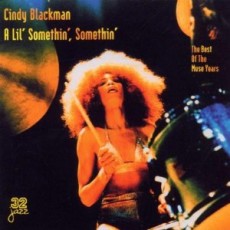
Cindy Blackman was born November 18, 1959 in Yellow Springs, Ohio into a musical family. Her mother and grandmother were classical musicians, an uncle was a vibraphonist and her dad was into jazz. Her first introduction to the drums happened when she was seven years old at a friend’s house she sat down at a drum set starting hitting and knew it was for her. Following this was joining the school band and convincing her parents to get a set of her own. By age 11 she was in Bristol, Connecticut, studying at the Hartt School of Music in Hartford and gaining an interest in jazz two years later after listening to Max Roach. It was at this time she got her first professional drum kit at fourteen.
One of her early influences was drummer Tony Williams who was the first drummer she ever saw perform live, later having the opportunity to participate in a William’s drum clinic. She soon moved to Boston, studying at the Berklee College of Music. She left after three semesters and moved to New York in 1982, became a street performer and got a chance to watch and learn from drummers like Billy Higgins, Elvin Jones, Roy Haynes, Philly Joe Jones and Art Blakey who became her mentor and major influence.
Blackman initially encountered resistance to a woman playing drums in the jazz world, both racial and gender prejudice along with her musical opinion and hairstyle. But persistence paid off in 1984 when she was showcased on Ted Curson’s “Jazz Stares of the Future”, then in 1987 her first compositions appeared on Wallace Roney’s Verses album, then Muse offered her a contract and in ’88 lead her debut session “Arcane” with Joe Henderson, Wallace Roney, Tony Williams, Clarence Seay, Kenny Garrett and Larry Willis.
Cindy has immersed herself in both jazz and rock leaving the former for a period recording and touring with Lenny Kravitz but returned to her love of jazz. She has recorded several straight-ahead jazz sessions since her 1994 release of “Telepathy” and continues to evolve the music playing with a who’s who list of luminary jazz musicians. In her own words, “To me, jazz is the highest form of music that you can play because of the creative requirements”.
More Posts: drums