

Daily Dose Of Jazz…
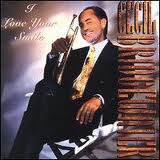
Cecil Bridgewater was born on Oct. 10, 1942 in Urbana, Illinois and studied music at the University of Illinois. Along with his brother Ron, they formed the Bridgewater Brothers Band in 1969. In 1970 he played with Horace Silver following this stint with a Thad Jones/Mel Lewis association from 1970 to 1976. During this period of the Seventies he married Dee Dee Bridgewater and played with Max Roach starting a decades-long association.
Cecil recorded his debut album “I Love Your Smile” in 1992, has enjoyed playing the sideman on some two dozen recordings with Dizzy Gillespie, Art Blakey, Randy Weston, Charles McPherson, Joe Henderson, Roy Brooks, Abdullah Ibrahim and Sam Rivers; and has composed works premiered by the Cleveland Chamber Orchestra and Meet the Composer.
Bridgewater has become a great supporter of The Jazz Foundation of America in their mission to save the homes and the lives of America’s elderly jazz and blues musicians including musicians that survived Hurricane Katrina. Cecil performed at the 2008 Benefit Concert, “A Great Night in Harlem” at the World Famous Apollo Theater. He continues to perform while currently teaching as adjunct faculty at Manhattan School of Music, New School, William Patterson and The Julliard School.
More Posts: trumpet
From Broadway To 52nd Street
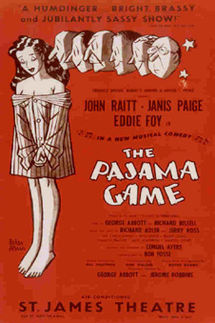
The Pajama Game drew back the first curtain at the St. James Theatre on May 13, 1954 and ran a record 1063 performances catapulting the show into the register of blockbuster musicals. Eddie Foy Jr., John Raitt, Janis Paige and Shirley MacLaine starred in the musical with music written and composed by Richard Adler & Jerry Ross. Jazz has had the privilege to give the song Hey There perpetual encores.
The Story: Adapted from the Broadway play, it’s a story of Sid, a workshop superintendent who must deal with a union demand for a 7.5-cent raise at the Sleep-Tite Pajama Factory. A strike is imminent and Babe the leader of the grievance committee leads the fight. However Sid is attracted to Babe and ensues a course of romance but is deflected. With slowdowns and machinery breakdowns promoting her cause, Sid reluctantly fires her. However he is convinced there is merit to Babe’s championship of the union and plots to get a peek at the books kept by Gladys.
Taking Gladys out to a nightclub Sid wheedles the keys from her but before he can leave the two are discovered by Babe. Sid gets a look at the books, sees that the boss has already tack on the 71/2 cents to production but has keeping the profits for himself. Sid confronts the boss, gets him to agree to the raise, goes to the union rally to bring the news and peace to his love life. Finally accepting her feelings for Sid, she falls for him. Everyone goes out to celebrate at Hernando’s Hideaway.
Jazz History: The free jazz movement, coming to prominence in the late ’50s, spawned very few standards. Free jazz’s unorthodox structures and performance techniques are not as amenable to transcription as other jazz styles. However, “Lonely Woman”, a blues by saxophonist Ornette Coleman, is perhaps the closest thing to a standard in free jazz, having been recorded by dozens of notable performers.
Free jazz is an approach to the music that was first developed in the 1950s and 1960s. Though the music produced by free jazz composers varied widely, the common feature was a dis-satisfaction with the limitations of bebop, hard bop and modal jazz, which had developed in the 1940s and 1950s. Each in their own way, free jazz musicians attempted to alter, extend, or break down the conventions of jazz, often by discarding hitherto invariable features chord changes or tempos. While usually considered experimental and avant-garde, free jazz has also oppositely been conceived as an attempt to return jazz to its “primitive”, often religious roots, and emphasis on collective improvisation.
Sponsored By

www.whatissuitetabu.com
Daily Dose Of Jazz…
Clifton Anderson was born October 5, 1957 in Harlem, New York City, grew up surrounded by music and exhibited an affinity for music at an early age. His father was a church organist/choir director, his mother a singer and pianist. When he was just seven years old he got his first trombone, a gift from his uncle Sonny Rollins.
Clifton attended the prestigious Fiorello LaGuardia High School of Music and Art followed by a year at SUNY – Stony Brook in 1974, then matriculating through the Manhattan School of Music, along with his friends Angela Bofill and Kenny Kirkland. It was during this tenure that he became involved in jazz organizations, ensembles and workshops that led to his first recording date with Carlos Garnett in 1976.
By the time he graduated Anderson was established as one the young “in demand” trombonists on the New York scene. He became a part of Slide Hampton’s “World of Trombones” and played alongside folks like Steve Turre, Clifford Adams, Papo Vazquez, Frank Lacy, Conrad Herwig and Robin Eubanks among others. However, it was J.J. Johnson who remained Clifton’s greatest influence.
The early 1980’s found Clifton working with a “who’s who” of diverse musical giants: from Frank Foster, McCoy Tyner, Clifford Jordan, Stevie Wonder, Dizzy Gillespie, Merv Griffin and The Mighty Sparrow to Lester Bowie, Paul Simon, Muhal Richard Abrams, T.S. Monk and Dionne Warwick among others. During this period Clifton also played on the Broadway shows Dreamgirls and Nine.
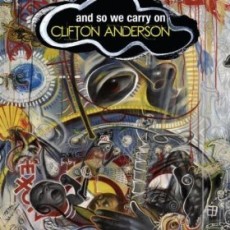
In 1983 Anderson got the call to join his uncle, Sonny Rollins, touring worldwide and appearing on his recordings. As a leader he has recorded three albums “Landmarks”, “Decade” and “And So We Carry On”. Between musical and administrative duties, running Sonny’s merchandising company, he has given academia much, teaching both privately and publicly and as an artist in residence at Duke University. He continues to perform, tour and record.
More Posts: trombone
Daily Dose Of Jazz…
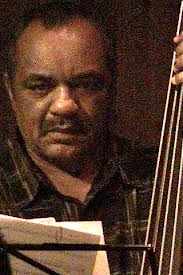
Tony Dumas was born in Los Angeles, California on October 1, 1955. By the age of 14, he started playing bass first crafting his sound in his high school orchestra. After graduation he went on to study music at Pasadena City College.
Dumas’ first started playing professionally with organist Johnny Hammond Smith followed by a stint with trumpeter Freddie Hubbard. To say he was sought after would be an understatement as his list of credentials as a sideman is impressive to say the least.
Tony has been privileged to have toured, played and recorded with such luminaries as Herbie Hancock, Carmen McCrae, Sarah Vaughan, Joe Williams, Cedar Walton, Billy Higgins, Rufus Reid, Chick Corea, Eddie Gladden, George Cables and Art Pepper as well as The Manhattan Transfer, Joe Farrell, Etta James, Mariah Carey, Bill Cosby and the Playboy Jazz Festival Band, Patrice Rushen, Bob Berg, and the list goes on and on.
Bassist Tony Dumas continues to add to the legacy of jazz through his performing and recording.
More Posts: bass
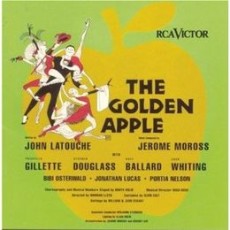
From Broadway To 52nd Street
The Golden Apple was staged for it’s initial performance at the Phoenix Theatre on March 11, 1954 and ran for one hundred and seventy-three performances. The stars of the musical were Kay Ballard, Dean Michener, Jonathan Lucas, Jack Whiting, Stephen Douglass, Bibi Osterwald and Priscilla Gillette. Jerome Morross composed the music with libretto written by John Latouche and their composition Lazy Afternoon emerged from the musical to make the pantheon of jazz standards.
The Story: In a small turn-of-the-century American village called Angel’s Roost, nothing of importance seems to happen until a traveling salesman arrives at the annual fair in a balloon. He so beguiles the wife of the sheriff that she elopes with him to the neighboring town. The mayor throws roadblocks in the pursuer’s path. After the sheriff outclasses the salesman in a boxing match, he returns home to find love from another woman waiting for him. Recreation of Homer’s The Iliad & The Odyssey.
Broadway History: The Off-Broadway theatre is a professional New York City venue with a seating capacity between 100 and 499, much smaller than those on Broadway. An Off-Broadway production is a production of a play, musical or revue that appears in such a venue, and which adheres to related trade union and other contracts.
The Off-Broadway movement started in the 1950s, as a reaction to the “perceived commercialism of Broadway” and provided an “outlet for a new generation” of creative artists. This fertile breeding ground, away from the pressures of commercial production and critical brickbats, helped give a leg up to hundreds of future Broadway greats. The first great Off-Broadway musical was the 1954 revival of the Brecht/Weil Three Penny Opera.
Sponsored By
www.whatissuitetabu.com