

Daily Dose Of Jazz…
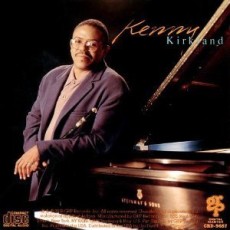
Kenneth David “Kenny” Kirkland was born September 28, 1955 in Newport, New York and when only six sat down at a piano keyboard. Following years of Catholic school Kenny enrolled in the Manhattan School of Music and studied classical piano performance, theory and composition. He first worked professionally touring through Europe with Polish fusion violinist Michal Urbaniak in 1977 and recording with him on “Urbaniak” and “Daybreak”. His next high-profile gig was with Miroslav Vitous with subsequent recording dates on “First Meeting” and “Miroslav Vitous Group”.
In the early 80s, Kirkland toured Japan with trumpeter Terumasa Hino, met Wynton Marsalis and their long association began with him playing on Marsalis’ self-titled debut album and sharing duties with Herbie Hancock. He became the sole pianist on Marsalis’ subsequent releases “Think Of One”, “Hothouse Flowers” and “Black Codes (From The Underground)”. Following this stint he joined Branford’s band After his association with Wynton Marsalis, Kirkland joined Branford Marsalis’ band and is featured on the albums “Royal Garden Blues”, “Renaissance”, “Random Abstract”, “Crazy People Music”, “I Heard You Twice The First Time”, “Buckshot Lefonque”.
Kenny worked for a short period as The Tonight Show pianist during Branford’s tenure but returned to the East coast and session work. Contrary to jazz orthodoxy Kirkland stretched to include keyboards and synthesizers coupled with straying from traditional jazz to work with Sting, on the documentary “Bring On The Night”, and in 1991 released his debut “Kenny Kirkland” for GRP and “Thunder and Rainbows/J.F.K.” on Sunnyside followed.
Leading up to June 1998, Kirkland worked diligently with long-time associate Jeff “Tain” Watts on the drummer’s debut recording “Citizen Tain” but his health was failing due to abuse and neglectful physical exercise. Jazz pianist Kenny Kirkland, most often associated with Sting, Branford Marsalis, Wynton Marsalis, and Kenny Garrett, passed away quietly in his Queens apartment of congestive heart failure on November 12, 1998.
In his more than twenty-year career, Kirkland performed or recorded with such artists as Don Alias, Carla Bley, Terence Blanchard, Michael Brecker, Stanley Clarke, Kevin Eubanks, Charles Fambrough, Chico Freeman, Dizzy Gillespie, Elvin Jones, Arturo Sandoval and the list of jazz greats continues along with Ben E. King, Angela Bofill, Youssou N’Dour, Stephen Stills and David Crosby.
More Posts: piano

Daily Dose Of Jazz…
Marlena Shaw was born Marlina Burgess on September 22, 1942 in New Rochelle, New York and was first introduced to music by her jazz trumpet player uncle Jimmy Burgess. She cites Dizzy Gillespie, Miles Davis, Al Hibbler and lots of gospel as her teaching tools.
In 1952, Burgess brought her on stage at Harlem’s Apollo Theatre to sing with him and his band. Shaw’s mother did not want her daughter to go on tour with her uncle at such a young age. Instead, she enrolled Shaw into the New York State Teachers College in Potsdam to study music. She later dropped out, got married, had five children but never gave up on her singing career.
Shaw began making appearances in jazz clubs whenever she could spare the time. This most notable of these appearances was in 1963 when she worked with jazz trumpeter Howard McGhee. That same year, she had an unsuccessful audition due to nervousness with Columbia Records but continued to play at small clubs in 1964 until 1966 when her career took off after landing a gig with the Playboy Club chain in Chicago. It was through this gig that she met with Chess Records, inked a deal, released her first two albums on their subsidiary Cadet and moved to Blue Note by 1972.
With the onset of disco in the 70s, she reinvented herself and recorded “Go Away Little Boy” and one of the era’s biggest hits remaking “Touch Me In The Morning” for Columbia. Her career has touched all forms of music even being sampled by hip-hop artists and commercials. Vocalist Marlena Shaw has continued to record, toured and consistently performing at club dates and festivals like the North Sea Jazz Festival in the Netherlands.
From Broadway To 52nd Street
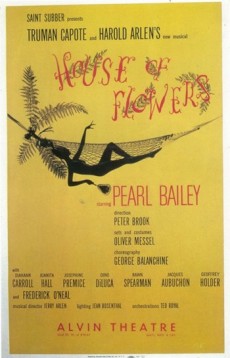
House Of Flowers opened at the Alvin Theatre on December 12, 1954 with music by Harold Arlen and lyrics and book by Truman Capote. This was his only Broadway musical based on his own short story, which was first published as one of three extra pieces in the Breakfast At Tiffany’s novella. Pearl Bailey, Diahann Carroll, Juanita Hall, Alvin Ailey, Geoffrey Holder, Ray Walston and Carmen de Lavallade starred for 165 performances. The composition that emerged from this musical to become a jazz standard was “A Sleepin’ Bee”.
The Story: During a trade war between two Haitian brothel keepers, Madame Tango and Madame Fleur, the latter sells one of her girls, Ottilia, to a rich lord. Ottilia turns him down preferring young, handsome but poor mountain boy Royal. and despite Fleur’s machinations to seal Royal in a barrel and toss him into the ocean, he escapes his watery grave on the back of a turtle. The lovers eventually marry and live happily ever after.
Jazz History: Hard bop, an extension of bebop (or “bop”) music that incorporates influences from rhythm and blues, gospel, and blues especially in the saxophone and piano playing, developed in the mid-1950s, partly in response to the vogue for cool jazz in the early 1950s. The hard bop style coalesced in 1953 and 1954, paralleling the rise of rhythm and blues. Miles Davis’ performance of “Walkin'”, the title track of his album of the same year, at the very first Newport Jazz Festival in 1954, announced the style to the jazz world. The quintet, Art Blakey and the Jazz Messengers featuring pianist Horace Silver and trumpeter Clifford Brown were leaders in the hard bop movement along with Davis.
Modal jazz recordings, such as Davis’ Kind of Blue became popular in the late 1950s. Popular modal standards include Davis’s “All Blues All” and “So What”, John Coltrane’s “Impressions” and Herbie Hancock’s “Maiden Voyage”. These recordings would eventually lead to the formation of Davis’ second great quintet, which included saxophonist Wayne Shorter and pianist Herbie Hancock, recorded a series of highly acclaimed albums in the mid-to-late 1960s.
Sponsored By

www.whatissuitetabu.com

Daily Dose Of Jazz…
Henry Butler was born September 21, 1949 in New Orleans, Louisiana and was blinded by glaucoma in infancy.His musical training began at the Louisiana State School for the Blind where he learned to play valve trombone, baritone horn and drums before focusing his talents on singing and piano. Mentored at Southern University by clarinetist and educator Alvin Batiste. He later earned a masters degree in music at Michigan State University in 1974, and received the MSU Distinguished Alumni Award in 2009.
He is known for his technique and his ability to play in many styles of music. He has been said to revel in fluency and facility, splashing chords all over the keyboard and streaking through solos with machine-gun articulation.Henry has recorded for Impulse, Windham Hill and Basin Street Records putting together a catalogue of eight albums to date.
With his home and vintage Mason & Hamlin piano destroyed by Hurricane Katrina’s floodwaters, Butler left New Orleans and briefly relocated to Boulder, and then Denver, Colorado before a final relocation to New York in 2009.
Butler’s pursuit of photography as a hobby since 1984, has culminated in his methods and photos being featured in an HBO2 documentary, Dark Light: The Art of Blind Photographers, airing in 2010 and has had his Butler’s photographs shown in galleries in New Orleans. The talented pianist and vocalist continues to perform, record and represent his generation of New Orleans pianists.
More Posts: piano

Daily Dose Of Jazz…
Emily Remler was born September 18, 1957 in New York City and began playing the guitar when she was ten. Initially inspired by hard rock and other pop styles, she experienced a musical epiphany during her studies, from 1974 to 1976 while at the Berklee College of Music in Boston, Massachusetts. She began listening to Wes Montgomery, Miles Davis and John Coltrane taking up jazz with a ferocious intensity, practicing almost constantly, and never looked back.
After Berklee, she hit the New Orleans blues and jazz clubs working with FourPlay, and Little Queenie and the Percolators before beginning her recording career in 1981. Championed by guitar great Herb Ellis, he referred to her as “the new superstar of guitar”.
Emily recorded on the Concord label, quickly developing a distinctive style with her diverse influences through versions of standard tunes and genres. Her first album as a leader “Firefly” won immediate acclaim and her bop guitar on her follow up “Take Two” was equally well received. Her next two albums, “Transitions” and “Catwalk” traced the emergence of a more individual voice, with many striking original tunes, while her love of Wes Montgomery shone through on the stylish “East to Wes”.
In addition to her recording career as a leader and composer, Emily played in blues groups, on Broadway and with artists as diverse as Larry Coryell, Astrud Gilberto and Rosemary Clooney, produced two popular guitar instruction videos, won the “Guitarist Of The Year” award in Down Beat Jazz Magazine’s international poll, in 1988 she was “Artist in Residence” at Duquesne University and in 1989 received Berklee’s “Distinguished Alumni” award.
Guitarist, leader and composer Emily Remler died of heart failure at the age of 32 at the Connells Point home of musician Ed Gaston, while on tour in Australia on May 4, 1990.
More Posts: guitar