

Daily Dose Of Jazz…
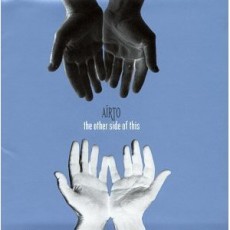
Airto Moreira was born in Itaiopolis, Brazil on August 5, 1941 into a family of folk healers but was raised in Curitiba and Sao Paulo. Showing an extraordinary talent for music at a young age, he became a professional musician at age 13, and his first landmark recording was “Quarteto Novo” with Hermeto Pascoal in 1967. Shortly after, he followed his wife Flora Purim to the U. S., settling in New York City.
Airto began playing regularly with jazz musicians in the city beginning with the bassist Walter Booker and through him began playing with Joe Zawinul, who in turn introduced him to Miles Davis. At this time Miles was mounting the seminal fusion recording Bitches Brew to which Airto became a part of.
After two years with Miles, Airto joined Miles alumni Joe Zawinul, Wayne Shorter and Miroslav Vitous forming Weather Report and recording their self-titled debut album. He left Weather Report and joined Chick Corea’s new band Return To Forever, drumming on the debut Return To Forever and Light As A Feather, commonly regarded as fusion classics.
Airto has played with many of the greatest names in jazz including Cannonball Adderley, Lee Morgan, George Benson, Donald Byrd, Paul Desmond, Dave Holland, Jack DeJohnette, John McLaughlin, Astrud Gilberto, Keith Jarrett and George Duke just to name a few. He also has played with symphonic orchestras and as a solo percussionist, and during live performances often includes a samba solo, where he emulates the sound of an entire band using just a single pandeiro.
In addition to jazz concerts and recordings, Airto has composed and contributed music scores to both television and film including Apocalypse Now and Last Tango In Paris. The drummer and percussionist has taught at UCLA and the California Brazil Camp and collaborated with his wife Flora and P.M. Dawn on “Non-Fiction Burning” for the Aids benefit album Red Hot + Rio produced by the Red Hot Organization.
More Posts: drums,percussion
From Broadway To 52nd Street
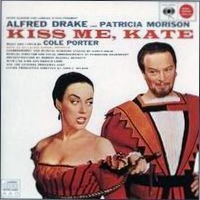
Kiss Me Kate opened its doors at the New Century Theatre on December 30, 1948 and was the second musical to be lauded as a blockbuster with a run of 1077 performances. Alfred Drake, Patricia Morrison, Lisa Kirk and Harold Lang were the stars of the show, who sung the music composed by Cole Porter, So In Love and From This Moment On, which became jazz standards. The musical won the very first Tony Award for Best Musical presented in 1949.
The Story: While cast members of a revival of Shakespeare’s Taming of the Shrew celebrate another opening, another show, the show’s stars, Fred & Lilli, celebrate their first anniversary of their divorce. They reminisce about better times. Fred sends Lilli a bouquet, leading her to believe he is still in love with her. Misunderstanding leads to argument between the two. Meanwhile, one of the cast members signs Fred’s name to his gambling debt. Goons arrive to collect and Fred convinces them to make Lilli perform. Debt is voided on a technicality. Fred & Lilli make up over the course of the evening and recognize they do still love each other)
Broadway History: In 1880, a stretch of Broadway between Union Square and Madison Square was illuminated by Brush arc lamps, making it among the first electrically lighted streets in the United States. By the 1890s, the portion of Broadway from 23rd Street to 34th Street was so brightly illuminated by electrical advertising signs, that people began calling it “The Great White Way.” When the theater district moved uptown, the name was transferred to the Times Square area.
Sponsored By

www.whatissuitetabu.com
Daily Dose Of Jazz…
Naná Vasconcelos was born in Recife, Brazil on August 2, 1944. At age 12 he began playing his father’s guitar and joined the city’s marching band. His intense curiosity and inquisitive ear prompted him to listen to music from Brazil’s greatest composer Villa Lobos to Jimi Hendrix. He played with every imaginable musical configuration in Recife from orchestras to street bands until finally moved to Rio where he began performing with Milton Nascimento.
By 1970 Argentinean tenor, Gato Barbieri came through Rio and invited Nana to join his group and everywhere the played Nana created a sensation. After the tours end he settled in Paris where he made his first recording, “Africa Deus”. He returned to Brazil to record Amazonas, began an eight-year collaboration with guitarist Egberto Gismonti, returned to New York and formed the group “Cordona” with Don Cherry and Collin Walcott, while touring and recording with Pat Metheny.
Throughout his career he has worked with everyone from B.B. King to Jean Luc Ponty to the Talking Heads but has never become a studio musician. With over two-dozen albums as a leader, Nana has contributed special energies to another sixteen albums with such musicians as Walter Bishop Jr., Jan Gabarek, Pierre Favre and Danny Gottlieb that go well beyond the usual contributions of a percussionist.
A master all of Brazil’s percussion instruments, specializing in the berimbau and taking it far beyond its traditional uses, he currently leads his own group “Bushdance” and has developed a theatrically staged piece that explores the full, fascinating range of sounds and songs that lie in the heart of his music.
Nana Vasconcelos has performed at the Woodstock Jazz Festival, “Luz De Candeeiro” to the AIDS benefit compilation album Onda Sonora: Red Hot + Lisbon produced by the Red Hot Organization and was awarded the Best Percussionist Of The Year by the Down Beat Critics Poll for seven consecutive years, from 1984 to 1990. He continues to perform, record and tour.
More Posts: percussion
Daily Dose Of Jazz…
Kevin Mahogany was born July 30, 1958, in Kansas City, Missouri and began his childhood study of music with piano, later learning to play the clarinet and baritone saxophone. He performed with jazz bands and teaching music while still in high school and later attended Baker University, performing with both instrumental and vocal ensembles. He formed a vocal jazz group, matriculating with a BFA in Music and English Drama.
After graduation, he returned to Kansas City where he attracted a local following in the 80’s performing with his groups, “The Apollos” and “Mahogany”. 1991 saw the vocalist featured on a Frank Mantooth CD and lists his influences as Lambert, Hendricks & Ross, Al Jarreau and Eddie Jefferson.
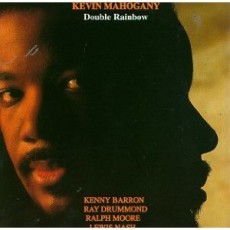
His first CD release as a solo artist was Double Rainbow in 1993 followed by his self-titled album Kevin Mahogany, which won him his first critical acclaim in the media, prompting Newsweek to call him “the standout jazz vocalist of his generation.”
He appeared in Robert Altman’s 1996 film Kansas City playing a character that’s said to be based on Kansas City singer Big Joe Turner. As a jazz educator, he has taught at the Berklee College of Music and the University of Miami. Known for his scat singing and with a dozen albums to his credit, vocalist Kevin Mahogany continued to perform, record, tour and educate until he passed away in his home on December 17, 2017 at the age of 59.
More Posts: vocal
Daily Dose Of Jazz…
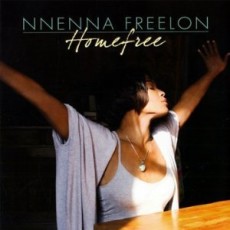
Nnenna Freelon, born Chinyere Nnenna Pierce on July 28, 1954 was raised in Cambridge, Massachusetts and sang in Union Baptist Church and St. Paul AME choirs as a young woman. She graduated from Boston’s Simmons College with a health care administration degree, worked at the Durham County Hospital in North Carolina and by 1990 had been singing for about seven years under her married name.
Attending the Southern Arts Federation conference presented her the opportunity to meet Ellis Marsalis, who became mentor and teacher. He passed her “package” on to George Butler of Columbia Records and in 1992 she was signed and dropped her debut. By 1994 Columbia ended their association and two-years later Concord picked her up.
The singer, composer, arranger, producer has been nominated for a five Grammy Awards, has performed and toured with the likes of Aretha Franklin, Ellis Marsalis, Al Jarreau, Clark Terry, Dianne Reeves, Terence Blanchard and Herbie Hancock, just to name a few. Nnenna has performed at venues such as Carnegie Hall, Montreux, Monterey and Ellington Jazz Festivals, the Kennedy Center, the Apollo Theatre and many more worldwide.
Aside from her many jazz and singing responsibilities, Freelon is the national spokesperson for the National Association of Partners in Education, an arts education organization with over 400,000 school/community partnership programs across the U.S; and her Babysong workshops teaches young mothers and healthcare providers the importance of the human voice for healing, nurturing and brain development in young children. She continues to perform, record and tour.

More Posts: vocal