Daily Dose Of Jazz…
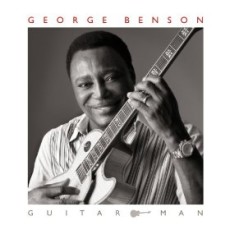
George Benson was born in Philadelphia, Pennsylvania on March 22, 1943 and raised in the Hill District. A child prodigy at the age of 7, he first played the ukulele in a corner drug store and received a few dollars for his efforts. At age 8, he was playing guitar in an unlicensed nightclub on Friday and Saturday nights that was soon closed down by the police. By the time he was 10, George was in New York recording his first single record with RCA-Victor in New York, called “She Makes Me Mad”.
He attended Connelly High School and although he left before graduation, he learned how to play straight-ahead instrumental jazz during a relationship performing for several years with organist Jack McDuff. At the age of 21, he recorded his first album as leader, “The New Boss Guitar” featuring McDuff, followed by “It’s Uptown with the George Benson Quartet” and “The George Benson Cookbook”.
During the ‘60s he was recording with Miles Davis for Columbia’s “Miles In The Sky”, moved on to Verve for a period and then signed with Creed Taylor producing such albums as “White Rabbit” and “The Other Side of Abbey Road” among others.
Benson released “Breezin” in 1976 and it went triple platinum topping Billboard’s 200. Tuning to vocal chops, the guitarist added a crossover audience adding smooth jazz to his repertoire of genres that include R&B, pop and jazz. The multi-Grammy award winner, he has recorded over two hundred albums and singles as a leader, sideman and collaborator; and has performed with the likes of Jaki Byard, Hank Mobley, Jimmy Smith, Lou Donaldson, Hank Crawford, Don Sebesky, Stanley Turrentine, Hubert Laws, Lee Morgan, Red Holloway, J. J. Johnson and Kai Winding, Freddie Hubbard, Deodato, Aretha Franklin, Freddy Cole, and Sadao Watanabe among numerous others.
In 2009 the National Endowment of the Arts honored George Benson with the distinction of being a Jazz Master and he continues to record, perform and tour worldwide.

Daily Dose Of Jazz…
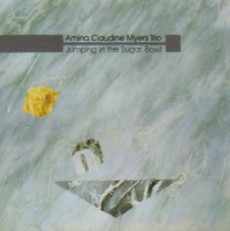
Amina Claudine Myers was born March 21, 1942 in Blackwell, Arkansas. The pianist, organist, vocalist, composer and musical arranger began singing and playing the piano and organ as a child in church choirs in the Dallas/Ft. Worth area where she grew up. She directed choirs at an early age and graduated in concert music and music education from Philander Smith College.
In the early sixties Amina moved to Chicago, teaching and attending classes at Roosevelt University. It was in Chicago that she began working with Sonny Stitt and Gene Ammons, joined the AAMC, focused on vocal compositions and recorded her debut album with Kalaparusha Maurice McIntyre in 1969. .
In 1976 Myers relocated to New York City, where she intensified her compositional work and expanded it into the realm of Off-Broadway productions. She also continued performing and recording as a pianist and organist with Lester Bowie and Muhal Richard Abrams into the early eighties. In 1985 she joined Charlie Haden’s Liberation Music Orchestra and had notable collaborations on recordings with artists like Marian McPartland, the Art Ensemble of Chicago, Archie Shepp, David Murray, Arthur Blytheand Ray Anderson to name a few.
Amina Claudine Myers, a virtuoso pianist and organist whose work is presented internationally and appears on scores of recordings, draws upon her backgrounds in classical music and the music of the black church of her native rural South to create a recombinant sensibility within improvisation-imbued extended compositions. Her work is insistently post-genre at a moment when re-inscriptive collage pretends to postmodern transgression.

Daily Dose Of Jazz…
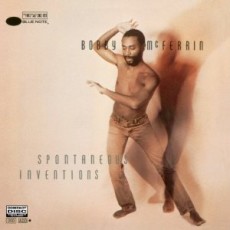
Robert “Bobby” McFerrin, Jr. was born March 11, 1950 in Manhattan, New York to the late Metropolitan Opera baritone Robert McFerrin and Broadway singer Sara Cooper. He spent his childhood surrounded by jazz, blues, R&B, classical, pop and world music, playing in jazz and cabaret bands until the age of twenty-seven.
Developing a vocal technique that switches rapidly and fluidly between normal and falsetto registers to create polyphonic effects, McFerrin performs both the main melody and the accompanying parts of songs. His use of percussive effects with his voice and tapping on his chest compliments his ability to overtone singing.
In 1984 McFerrin released his first solo album The Voice without accompaniment or overdubbing but he came to worldwide prominence with his 1988 hit “Don’t Worry, Be Happy” that garnered him two Grammys for Song and Record of the Year.
The ten-time Grammy winning vocalist and conductor has collaborated with Chick Corea, Herbie Hancock, Joe Zawinul, Tony Williams and Yo-Yo Ma. In addition he has lent his voice to the Cosby Show, to film and the 1989 Oscar winning documentary Common Threads: Stories from the Quilt in which his ten-person Voicestra was featured.
He is the creative chair of the Saint Paul Chamber Orchestra and has been a guest conductor for symphonies and philharmonics in San Francisco, New York, Chicago, Cleveland, Philadelphia, Los Angeles, Vienna and London. He has performed with comedian Robin Williams, consorted with the Muppets, interpreted Beatles songs and demonstrated with audience participation the power of pentatonic scale that became a viral Internet phenomenon.
Bobby McFerrin defies convention and categorization as he draws from all genres to showcase his matchless improvisational skill with an ability to create new vocabularies on the fly as he continues to explore and discover new territory in music.

More Posts: vocal

Daily Dose Of Jazz…
Lew Soloff was born February 20, 1944 in New York City and is a jazz trumpeter, composer and actor. Studying trumpet at the Eastman School of Music, he continued his studies at Julliard. After graduation he freelanced around New York City with Maynard Ferguson, Joe Henderson, Machito, Tito Puente and Clark Terry. From 1968 to 1973 he worked with Blood, Sweat and Tears.
By 1973 he began an association an association with Gil Evans, played with George Gruntz’s Concert Jazz Band, Carla Bley, and is a longtime member of the Manhattan Jazz Quintet. He has also teamed up with the colorful trombonist Ray Anderson on several often-humorous recordings.
In the 1980’s he was part of a jazz ensemble called Members Only, recording for Muse Records. A brilliant high note trumpeter, Lew has long been sought after to play in big bands and session work. He is a distinctive soloist and an expert with the plunger mute. He has over four-dozen albums to his credit as a leader and sideman and currently performs, tours and records.
More Posts: trumpet
Daily Dose Of Jazz…
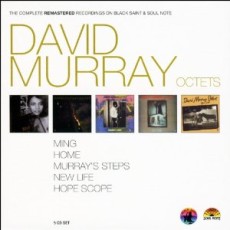
David Murray was born on February 19, 1955 in Oakland, California to musical parents, his mother played piano and his father, guitar. He was introduced to jazz while in the Berkeley school system playing alto in the school band. By thirteen he was in a local group called the Notations of Soul, but it was hearing Sonny Rollins that gave him the inspiration to switch from alto to tenor.
Influenced by Stanly Crouch while attending Pomona College, he moved to New York at 20 during the jazz loft era in lower Manhattan. Joining up with Crouch they opened their own loft space called Studio Infinity and Crouch occasionally played drums in Murray’s trio with Mark Dressler.
Murray’s early work was raw filed with multiphonics, extreme volume and upper register forays. By 1976 he recorded his first album “Flowers For Albert” and along with Julius Hemphill, Oliver Lake and Hamiet Bluiett became a founding member of the World Saxophone Quartet. Around the same time Joseph Papp commissioned David for a big band assemblage that enjoyed a modicum of critical success.
Through the 80’s he continued to play with the WSQ, his octet and various small bands, recording mostly for Italy’s Black Saint label, showcasing his rough and unformed talent as a composer. His recording dates became a flurry for the next two decades, leading more sessions than any other contemporary jazz musician. His playing matured and he began relying on the standard jazz repertoire when playing in small combo configurations. Yet by the time he was 40, his relative predictability was offset by his attention to the craft of playing and his inimitable style while his increased skill as a composer. In addition to winning a Grammy for Best Jazz Instrumental Group Performance for Blues for Coltrane: A Tribute to John Coltrane, over the course of his career he has been awarded a Guggenheim Fellowship, received a Bird Award, the Jazzpar Prize and has been named Musician of the Year by Newsday and Musician of the Decade by the Village Voice.
Murray mainly plays tenor saxophone and bass clarinet influenced in the free jazz genre of Albert Ayler and Archie Shepp. He has played with a host of world-renowned musicians, of which he is a member and continues to perform, record and tour.