


From Broadway To 52nd Street
Lady In The Dark took the stage at the Alvin Theatre on January 23, 1941. The musical starred Gertrude Lawrence, McDonald Carey, Dianne Kaye and Victor Mature with the music composed by Kurt Weill and lyrics by Ira Gershwin. It ran for four hundred and sixty-seven performances. Beyond its Broadway run, Lady In The Dark would b staged in the United Kingdom in 1981, was also made into a 1944 film and a live 1954 television special. Except for the final song, all the music in the play is heard in three extended dream sequences: the Glamour Dream, the Wedding Dream, and the Circus Dream which, to some extent, become three small operettas integrated into a straight play. The final song, “My Ship”, which went on to become a jazz standard, functioned as a leitmotif for Liza’s insecurity: as each dream commences, a snippet of the tune is heard, as it is a haunting melody which Liza recognizes but cannot name, or sing with words, until her anxiety is resolved.
The Story: The protagonist, Liza Elliott, is the unhappy albeit successful editor of a fashion magazine, Allure, who is undergoing psychoanalysis. Relating a dream to her analyst, all the familiar male figures in her life appear in her dream but they act in unfamiliar ways. By recounting her dream, Liza realizes that her father’s disdain for her as a child has warped her relations with men.
Broadway History: Innovations to Broadway would come in 1943 with Rodgers & Hammerstein’s Oklahoma, which integrated music, song, and dance with a detailed plot. West Side Story followed in these footsteps in 1957 by introducing serious themes, causing the genre to be called simply “musicals”. In 1967 Hair would herald the rock musical to prominence.
Sponsored By

www.whatissuitetabu.com
Daily Dose Of Jazz…
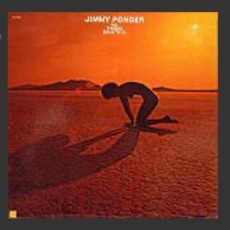
Jimmy Ponder was born May 10, 1946 in Pittsburgh, Pennsylvania and picked up his brother’s guitar at age 11. Teaching himself by ear and practicing an average six hours a day, he began learning the music of Bo Diddley. Learning quickly he played his first professional gig at age 11 and was performing in Pittsburgh clubs by age 13. He won citywide talent shows and while in junior high, sang in a “Doo-Wop” group and later played guitar in an R&B bands.
At age 16 Ponder set his sights on being a jazz guitarist. He began playing jazz in Pittsburgh with Sam Pearson’s avant-garde group Sam P. and the Players. He also performed with the Bobby Jones Trio and the Jimmy McGriff Trio. After graduating from South Hills High School he joined the Charles Earland Trio and going on the road for three years to begin his long jazz career.
In the 70s Jimmy moved first to Philadelphia and then New York, recording extensively as a leader recording twenty-one albums and over 80 sessions as a sideman playing with the likes of Lou Donaldson, Shirley Scott, Houston Person, Donald Byrd, John Patton, Stanley Turrentine, Etta Jones, Sonny Stitt and Jimmy McGriff.
In 1978 while recording for Muse Records, Jimmy’s “All Things Beautiful” hit #38 on the Billboard Jazz Albums and his 2000 Ain’t Misbehavin’ went to #16. He also recorded with Cadet, ABC, Highnote, Milestone and LRC Records. He considers Wes Montgomery and Kenny Burrell his major influences incorporating Montgomery’s approach of playing octaves with the thumb into his unique bluesy sound has influenced other guitarists. His playing is described as aggressive rhythm-and-blues figurations with swift and lucid chromatic bop lines.
Guitarist Jimmy Ponder returned to Pittsburgh in 1990 where he led a trio with drummer Roger Humphries. He became at artist-in-residence at Duquesne University and continues to record and work in jazz venues around the country until his death on September 16, 2013 in his hometown of Pittsburgh.
More Posts: guitar
Daily Dose Of Jazz…
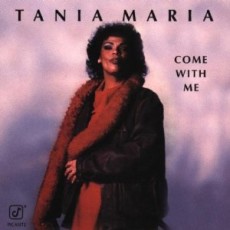
Tania Maria was born on May 9, 1948 in Sao Luis, Maranhao in northern Brazil. She began playing piano at 7, became a leader at 13 of a band organized by her father, won first place in a local music contest and began playing dances, in clubs and on the radio. It was her father who encouraged her to study piano so that she could play in his weekend jam sessions. By doing so she absorbed the rhythms and melodies of samba, jazz, pop and Brazilian chorinho. Since then she has never worked in anyone else’s group.
Tania released her first album ”Apresentamos” in 1969 with a second in 1971 but it was her move to France that exploded her on the international scene. She began touring and while performing in Australia she caught the ear of guitarist Charlie Byrd who recommended her to Concord Records.
Tania’s formidable musical precision and freewheeling spirit has been heard at virtually every important jazz festival in the world and has appeared on countless television and radio shows. She has recorded numerous albums, has been nominated for a Grammy in the category of “Best Jazz Vocal Performance, Female, and has played with such greats as Steve Gadd, Anthony Jackson, Sammy Figueroa and Eddie Gomez to name a few.
The Brazilian artist, singer, composer, bandleader and pianist also has a law degree She sings mostly in Portuguese but also English. Her music is sometimes pop, jazz, and unmistakably Brazilian. Whether playing fiery samba, tranquil bossa or any other style, Tania Maria maintains a style that is uniquely her own. Her vibrant voice, brilliant piano work and outstanding performances have made an artist of increasing international popularity.
Daily Dose Of Jazz…
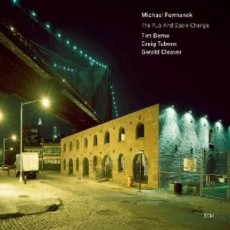
Michael Formanek was born on May 7, 1958 in San Francisco, California. The bassist and composer has had a long association with the jazz scene in New York City.
By the 1980s, Formanek was working as a sideman with Freddie Hubbard, Joe Henderson, Dave Liebman, Fred Hersch and Attila Zoller. His debut recording released as a leader at the onset of the nineties Wide Open Spaces, featured a few of the young lions at the time, saxophonist Greg Osby, violinist Mark Feldman, guitarist Wayne Krantz and drummer Jeff Hirshfield.
A series of albums followed through the decade as Formanek changed different configurations from trio to septet. Towards the end of the decade he was touring with Gerry Hemingway and recording duo and solo albums. He has worked with Dave Douglas, Marty Ehrlich, Kuumba Frank Lacy, Marvin Smith, Salvatore Bonafede, Peter Erskine, Jane Ira Bloom, Uri Caine, Lee Konitz, Kevin Mahogany and the Mingus Big Band, just to name a few.
Michael Formanek is currently the Director of the Peabody Jazz Orchestra and jazz bass instructor at the Peabody Conservatory of Music in Baltimore, Maryland.
Daily Dose Of Jazz…
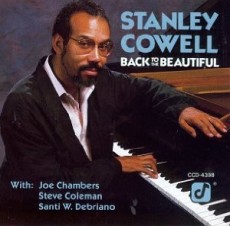
Stanley Cowell was born on May 5, 1941 in Toledo, Ohio. As a child he studied piano and pipe organ. By age 15, he was a featured soloist with the Toledo Youth Orchestra, a church organist, choir director and a budding jazz pianist. He went on to get his bachelors from Oberlin, Masters from the University of Michigan and graduate studies at USC.
The Sixties saw Cowell moving to New York City and working with Rahsaan Roland Kirk, Marion Brown, Max Roach, Bobby Hutcherson, Miles Davis, Clifford Jordan, Harold Land, Abbey Lincoln, Stan Getz and as a member of the Detroit Artist’s Workshop Jazz Ensemble.
By the 70s Stanley was a member of Music Inc. with Charles Tolliver with whom he found the Strata East record label, worked with the Heath Brothers, Donald Byrd, Roy Haynes, Oliver Nelson, Sonny Rollins, Richard Davis, Art Pepper and the list continues. He was the musical director for George Wein’s New York Jazz Repertory Company at Carnegie Hall along with Gil Evans, Dr. Billy Taylor and Sy Oliver.
He recorded successfully as a leader for Arista-Freedom, ECM, Strata East, Galaxy, Concord and Steeplechase among others. Since the eighties Stanley Cowell has been a busy jazz educator and a part of the quartet led by J.J. Johnson.
Pianist Stanley Cowell remained an excellent mainstream jazz pianist with an ability to adapt to a variety of acoustic jazz settings until he passed away at Bayhealth Hospital in Dover, Delaware, from hypovolemic shock. He was 79 years old

More Posts: piano