

Daily Dose Of Jazz…
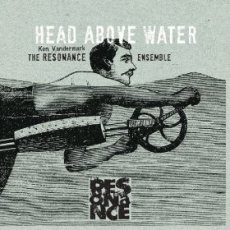
Ken Vandermark was born September 22, 1964 in Warwick, Rhode Island but grew up in Boston, Massachusetts. Mostly a self-taught musician, the saxophonist studied intermittently under George Garzone in the early 80s. He performed and led groups while in high school and at McGill University in Montreal, graduated in 1986.
Returning to Boston Ken co-led the groups Lombard Street, Mr. Furious and Barrage Double incorporating “suite forms” into his arrangements and composing pieces dedicated to other Boston bands, thus, developing broad, free-ranging charts as his signature especially in large ensemble settings.
Vandermark moved to Chicago in 1989 and has performed or recorded with many musicians such as Fred Anderson, Joe Morris, Fredrik Ljungkvist and Yakuza to name a few. He first gained widespread attention working with the NRG Ensemble from 1992 to 1996, went on to co-lead DKV Trio, Free Fall, Territory Band, the Vandermark Five and some six more groups, collaborated with Joe Harriott, released his album Furniture Music in 2002 marking his debut as an accomplished soloist and has since concentrated on his own compositions.
A fixture on the Chicago music scene Vandermark plays tenor and baritone saxophone, clarinet and bass clarinet and has received critical praise for his performing multilayered compositions that typically balance intricate orchestration with passionate improvisation. He was awarded a 1999 MacArthur Fellowship, won the Cadence magazine poll for Best Artist and Best Recording. He continues to perform and record.

Dose A Day – Blues Away
Hollywood On 52nd Street
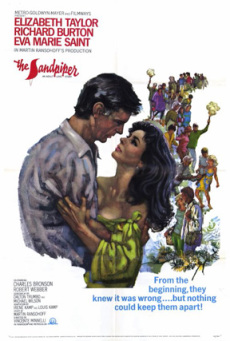
The Shadow Of Your Smile also known as the love theme from the 1965 film The Sandpiper“, is a popular song whose music was written by Johnny Mandel with the lyrics written by Paul Francis Webster.
The song was introduced in the 1965 film The Sandpiper with a trumpet solo by Jack Sheldon and later became a minor hit for Tony Bennett. Johnny Mandel arranged and conducted his version as well). It won the Grammy Award for Song of the Year and the Academy Award for Best Original Song.
The Story: Vincente Minnelli directed the film’s stars Richard Burton and Elizabeth Taylor. Laura Reynolds (Taylor) is a free-spirited, unwed single mother living with her young son Danny (Morgan Mason) in an isolated California beach house. She makes a modest living as an artist and home-schools her son out of concern that he will be compelled to follow stifling conventional social norms in a regular school. Danny has gotten into some trouble with the law through two minor incidents, which are in his mother’s eyes innocent expressions of his natural curiosity and conscience rather than delinquency. Now with a third incident a judge orders her to send the boy to an Episcopal boarding school where Dr. Edward Hewitt (Burton) is headmaster, and his wife Claire (Eva Marie Saint) teaches. Edward and Claire are happily married with two young sons, but their life has become routine and their youthful idealism has been tamed by the need to raise funds for the school and please wealthy benefactors.
Sponsored By

www.whatissuitetabu.com
More Posts: comedy,dance,drama,hollywood,instrumental,jazz,musical,suite ta bu,vocal
Hollywood On 52nd Street
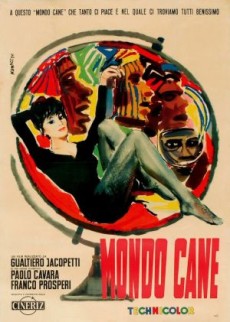
Riz Ortolani and Nino Oliviero composed the theme song More that found its place in the pantheon of jazz classics. It was a part of the score for the 1962 film Mondo Cane. The film title translates to Dog’s World, or as the soundtrack album states, “a world gone to the dogs”.
Some melodies are used repeatedly, in different styles, each named for the part of the movie where the music is used. Of the 15 music tracks on the soundtrack album, one melody is presented 6 times, another melody 2 times. The melody which became known as “More” is presented 4 times, named “Life Savers Girls”, “The Last Fight/L’Ultimo Volo”, “Models In Blue/Modelle in Blu”, “Repabhan Street/Repabhan Strasse”, in styles ranging from lush to march and 3/4 waltz.
Originally composed as an instrumental and titled “Ti guarderò nel cuore”, lyrics were later provided by Marcello Ciorciolini, which were adapted into English by Norman Newell. At that point, “Theme from Mondo Cane” became “More” (not to be confused with an earlier pop song of the same name).
The Story: The movie Mondo Cane is filmed as a documentary and uses a variety of music to accompany various segments. The film uses a series of stories that take place in different cities around the world, i.e. dog pound, Rudolph Valentino statue, bikini-clad girls wooing sailors, pigs being slaughtered, and a manhunt among various others.
More Posts: comedy,dance,drama,hollywood,instrumental,jazz,musical,suite ta bu,vocal
Daily Dose Of Jazz…
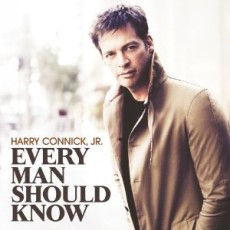
Harry Connick, Jr. was born Joseph Harry Fowler Connick, Jr. on September 11, 1967 and raised in New Orleans, Louisiana. His musical talents soon came to the fore when he started learning the keyboards at the age of three, played publicly at age five and recorded with a local jazz band at ten.
When Harry was nine years old, he performed with the New Orleans Symphony Orchestra and later played a duet of “I’m Just Wild About Harry” with Eubie Blake at the Royal Orleans Esplanade Lounge in New Orleans. His musical talents were developed at the New Orleans Center for Creative Arts and under the tutelage of Ellis Marsalis and James Booker.
Moving to New York, Connick studied at Hunter College and the Manhattan School of Music. It was here that Columbia Records A&R exec Dr. George Butler persuaded him to sign with the label releasing first a self-titled album and then “20” as his sophomore project. He soon acquired a reputation in jazz because of extended stays at high-profile New York venues.
Over the course of his career Harry has sung on film soundtracks, ventured into acting on Broadway and the big and small screens, has sold over 25 million albums worldwide, has seven top-20 US albums, and ten number-one US jazz albums, earning more number-one albums than any other artist in the U.S. jazz chart history. Harry Connick Jr., singer, big-band leader, conductor, pianist, actor, and composer, continues to perform, record and tour.
Put A Dose In Your Pocket
Hollywood On 52nd Street
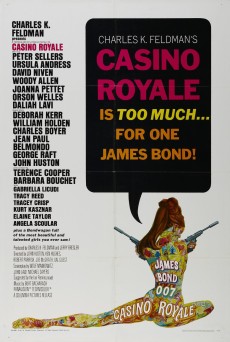
The Look Of Loveis another jazz standard from the iconic pop library composed by Burt Bacharach and Hal David. The tune was sung by English pop singer Dusty Springfield in the 1967 James Bond film spoof, Casino Royale. It also received a Best Song nomination at the 1968 Academy Awards and in 2008 the song was inducted into the Grammy Hall of Fame.
David Niven starred in Casino Royale as the original 007, Sir James Bond. It is loosely based on Ian Fleming’s first novel. Forced out of retirement to investigate the deaths and disappearances of international spies, he soon battles the mysterious Dr. Noah and SMERSH.
More Posts: comedy,dance,drama,hollywood,instrumental,jazz,musical,suite ta bu,vocal