

Daily Dose Of Jazz…
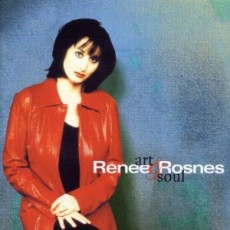
Renee Rosnes was born Irene Louise Rosnes on March 24, 1962 in Regina, Saskatchewan but grew up in North Vancouver, B.C. where she attended Handsworth Secondary School. She was three when she began taking classical piano lessons and became interested in jazz in high school. She went on to the University of Toronto pursuing classical performance, was awarded a Canada Council of the Arts grant in 1985 and moved to New York City to further her studies.
Saxophonist Joe Henderson hired her to play with his quartet that kick-started her international career. Since then, Rosnes has worked with many of the top names in jazz including J.J. Johnson, Wayne Shorter, James Moody, Bobby Hutcherson and Jon Faddis among others.
Renee is a founding member of the San Francisco Jazz Collective, whose members have included the likes of Joshua Redman, Brian Blade, Bobby Hutcherson, Dave Douglas, Eric Harland, Nicholas Payton, Joe Lovano, Stefon Harris and others.
The pianist, composer and arranger performs and records in the hard bop and post-bop mediums, has nearly two dozen albums as a leader and several more as a sidewoman with her latest project “Double Portrait” recorded with her husband Bill Charlap. Renee Rosnes continues to perform, tour and record.
More Posts: piano
Daily Dose Of Jazz…
Stefon Harris was born March 23, 1973 in Albany, New York and started playing the piano at age 6 and learned to read music by the time he began elementary school. By the time he reached 8th grade Stefon played nearly twenty different instruments from string bass to trombone. After seeing the Empire State Youth Orchestra on television, he auditioned for the ensemble and was accepted as the principal percussionist.
A few years later, he earned a full merit scholarship to attend Eastman School of Music in Rochester, where his roommate introduced him to jazz via Charlie Parker records. Smitten by the music, Harris moved to New York City and began gigging on the jazz scene as a vibraphone player while finishing his B.A. and Master’s degrees at the Manhattan School of Music.
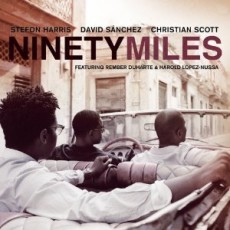
Harris has released several critically acclaimed albums, composed numerous works and is one of the foremost young artists in demand today having played with such luminaries as Kenny Barron, Steve Turre, Kurt Elling, Charlie Hunter, Joe Henderson, Steve Coleman, Cassandra Wilson, Buster Williams, Wynton Marsalis and the Lincoln Center Chamber Music Society. In 2011 he ventured to Havana, Cuba with saxophonist David Sanchez and trumpeter Christian Scott to record their critically acclaimed Ninety Miles. Having performed worldwide, vibraphonist Stefon Harris sits at the forefront of New York music.
More Posts: marimba,vibraphone
From Broadway To 52nd Street
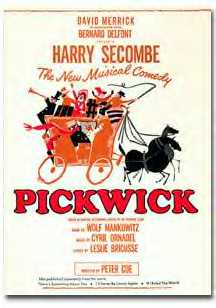
Pickwick opened at the 46th Street Theatre on October 4, 1965 and ran 56 performances with the music composed by Cyril Ornadel and Leslie Bricusse. The song that rose to great heights is the Great American songbook and became a jazz standard was If I Ruled The World.
The Story: Set in England in 1828, the story centers on wealthy Samuel Pickwick and his valet Sam Weller, who are in a debtors’ prison where they recall the misadventures that led to their imprisonment. On the previous Christmas Eve, Pickwick introduced his friend Wardle, Wardle’s daughters, Emily and Isabella, and their Aunt Rachael to Nathaniel Winkle, Augustus Snodgrass, and Tracy Tupman, three members of the Pickwick Club. Soon, Alfred Jingle joined them and tricked Tupman into paying for his ticket to a ball that evening. Upon learning Rachael is an heiress, Jingle set out to win her hand and eventually succeeded. Pickwick engages Sam Weller as his valet and, through a series of misunderstandings, he inadvertently leads his landlady, Mrs. Bardell, to believe he has proposed marriage to her. Pickwick is charged with breach of promise and hauled into court, where he is found guilty as charged and sentenced to prison when he stubbornly refuses to pay her compensation.
Jazz History: In 1965 Miles Davis records ESP with his new quintet; pianist/vocalist Nat King Cole dies of cancer; Herbie Hancock records Maiden Voyage, a classic modal tune, with the other members of Miles Davis’ group plus trumpeter Freddie Hubbard; trumpeter Thad Jones and drummer Mel Lewis form a rehearsal orchestra that is to last for years and is still in existence today; and John Coltrane records Ascension, a free jazz experiment influenced by Ornette Coleman.
Sponsored By

www.whatissuitetabu.com

From Broadway To 52nd Street
The Roar Of The Greasepaint – The Smell Of The Crowd opened its season at the Shubert Theatre on May 16, 1965 and ran for 231 performances. Leslie Bricusse and Anthony Newley composed the music with the later starring alongside Cyril Ritchard. From these two talented lyricist and composer, Who Can I Turn To and Look At That Face entered the lexicon of jazz standards.
The Story: The allegorical plot examines the maintenance of the status quo between the upper and lower classes of British society in the 1960s. Since Sir forever is changing the rules of the game of life, downtrodden young Cocky always gets the short end of the stick. Assisting Sir is his eager disciple Kid, anxious to pick up bits of wisdom while helping keep Cocky in his place.
Broadway History: Musical theatre is a form of theatrical performance that combines songs, spoken dialogue, acting, and dance. The story and emotional content of a musical may have humor, pathos, love, anger and are communicated through the words, music, movement and technical aspects of the entertainment as an integrated whole. Although musical theatre overlaps with other theatrical forms like opera and dance, it may be distinguished by the equal importance given to the music as compared with the dialogue, movement and other elements. Since the early 20th century musical theatre stage works have generally been called, simply, musicals.
Sponsored By
www.whatissuitetabu.com

From Broadway To 52nd Street
Greenwillow rose the curtain of the Alvin Theatre on March 8, 1965 with Anthony Perkins as the lead but only lasted 95 performances. Frank Loesser composed the music for the show from which Never Will I Marry rose to stand amongst the other classic jazz tunes.
The Story: A homespun fantasy that had to do with quaint superstitions and folklore of a mythical village located on the Meander River. The whimsical tale takes up the conflict of young Gideon Briggs who would rather stay home and marry his summertime love, but who fears that the curse of his family’s “call to wander solitary” will someday make him run off to sail distant seas.
Jazz History: The birth of funk can probably be traced back to 1967 when bop saxophonist Lou Donaldson hit big with Alligator Boogaloo. It was the start of a movement – and, to many, the demise of the legendary Blue Note label. Jazz labels like Blue Note, Prestige and Atlantic, who stayed alive selling R&B records, recognized the value of funk instantly. These labels, their artists and producers Bob Porter, Francis Wolf and Joel Dorn were the primary movers and shakers of the whole genre. But there were certainly others who came along and funked up their jazz, such as Creed Taylor’s CTI and Kudu output between 1970 and 1975). The whole thing probably ended in 1975, when disco and an increasing array of electronica started taking funk in a new yet still worthy direction. But the musical edge of funk was clearly getting replaced with slicker effects.
A decade later, when jazz was suffering under the post-fusion tradition-bound conservatism of Wynton Marsalis and “the new young lions,” young DJs in London spearheaded by Gilles Peterson began to rediscover these old funk records in thrift shops and spun them for the young dancers in the hippest clubs. Here, “acid jazz” was born. It still took another decade for the US to realize its own funk legacy and by the late 1990s, surviving funk musicians were finally getting paying work and hero worship bestowed upon them.
Sponsored By
www.whatissuitetabu.com