

Daily Dose Of Jazz…
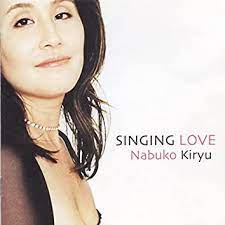
Nabuko Kiryu was born on May 18, 1968 in Tokyo, Japan and grew up in a musical family. Her mother and stepfather both are jazz pianists and a brother plays classical trumpet. The daughter of Toshiko Kiryu, a classically trained pianist who has performed at Carnegie Hall, she learned an appreciation for music early. However, her stepfather Kanji Ohta, was the one who inspired her movement toward jazz.
She started singing jazz in 1990 in Japan after graduating from Shobi Junior College of Music with a degree in composition. But her musical career began much earlier. Since her arrival in New York City in 1996, she has been performing in restaurants, cafes, and jazz clubs such as Blue Note, Lenox Lounge, and Showmans. She completed her B.A. in jazz vocal performance from City College of New York in 2001 and also graduated with her M.A. at Queens College in 2004.
Nabuko has performed with jazz giants such as Jimmy Heath, Grady Tate, Earl May, and Jimmy Lovelace, the last two of which appear on her latest What’s New Records release titled Singing Love. She studied with Sheila Jordan and has participated in the Barry Harris Jazz Vocal Ensemble.
Vocalist Nabuko Kiryu continues to perform and record as she explore the jazz idiom.

More Posts: bandleader,history,instrumental,jazz,music,vocal
Requisites
Tubby The Tenor ~ The Tubby Hayes Sextet | By Eddie Carter
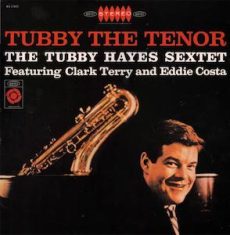
Submitted for your approval this morning is a 1962 release by British tenor saxophonist Tubby Hayes. The year before, he traveled to the United States for the first time to appear at the Half Note. This week’s album is an excellent studio session recorded at Columbia Studio A during his engagement and initially released in the U.K. as Tubbs in N.Y. Its U.S. counterpart came out the same year and is titled Tubby The Tenor (Epic LA 16023/BA 17023) by The Tubby Hayes Sextet. Hayes is in good company on this date; Clark Terry on trumpet (tracks: A2, B1), Eddie Costa on vibes (tracks: A2, A3, B3), Horace Parlan on piano, George Duvivier on bass, and Dave Bailey on drums. My copy is the 1995 Classic Records U.S. Stereo audiophile reissue sharing the original catalog number.
Side One gets underway with You For Me by Bob Haymes, a quartet feature for Tubby and the rhythm section. The saxophonist sets the scene with an unaccompanied introduction segueing into the foursome’s lively opening chorus. Tubby takes the song’s only solo and gives a swinging interpretation complemented by the trio’s spirited support leading to the closing chorus. Clark Terry’s easy-going blues, A Pint of Bitter, begins with the sextet stating the carefree melody collectively. The trumpeter is up first with a relaxing lead interpretation; then Hayes is equally laid-back on the following statement. Costa comes in next and delivers a leisurely-paced reading; then, Parlan builds a compelling finale ahead of the ending theme.
Airegin by Sonny Rollins opens with the quintet’s brisk theme. Tubby launches the solos with a spirited presentation, then gives way to Eddie, who swings freely in an exciting reading. Horace has the third spot and gives an energetic performance. George walks briskly behind him, ahead of the tenor sax’s and vibraphonist’s concise conversation preceding the reprise and climax. Side Two takes off with Opus Ocean by Clark Terry, a fast-paced thrill ride that moves quickly from the quintet’s collective theme. Hayes is off to the races wailing at top speed in the opening solo, followed by an exhilarating statement from Terry. Parlan turns the heat up on the third reading, and the front line delivers a spirited exchange before the ensemble takes the song out.
The quartet returns to put some fresh clothes on Soon, an old tune from the songbook of George and Ira Gershwin. Horace briefly introduces himself; then Tubby steps up for an excellent melody that flows seamlessly into his impressive lead statement. Horace is next and completes the solos with a festive interpretation until Tubby reappears for the song’s finish. Doxy by Sonny Rollins is misspelled here as Doxie and begins with a relaxing melody led by Hayes and Costa. Hayes is up first and gets into a comfortable groove on the opening statement. Costa comes in next for a pleasant performance, then Parlan takes a nice turn in the third reading. Duvivier wraps it up with a short walk leading to the ensemble’s finale.
Mike Berniker and Nat Shapiro produced Tubby The Tenor, and it’s unknown who the recording engineer is. However, this Classic Records reissue is an excellent recording with a superb soundstage. Bernie Grundman remastered this album, and it is an outstanding pressing using 180-gram audiophile vinyl that’s silent until the music starts. The front and rear covers also have a high gloss. Though known as a tenor saxophonist, Tubby Hayes played the flute and vibraphone equally proficiently. Until this album, I only knew of his work as a member of The Jazz Couriers with Ronnie Scott, but I am now on the hunt for more of his records. If you’re a fan of the tenor sax, I invite you to check out Tubby The Tenor by The Tubby Hayes Sextet on your next vinyl shopping trip. It’s an ideal introduction to this remarkable musician and an enjoyable album you can listen to any time of the day or evening!
~ Tubbs in N.Y. (Fontana TFL 5183/STFL 595) – Source: Discogs.com ~ Aireign – Source: JazzStandards.com ~ Columbia Studio A – Source: Tubby Hayes: How The Little Giant Conquered The Big Apple by Simon Spillett. Jazzwise Magazine, October 18, 2021. www.jazzwise.com ~ Doxy, Soon – Source: Wikipedia.org © 2023 by Edward Thomas Carter

More Posts: choice,classic,collectible,collector,history,instrumental,jazz,music,saxophone
Daily Dose Of Jazz…
On May 12, 1964 Audrey Silver was born and raised in New York City, New York. She graduated from Brown University, where she founded The Higher Keys, the school’s first a capella singing group. After stints working in marketing for CBS Masterworks (now Sony Classical) and Chesky Records, she returned to school and earned an MBA from Columbia University Business School.
Beginning her singing career in earnest in 1998, she teamed with Jon Raney, son of pianist Jimmy Raney and produced her first demo with the help of Ronnie Zito and Jay Leonhart. In the meantime, she honed her craft through private study with singers Sheila Jordan and Mark Murphy. Building a respected career performing around the city’s jazz clubs and music venues, she also performed at national festivals and venues around the country.
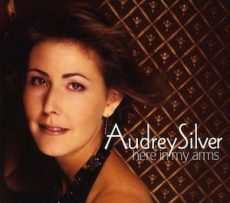
She released her debut album Here In My Arms in 2004 and has since released three more, the last being before the pandemic. Silver was a 2016 semi-finalist in the International Songwriting Competition. As a songwriter, it was her four year old son that opened that door for her and the stories began to pour out.
Vocalist Audrey Silver credits Bill Evans, Annie Lennox and Arnold Schoenberg as influences as she continues to grow her catalogue of originals and performing around the world.
More Posts: bandleader,history,instrumental,jazz,music,vocal
Daily Dose Of Jazz…
Rico Belled was born in the Netherlands on May 9, 1970 to Spanish/Swiss parents. Growing up in a multicultural environment, with a pianist father, he was exposed to many styles of music. He started playing piano at age 11, exploring everything from classical music to jazz. At 15 he started playing gigs with local bands doing pop and blues, while slowly getting interested in the bass, which he started practicing at age 17.
In 1989, while studying electrical engineering at the TU Delft, Rico met Roy Cruz in The Hague and joined his weekly Sunday night band at De Pater, exploring the world of Funk and Jazz playing Fender Rhodes. During these sessions they broke down all stylistic walls from playing Weather Report tunes to full on James Brown Funk, featuring as many as 10 people on the little stage. Here he got an education in the art of jamming.
Realizing music was his passion, in 1992 Belled gave up engineering and moved to Los Angeles, California and attended the Musicians Institute in Hollywood. Post graduation he was already playing with a few different groups in the Los Angeles area and in the following years made a name for himself as a bass and keyboard session musician. His breakthrough came when he joined Wrecking Crew pianist Don Randi and the house band at the Baked Potato in 1994. A two year residency offered the opportunity to lead his own group performing his original music at the club.
This led to him performing and recording with Marc Antoine, The Dan Band, Sound Assembly, Jeff Robinson, Leslie Paula’s Latin Soul Band, Liza Minelli, Chris Standring, Scott Grimes, Keiko Matsui and many others. He has co-written and published music with Mindi Abair and Jeff Robinson. All this led to him being asked to join the Rippingtons, starting with recording the album ‘Modern Art’, for which he received a Grammy Nomination in 2010. Still a member, bassist Rico Belled remains one of the top bassists in Los Angeles, known for his deep groove and versatility, staying busy live and in the studio.
More Posts: bandleader,bass,composer,history,instrumental,jazz,music
Daily Dose Of Jazz…
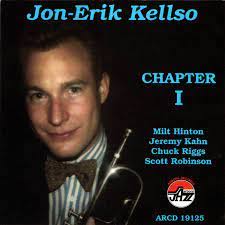
Jon-Erik Kellso was born on May 8, 1964 in Dearborn, Michigan and began playing jazz music very young in life, while receiving some formal training in classical idioms.
He moved from Detroit, Michigan to New York City in 1989 to join Vince Giordano and the Nighthawks. He has recorded many movie and TV soundtracks with the group, including the Grammy Award-winning soundtrack for Boardwalk Empire, The Aviator, Bessie, Ghost World, and Revolutionary Road.
He has performed and/or recorded with J.C. Heard, Catherine Russell, Cecile McLorin Salvant, Kat Edmonson, Milt Hinton, Ruby Braff, Marty Grosz, Bob Haggart, Dick Hyman, Wynton Marsalis, Ken Peplowski, Bucky Pizzarelli, Bob Wilber, Howard Alden, Wycliffe Gordon, and Kenny Davern among other jazz musicians.
Not limited to the genre he has also played and recorded with Linda Ronstadt, Leon Redbone, Maria Muldaur, Elvis Costello, Dave Van Ronk, and many others, appearing on over one hundred records. Since 2007 Kellso has led The EarRegulars at the historic Ear Inn in Manhattan on Sunday nights, and has recorded two acclaimed albums. Trumpeter Jon~Erik Kellso, who is a prolific session player, continues to perform and record.
More Posts: bandleader,history,instrumental,jazz,music,trumpet