

Daily Dose Of Jazz…
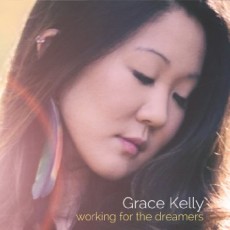
Grace Kelly was born Grace Chung on May 15, 1992 in Wellesley, Massachusetts of Korean ancestry. A move to Brookline, Massachusetts, mother remarried and a legal adoption and her name became Kelly. Growing up in an environment of music appreciation of American standards, Broadway and jazz.
Hearing Stan Getz during the ritual Sunday brunch she fell in love with the sound, however, too young to play saxophone she started taking classical piano lessons at age six. She hanged to jazz because she liked making up her own melodies. She wrote her first song On My Way Home at age seven, took up the clarinet in 4th grade the switched to saxophone later the same year and by 12 recorded her debut CD Dreaming. While in the recording stages Kelly met An Hampton Callaway who offered to write liner notes for her first CD.
At age 14, Kelly appeared as special guest artist for two nights with Keith Lockhart and the Boston Pops, at 15 with Wynton Marsalis and the Lincoln Center Jazz Orchestra and the following year for the Let Freedom Swing Celebration of America concert with Dave Brubeck as part of the inaugural festivities for President Obama. She left Brookline High at 16, got her GED, recorded her CD with Lee Konitz titled GRACEfulLEE, attended Berklee College of Music on full scholarship and graduated in 2011.
She has studied with Lee Konitz, Greg Osby, Jerry Bergonzi, James Merenda, George Garzone, Jeremy Udden and Allan Chase; played National Anthem for the Celtics preseason and playoff games, and has opened the Newport Jazz Festival in 2010.
Her list of collaborations is extensive but includes Harry Connick, Esperanza Spalding, Kenny Barron, Teri Lyne Carrington, Chris Potter, Dianne Reeves, Marian McPartland, Adam Rogers, Bob Dorough, Frank Morgan and Phil Woods among others. She has to date amassed more than two-dozen awards, recorded 10 sessions as a leader and continues to perform at some of the 600 concerts, clubs and festivals all over the world.

Inspire A Young Mind
Daily Dose Of Jazz…
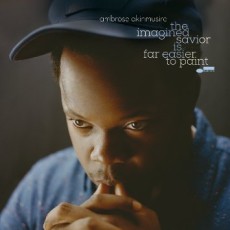
Ambrose Akinmusire was born May 1, 1982 and raised in Oakland, California. A member of the Berkeley High School Jazz Ensemble, he caught the attention of saxophonist Steve Coleman who was visiting the school to give a workshop. Coleman hired him as a member of his Five Elements band for a European tour and the young trumpeter was also a member of the Monterey Jazz Festival’s Next Generation Jazz Orchestra.
Ambrose studied at the Manhattan School of Music before returning to the West Coast to obtain a master’s degree at the University of Southern California and attend the Thelonious Monk Institute of Jazz in Los Angeles. In 2007, he won the Thelonious Monk International Jazz Competition, the Carmine Caruso International Jazz Trumpet Solo Competition and released his debut recording Prelude…To Cora on the Fresh Sound New Talent label.
Moving back to New York City he began performing with Vijay Iyer, Aaron Parks, Esperanza Spalding and Jason Moran, taking part in Moran’s innovative multimedia concert event In My Mind: Monk At Town Hall, 1957. It was also during this time that he caught the attention of Bruce Lundvall, President of Blue Note Records. Akinmusire released his sophomore album as a debut on the Blue Note label in 2011 titled When The Heart Emerges Glistening, featuring his quintet of tenor saxophonist Walter Smith III, pianist Gerald Clayton, bassist Harish Raghavan and drummer Justin Brown. His third album, The Imagined Savior Is Far Easier To Paint was released in 2014.
Trumpeter Ambrose Akinmusire has won the North Sea Jazz festival Paul Acket award and has worked with Kendrick Lamar, Aaron Parks, Sara Gazarek, Alan Pasqua, Mike Ladd, Josh Roseman, David Binney, John Escreet, Le Boeuf Brothers, Vince Mendoza, Jack DeJohnette and Dana Stephens. He continues the tradition of performing and recording.
Inspire A Young Mind
More Posts: trumpet
Requisites
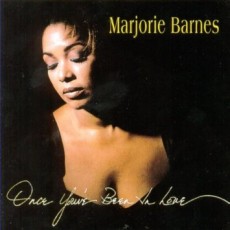
Once You’ve Been In Love by Marjorie Barnes was originally produced with twelve classic standards in the 1990s as a promotional piece to get gigs in Europe, it has since been made available to a wider audience. The vocalist was born and raised in New York City, has had starring roles on Broadway in Hair and Dreamgirls, sang with the Fifth Dimension for two years, and then made Europe her home – living in London, Paris, Vienna and Holland from 1978 to 2000. She moved back to the States working alongside Frank Sinatra, Sammy Davis Jr., Lena Horne, Billy Eckstine, Marcus Miller and Mel Lewis. In 2012 she returned to Europe making her home once again in Holland.
A rare find, temporarily unavailable on major purchase sites, however, there are a few available online from different sellers that can be snatched up.
Producer: Marjorie Barnes
Playing Time: 47.5 Minutes
Songs: Watch What Happens, Fascinating Rhythm, Once You’ve Been In Love, The Surrey With The Fringe On Top, He’s My Guy, Isn’t It A Pity, I’ve Got The World On A String, The Beauty And The Beast, A Little Tear, I Can’t Believe That You’re In Love With Me, No More Blues, Never Will I Marry

More Posts: collectible,vocal
Daily Dose Of Jazz…
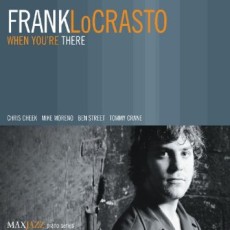
Frank LoCrasto was born and raised in Texas on March 7, 1983. Studying piano during his childhood, his influences include Erroll Garner, Raymond Scott, Ennio Morricone, Kraftwerk and Brian Eno. After moving to New York in 2001 to attend the New School, he went on to work as a sideman with jazz musicians such as Pat Martino, Greg Osby and Jeremy Pelt.
At twenty-three he released his debut album When You’re There on the Maxjazz label and his second release five years later, El Dorado, which he recorded in his Brooklyn basement apartment, is layered with vintage synthesizers and old timey pianos.
An accomplished composer and arranger, he is a member of the Jeremy Pelt Quartet, Frank is also a member of Rumblefoot, Breastfist, Yost, and plays regularly with Kat Edmonson and James Iha. His solos exhibit his ample technique and unfettered expressiveness. At 32, he continues to build his talent as a sideman profusely performing, recording and touring.
Give The Gift Of Knowledge
More Posts: piano
Daily Dose Of Jazz…
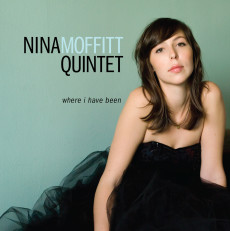
Nina Moffitt was born on March 3, 1987 in Brooklyn, New York and began piano lessons at the age of five. She took up percussion in her father’s church ensemble and finally became a vocalist by leading the church congregation throughout her formative years. Attending the LaGuardia Arts High School of Performing Arts in Manhattan, she studied classical music, gospel, jazz, and new music composition. Simultaneously she studied jazz voice privately at the Brooklyn Conservatory of Music.
By 2005 Moffitt was singing with the All City Jazz Band at Lincoln Center, was granted an Honorary Mention from the National Foundation for Advancement in the Arts in the category of jazz voice, and performed as a backup singer with pop star Josh Groban.
Graduating from Oberlin College with honors for her work in cultural and linguistic anthropology, not only did Nina study with world renowned Oberlin Conservancy professors like Lorraine Manz and Marcus Belgrave, she performed with the Oberlin Jazz Ensemble for four years, led jazz worship services at First Church of Oberlin and Trinity Church in Cleveland.
She cites Joni Mitchell, Sarah Vaughan, Wayne Shorter, and Nina Simone as her influences and has added bossa nova phrasing to her arsenal having studied Portuguese in Brazil. Vocalist Nina Moffitt has recorded her debut album Where I Have Been with her quintet and continues to perform with her band in the New York area.
Give A Gift Of Jazz – Share
More Posts: vocal