

Daily Dose Of Jazz…
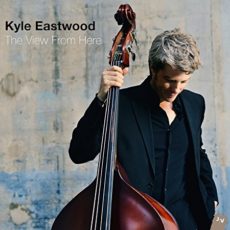
Kyle Eastwood was born on May 19, 1968 in Los Angeles, California and is the son of actor Clint Eastwood. Growing up with a father’s love of jazz for the music of Miles Davis, Dave Brubeck, Thelonious Monk and the Stan Kenton Big Band, he developed a similar love for jazz that was prominent in the home. This was coupled with a father and mother who played piano and a and grandmother who taught music at Northwestern University. Attending several Monterey Jazz Festivals in his youth with his dad, got him access backstage to meet people who a great influence on him like Dizzy Gillespie and Sarah Vaughan.
Eastwood began playing electric bass in high school, learning R&B, Motown, and reggae tunes by ear. After studying with French bassist Bunny Brunel, he began playing gigs around the New York and Los Angeles areas, eventually forming the Kyle Eastwood Quartet. In 1996 he contributed to Eastwood After Hours: Live at Carnegie Hall performance and ultimate recording, then two years later released his debut CD as a leader, From There to Here, on the Sony label. He moved on to record with the UK’s Candid Records and then to Rendezvous.
He has contributed music to nine films The Rookie, Mystic River, Million Dollar Baby, Flags of Our Fathers, Changeling, Gran Torino, Invictus and J. Edgar and has been nominated for a Chicago Film Critics Association Award for Original Score for the film Letters from Iwo Jima. He has also contributed to the score of the documentary Homme Less about homeless photographer Mark Reay. Bassist and bass guitarist Kyle Eastwood currently has eight albums released, tours around the world playing clubs and festivals and continues to write, compose, arrange and perform.
Sponsored By


#preserving genius
Daily Dose Of Jazz…
Mike Zwerin was born May 18, 1930 in New York on May 18, 1930. He studied at the High School of Music and Art and began leading bands in his teens, employing several up-and-coming musicians. At the age of 18, while on summer break from the University of Miami, he was the trombonist in Miles Davis’s nonet at the Royal Roost club in New York. This band was recorded performing the live sessions in 1948 and its music the following year culminated in the album that became immortalized as Birth of the Cool.
He abandoned his musical life for much of the 1950s but after a spell in France he returned to New York in 1958 and played the trombone in several big bands. However, in 1960 after his father’s death, he returned to the world of business and he took over as president of his dad’s company, the Capitol Steel Corporation. Over the next four years Mike kept a hand in jazz, working in John Lewis’s big band Orchestra USA, with whom he recorded and directed a small group. He also worked briefly with pianist Earl Hines but by the mid-1960s he withdrew from the business.
Zwerin moved to London in 1969 and then, in 1972, to Paris, which would be his home for the rest of his life. Nevertheless, he kept his hand in as a trombonist throughout the 1980s, working with his fellow expatriate Hal Singer and with the guitarist Christian Escoudé. In 1988 he toured with the Big Band Charles Mingus, played briefly with t Swiss bandleader George Gruntz and played with the French fusion band Telephone.
As a music critic and columnist he wrote for the Village Voice, Down Beat, Rolling Stone, Penthouse, the International Herald Tribune and Bloomberg News. He authored several books about his own life in the world of jazz, most notably The Silent Sound of Needles, about his struggles with drug addiction, Close Enough for Jazz and The Parisian Jazz Chronicles: An Improvisational Memoir, but his most ambitious book may be La Tristesse de Saint Louis: Swing Under the Nazis that included the story of the Kille Dillers and the Ghetto Swingers, two bands that played in concentration camps, and how jazz survived across Europe though banned by the Nazis and labeled degenerate music.
Throughout his career trombonist and bass trumpeter Mike Zwerin would perform and record with Miles Davis, Maynard Ferguson, John Lewis, Archie Shepp, Claude Thornhill and Bill Russo, arrange, direct and produce an album of Kurt Weill songs with the Sextet of Orchestra U.S.A., before passing away after a long illness on April 2, 2010 in Paris, France at the age of 79.
Sponsored By

#preserving genius

Daily Dose Of Jazz…
Warren Smith was born on May 17, 1908 in Middlebourne, West Virginia and and taught by hi s multi-instrumentalist father, he began playing piano from age seven. He learned cornet and saxophone before settling on the trombone.
Starting out in Harrison’s Texans, a territory band in the 1920s, Smith followed with an extended half-dozen year run in Abe Lyman’s employ in the 1930s. He worked with Bob Crosby in Indianapolis, Indiana during late in the 1930s before returning to work with Lyman briefly and closing out the decade.
Moving to Chicago, Illinois in the Forties, he settled in with Bud Jacobson and Bob Scobey, before heading to the West Coast to work with Jess Stacy and Lu Watters. In 1955 he toured with Duke Ellington, then played with Joe Darensbourg from 1957 to 1960. Through the Sixties he performed with Wild Bill Davison and Red Nichols.
On August 28, 1975 in Santa Barbara, California swing and mainstream trombonist Warren Smith, who never led a recording session but was fortunate to be able to make his living performing, passed away of natural causes at age 67.
Sponsored By

#preserving genius
Daily Dose Of Jazz…
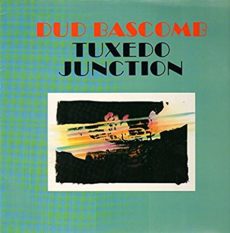
Wilbur Odell “Dud” Bascomb was born on May 16, 1916 in Birmingham, Alabama, the youngest of a family of ten children, and brother of tenor saxophonist Paul Bascomb. He played piano as a child but settled on trumpet, first playing with Erskine Hawkins at the Alabama State Teachers’ School, now Alabama State University in 1932. It was here that Hawkins led the Bama State Collegians band. Remaining with Hawkins until 1944, he soloed with him on many of his most well-known recordings.
Eventually he moved on to play in his brother’s septet, that became a big band later in the decade. He played briefly with Duke Ellington in 1947. During the 1950s Bascomb played for three years at Tyle’s Chicken Shack in New Jersey, leading a quintet which counted Lou Donaldson among its members.
He toured Japan three times with Sam Taylor and Europe with Buddy Tate in the 1960s, in addition to touring and recording with James Brown. He recorded sparingly as a leader and his Savoy Records sessions in 1959-60 were not issued until 1986.
Trumpeter Dud Bascomb passed away on December 25, 1972 in New York City. He was inducted into the Alabama Jazz Hall of Fame in 1979.

#preserving genius
More Posts: trumpet
Daily Dose Of Jazz…
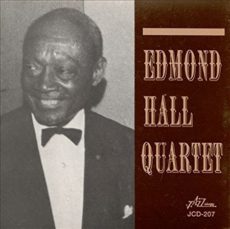
Edmond Hall was born on May 15, 1901 in Reserve, Louisiana, into a musical family. His father, Edward, played the clarinet in the Onward Brass Band, joined by Edmond’s maternal uncles, Jules Duhe on trombone, Lawrence Duhe on clarinet, and Edmond Duhe on guitar. The Hall brothers, Robert, Edmond, and Herbert, all became clarinetists, but Edmond was first taught guitar by his uncle Edmond. When Hall finally picked up the clarinet, he played it within a week.
Tired of working as a farm-hand, by 1919 he left for New Orleans where he signed up with the band of Bud Rousell, then with trombonist Jack Cary and blues cornetist Chris Kelley. His first big break came in late 1920, when he went to a dance at Economy Hall, saw Buddy Petit and discovered his clarinet player had left the band and the following Saturday Hall was sitting in with Petit’s band as a replacement until 1922.
Arriving in Pensacola, Florida in 1923, there was a series of band as he joined Lee Collins, then Mack Thomas, the Pensacola Jazzers, where Hall met the young trumpeter Charles “Cootie” Williams, on to “Eagle Eye” Shields, the Alonzo Ross DeLuxe Syncopators, finally in 1928 with pianist Arthur “Happy” Ford.
1929 saw Edmond moving back to New York he joined Charlie Skeet’s band, followed by Claude Hopkins and an invitation to play the Savoy Ballroom. By 1935 he left Hopkins and took residency in Billy Hicks’ Sizzling Six. Hall’s new sound on the clarinet led him to recording with the big stars and in 1937 he had his first recording session with Billie Holiday, sitting alongside tenor saxophonist Lester Young. Leaving Hicks he stepped into Café Society, joining Joe Sullivan’s band in late 1937. In between the regular job at the Cafe Society he recorded with Bud Freeman, Teddy Wilson, Charlie Christian, Henry “Red” Allen, J.C. Higginbotham, Art Tatum, Big Joe Turner, Hot Lips Page, Zutty Singleton, Meade Lux Lewis, Big Sid Catlett, Josh White, Ida Cox, Coleman Hawkins, Helen Ward, Vic Dickenson, Sidney de Paris, Wild Bill Davison, Eddie Heywood, Roy Eldridge and Jack Teagarden among others.
In 1941 Edmond led his first recording session as a leader, joined Teddy Wilson’s outfit, and made recordings as Edmond Hall’s Blue Note Jazzmen, the Edmond Hall Sextet, the Edmond Hall Celeste Quartet, Edmond Hall’s Star Quintet, Ed Hall and the Big City Jazzmen, and Edmond Hall’s Swingtet. Very popular among the musicians and critics and was frequently invited to the New York Town Hall Concerts led by Eddie Condon.
By 1944 Hall began fronting his own band, becoming a draw for Café Society. More recording dates followed for the famous Commodore Records and Blue Note labels. While business at the Café Society was exceedingly good, Hall appeared at Town Hall Concerts in between. Hall relocated successfully with his band to the Café Society Uptown and would also play for World War II servicemen.
Throughout his career he would perform with pianist George Wein, Louis Armstrong’s All Stars, tour Europe, settle in Los Angeles, California to shoot the film High Society with Grace Kelly and Bing Crosby, and appear on the Ed Sullivan Show. In 1952, Hall, Buzzy Drootin and Ralph Sutton appeared as the Ralph Sutton Trio in Saint Louis, where they played the Encore Lounge for several weeks and were the first mixed trio there. He received the Esquire Magazine Silver Award for clarinet, a certificate for nomination as one of the outstanding jazz artists of 1961 from Playboy Magazine and was awarded as the best Clarinetist by the English Melody Maker.
Clarinetist and bandleader Edmond Hall, who also played alto and baritone saxophones and is perhaps best known for the 1941 chamber jazz song Profoundly Blue, which is regarded as a pre-World War II jazz classic, passed away on February 11, 1967 in Boston, Massachusetts.
Sponsored By

Voices From The Community
#preserving genius