


Daily Dose Of Jazz…
Gordon “Specs” Powell was born June 5, 1922 in New York City. He started out musically on the piano but by the late 1930s he became exclusively a drummer. He began in the swing era working with Edgar Hayes in 1939, Benny Carter in 1941-42 and Ben Webster.
He started working as a staff musician for CBS in 1943 and by the early 60s he was lead drummer on The Ed Sullivan Show. He only led one recording session for Roulette Records in 1957 titled “Movin’ In”.
Remaining active until the 1970s, Specs Powell, jazz drummer and percussionist that worked in the bebop and hard bop idioms was honored by the Big Band and Jazz Hall of Fame in 2004.
Though he passed away three years later on September 15, 2007 at the age of 85, Specs Powell selected discography lists his orchestra and big band albums, “Movin’ In” and “Big Band Jazz” and left behind an impressive albeit a selected collection of recordings with Teddy Wilson, Jess Stacy, Red Norvo, Erroll Garner, Shirley Scott, Reuben Wilson, Bernard Purdie and Billy Butler among others.

Dose A Day-Blues Away
More Posts: drums
Daily Dose Of Jazz…
Morgana King was born Maria Grazia Morgana Messina on June 4, 1930 in Pleasantville, New York but grew up in New York City at 145th & Amsterdam. Around 13, she began studying acting with the Shubert Theatre family, discovered her vocal talents and received a scholarship to the Metropolitan School of Music.
By sixteen she heard jazz and fell in love with the big bands of Benny Goodman, Harry James but they became overshadowed by Duke Ellington, Erskine Hawkins and Benny Carter. It was during this period she changed her name to Morgana King and her professional career began on a stage in Greenwich Village.
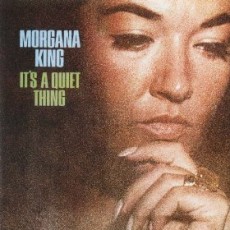
Morgana’s unique phrasing and multi-octave range has made her a formidable interpreter that was expressively evident on her 1956 debut release “For You, For Me, For Evermore”. Her singing career would go on to span four decades with such albums as “It’s A Quiet Thing”, “Wild Is Love” and “Gemini Changes” and headlining clubs, concert halls and hotels throughout the U.S., Europe, Australia and South America with a limited list of musicians she has performed and recorded with.
She is also known for her acting debut playing Carmela Corleone in The Godfather, singing “Eh, Cumpari” and reprising the role in the Godfather Part II. Retiring from show business in 1993, her body of work that includes over thirty albums exhibits her four-octave range, her lyrical signature and her refined ease of evoking a sentiment not just in jazz but also throughout her expanded genres. Morgana King passed away on March 22, 2018 in Palm Springs, California leaving us with her catalogue of music that includes her 1964 signature song “A Taste of Honey”.
Inspire A Young Mind
More Posts: vocal
Daily Dose Of Jazz…
Al Harewood was born on June 3, 1923 and as a child Harewood was a gifted tap dancer that gave recitals and was affiliated with Bill “Bojangles” Robinson’s school of dance. With his older brother’s drum unoccupied when he was drafted into the Army during WWII, He began his apprenticeship. Having contracted pneumonia as a child and exempted from military service, Al began his illustrious career as a jazz drummer.
While working at a munitions armory during the war, Harewood taught himself the drums, finding uncommon aptitude for playing the traps with fire and swing. He began listening to the major percussion innovators of the time: Max Roach, Art Blakey, Philly Joe Jones, and the new bop styling’s of Kenny Clarke and began playing club dates around New York.
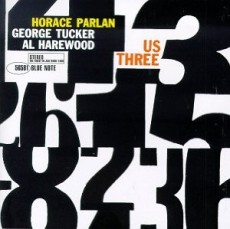
Harewood plays very melodically with rhythmic punches, a talent that made him an expert at feeding and supporting each soloist while never getting in the way of a horn player’s melodic development. He has worked with J. J. Johnson, Kai Winding, Art Farmer, Gigi Gryce, Benny Golson, Horace Parlan, Ike Quebec, Grant Green, Lou Donaldson, Curtis Fuller, Stan Getz, Carmen McRae, Mary Lou Williams, Stanley Turrentine, Shirley Scott and Dexter Gordon to name a few.
By age 88, Al Harewood maintained a wonderful sense of humor, dignity and courage as one of the original creators of modern jazz drumming. He played in New York’s clubs each and every night at the very least in spirit if not influence. He spent his time between New York and his family home in Barbados until his passing on March 13, 2014 at the age of 90.
Give A Gift Of Jazz – Share
More Posts: drums
Daily Dose Of Jazz…
Marty Napoleon was born on June 2, 1921 in Brooklyn, New York and studied piano as a child. His early years in 1946 he worked with Gene Krupa and went on to work with his uncle, trumpeter Phil Napoleon in his Original Memphis Five.
He is perhaps best known for replacing Earl Hines in Louis Armstrong’s All Stars in 1952. During the decade of the 50s he also worked with his brother Teddy Napoleon, also a pianist. From 1966-1971 Marty was once again reunited and performing with Louis Armstrong.
Napoleon recorded as a sideman with Kai Winding, Charlie Ventura, Rex Stewart, Carl Barry, Herbie Fields, Teddy Reig, Cozy Cole and Allen Eager.
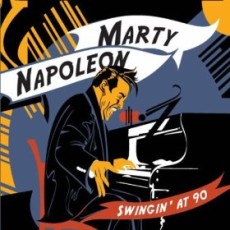
Marty Napoleon released one album as a leader for Bethlehem Records titled Marty Napoleon Swings and Sings, recorded with his trio “The Big Three”, “Jazz From Then Till Now” and “We 3” for other labels, and in 2012 recorded and released “Swingin’ at 90. At age 93 he currently resides in New York.
Jazz Is Global – Share
More Posts: piano
Daily Dose Of Jazz…
Hal McKusick was born on June 1, 1924 in Medford, Massachusetts. Hal moved with his family at age 3 to nearby Newton and at age 8, Hal’s mother bought him a clarinet as a Christmas present, insisting first on a vow of daily practice sessions and weekly lessons. With clarinet in hand, Hal practiced relentlessly and took lessons from schoolteacher Frank Tanner, who used him in the school band on clarinet and alto saxophone at age 9. Sight-reading came quickly to Hal, and by age 15, he was playing Boston’s burlesque house, the Old Howard Theater.
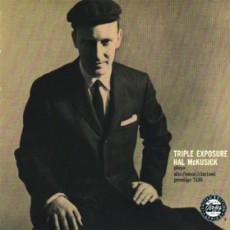
By the 40s and WWII McKusick was playing with Les Brown and moved through the decade playing with Boyd Raeburn and then Claude Thornhill. In the early 1950s he worked with Terry Gibbs and Don Elliott and in 1957 released his first album as a leader for Prestige titled Triple Exposure. As a sideman he sat in on recording sessions with groups led by George Russell and Jimmy Giuffre; worked with Bill Evans, Art Farmer, Paul Chambers, Connie Kaye, Lee Konitz and John Coltrane.
During the 60s he joined the CBS orchestra playing alongside the likes of Hank and Thad Jones, playing Carnegie Hall and Lincoln Center behind Judy Garland, Sarah Vaughan, Peggy Lee, Nat King Cole and Barbara Streisand. In the 70s he moved east to New York and throughout the 70s and 80s he produced weekend performances at Jazz At Moon in Easthampton that led to forming his nonet featuring Clark Terry, Art Farmer, Percy Heath, Jim Hall, Mike LeDonne, Hank Jones, Jim McNeely Jerry Dodgion and others.
Hal McKusick, alto saxophonist, clarinetist, flautist, composer and educator taught at the Ross School in East Hampton, New York and also restored and sold antiques, restored and built Shaker furniture both for Bloomingdales and private commissions. On April 11, 2012 he passed away of natural causes at the age of 87.
Jazz Is Global – Share