

Daily Dose Of Jazz…
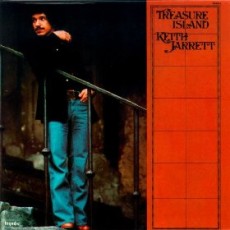
Keith Jarrett was born on May 8, 1945, in Allentown, Pennsylvania and had significant early exposure to music. He possessed absolute pitch and displayed prodigious musical talents as a young child. He began piano lessons just before his third birthday, and at age five he appeared on a TV talent program and by seven had given his first classical piano recital. During his teens he began leaning towards jazz, turned down classical training in Paris and attended Berklee College of Music
He started his career with Art Blakey and after his tenure as a Jazz Messenger moving on to play with Charles Lloyd and Miles Davis. Since the early 70s he has enjoyed a great deal of success in jazz, jazz-fusion, and classical music; as a group leader and a solo performer. His improvisations draw not only from the traditions of jazz but from other genres as well, especially Western classical music, gospel, blues, blues and ethnic folk music.
Jarrett has received the Polar Music Prize, the Leonie Sonning Music Prize, was inducted into the Down Beat Down Beat Hall of Fame, played with Jack DeJohnette, Charles Lloyd, Charlie Haden, Paul Motian, Dewey Redman, Airto Moreira, Palle Danielson and Jan Garbarek among others.
Jarrett’s compositions and the strong musical identities of the group members gave this ensemble a very distinctive sound. The quartet’s music is an amalgam of free jazz, straight-ahead post-bop, gospel music, and exotic, Middle-Eastern-sounding improvisations. He has played as a soloist, trio, returned also to classical music, incorporates vocalizations of grunts, squeals and tuneless singing. He continues to compose, record, perform and tour.
In 2003, Jarrett received the Polar Music Prize, the first (and to this day only) recipient not to share the prize with a co-recipient,[1] and in 2004 he received the Leonie Sonning Music Prize. In 2008, he was inducted into the Down Beat hall of Fame in the magazine’s 73rd Annual Readers’ Poll. He continues to tour and record.

Take A Dose On The Road

Daily Dose Of Jazz…
Teresa Brewer was born Theresa Veronica Breuer on May 7, 1931 in Toledo, Ohio and at the age of two her mother took her to audition for a radio program, “Uncle August’s Kiddie Show” on Toledo’s WSPD, performing for cookies and cupcakes. Although she never took singing lessons, she took tap dancing lessons and from age five to twelve, she sang and danced on the “Major Bowes Amateur Hour,” then a popular touring radio show.
At the age of 12, Theresa returned to Toledo, ceased touring, went back to school and continued to perform on local radio. By 1948 at 16 she won a local competition, went to New York, won a number of talent shows and played New York nightclubs including the Latin Quarter.
Discovered by agent, Richie Lisella she signed with London Records and in 1949 recorded her first session that sold over a million copies and “Music! Music! Music!” became her signature song.
In 1951 she switched labels, going to Coral Records and had a string of hits. Since she never learned to read music, she had demos sent to her to learn the melodies of the songs she would record. During those years she continued to play nightclubs in New York, Chicago, Las Vegas and elsewhere. In the mid-50s, she did a number of covers of rhythm and blues and country songs, and co-wrote “I Love Mickey” for Yankees center fielder Mickey Mantle, appeared in the musical “Those Redheads From Seattle” stealing the show fro veterans Rhonda Fleming, Agnes Moorehead and Guy Mitchell.
By 1962 she switched to Philips Records, recorded many singles and albums over a five-year period, also re-recorded her earlier material with new arrangements and instrumentation. In 1977 Teresa guest starred on The Muppet Show and Sha Na Na.
Throughout the ‘80s and ‘90s she re-emerged as a jazz singer paying tribute to Bessie Smith, Louis Armstrong, Fats Waller and Irving Berlin. She recorded with Count Basie, Duke Ellington, Earl “Fatha” Hines and Bobby Hackett.She recorded nearly 600 song titles, received a star on the Hollywood Walk of Fame and inducted into the Hit Parade Hall of Fame.
Singer Teresa Brewer passed away on October 17, 2007 in New Rochelle, New York of Progressive Supranuclear Palsy, a rare degenerative brain disease at 76.
Dose A Day-Blues Away
More Posts: vocal
Daily Dose Of Jazz…
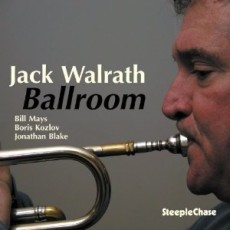
Jack Walrath was born on May 5, 1946 in Stuart, Florida and began playing the trumpet at the age of nine while living in Edgar, Montana. He graduated from Joliet High School in 1964 and attended the Berklee College of Music. Pursuing a composition diploma program instead of a full degree program, he concentrated specifically upon music classes. During his Berklee years he backed a number of R&B singers in the Boston and Cambridge areas, gigged with his fellow students and worked in the band Change with bassist Gary Peacock.
In 1969 Jack relocated to the West Coast, found work in the Los Angeles jazz scene, became a member of the band Revival, joined the West Coast Motown Orchestra, toured with Ray Charles and by the next year was back in New York City working with mainstream and Latin jazz bands. By 1974 he met and joined Charles Mingus’ quintet that broke new ground in free jazz and non-chordal improvisation. He continues the legacy working with Mingus Dynasty and the Charles Mingus Big Band.
Walrath has been a sideman for such luminaries as Miles Davis, Quincy Jones, Larry Willis, Bobby Watson, Hal Galper, Sam Rivers, Mike Longo, Elvis Costello, Richie Cole and others. He has worked with the WDR Big Band, the Jazz Tribe and the Charlie Persip Superband. He has led ensembles under the names of The Jack Walrath Group, Wholly Trinity, Hard Corps, The Masters of Suspense, and The Jack Walrath Quintet.
Post-bop jazz trumpeter Jack Walrath has amassed a catalogue of twenty-six albums as a leader and 28 as a sideman; has been nominated for a Grammy, received composition grants from the National Endowment for the Arts, has been commissioned to compose for symphony to solo piano and continues to conduct seminars, master classes, music camps and clinics around the world. He has also written an instruction book, 20 Melodic Jazz Studies for Trumpet, and is currently working on an autobiography, CD and record guide.
More Posts: trumpet
Daily Dose Of Jazz…
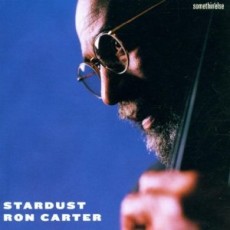
Ron Carter was born May 4, 1937 in Ferndale, Michigan and started playing the cello at the age of 10, but when his family moved to Detroit, he ran into difficulties regarding the racial stereotyping of classical musicians and instead moved to bass. He attended Cass Technical High School and later the Eastman School of Music, played in the later Philharmonic Orchestra. He received his bachelor’s degree at Eastman in 1959, and in 1961 a master’s degree in double bass performance from the Manhattan School of Music.
His first jobs as a jazz musician were with Jaki Byard and Chico Hamilton and made his first records were made with Eric Dolphy and Don Ellis in 1960. Ron led his first date as leader, “Where?”with Dolphy and Mal Waldron and a date “Out There” with Dolphy, George Duvivier and Roy Haynes playing advanced harmonies and concepts were in step with the third stream movement. He truly came to fame in the early ‘60s in the second great Miles Davis quintet with Herbie Hancock, Wayne Shorter and Tony Williams.
Over the course of his career, Carter who is also an acclaimed cellist has appeared on over 2,500 albums make him one of the most-recorded bassists in jazz history. He has played with Sam Rivers, Freddie Hubbard, Duke Pearson, Lee Morgan, McCoy Tyner, Andrew Hill, Horace Silver, Joe Henderson, Hank Jones and too many more to name.
He was a member of the New York Jazz Quartet, the Classical Jazz Quartet, was a Distinguished Professor Emeritus of the Music Department of The City College of New York after twenty years teaching and received an honorary Doctorate from the Berklee College of Music. He is currently on the faculty of the Julliard School teaching bass in the school’s Jazz Studies program, sits on the Advisory Committee of the Board of Directors of The Jazz Foundation of America.
Inspire A Young Mind
From Broadway To 52nd Street
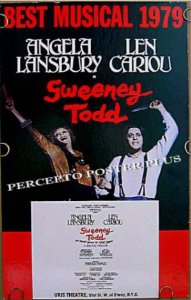
Sweeney Todd opened at the Uris Theatre on March 1, 1979 and ran for 557 performances. The musical starred Angela Landsbury and Len Cariou with music composed by Stephen Sondheim from which came the song Pretty Women that entered into the jazz pantheon. The show would also win Best Musical for that year.
The Story: The Demon Barber of Fleet Street was set in the 19th century London. Todd is a barber who dispatches his victims by pulling a lever as they sit in his barber chair. Todd “polishes them off”, slitting their throats with his straight razor before dispatching them into the basement via the revolving trapdoor. After Todd has robbed his dead victims of their goods, Mrs. Lovett, his partner in crime assists him in disposing of the bodies by baking their flesh into meat pies and selling them to the unsuspecting customers of her pie shop. Todd’s barbershop is situated at 186 Fleet Street and is connected to Mrs. Lovett’s pie shop by means of an underground passage.
Jazz History: The end of the 70s decade saw trumpet virtuoso Wynton Marsalis in New York and a hard bop revival was soon underway. Bassist and composer Charles Mingus dies in Mexico at the age of 56. Vocalese singer Eddie Jefferson dies on May 9 in Detroit, Michigan. A jam session at the Brecker brothers’ club will produce the group Steps Ahead. Gil Scott Heron is experimenting with a new form of music which involves spoken poetry set to music, similar to what will later be known as hip hop and rap; the first Sony Walkman (model TPS-L2) hits the market and two years later the word “Walkman” enters the dictionary, and the product changes listening habits forever.
Sponsored By

www.whatissuitetabu.com