

Daily Dose Of Jazz…
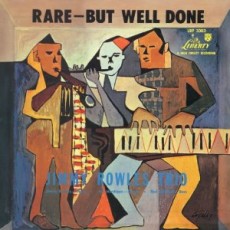
Jimmy Rowles was born James G. Rowles on August 19, 1918 in Spokane, Washington and studied at Gonzaga College. After moving to Los Angeles in 1942, he joined Lester Young’s group and also worked with Benny Goodman, Woody Herman, Les Brown, Tommy Dorsey, Tony Bennett and as a studio musician.
In the 1950s and 1960s, he frequently played behind Billie Holiday and Peggy Lee and in 1973, Rowles settled in New York City, where he performed and/or recorded with Zoot Sims and Stan Getz among others. He joined Ella Fitzgerald for nearly three years in 1981 succeeding Paul Smith as her accompanist first performing with her at the Mocambo nightclub in L.A.’s Hollywood district in late 1956. Jimmy appeared on several recording sessions with her in the 1960s and played on Fitzgerald’s final collaboration with Nelson Riddle, The Best Is Yet To Come in 1982.
In 1983, Jimmy worked with Diana Krall in Los Angeles, developing her playing abilities and encouraged her to add singing to her repertoire. He composed several jazz pieces, the best known being “The Peacocks”; accompanied jazz singer Jeri Brown in 1994 on the only album containing only his own compositions, A Timeless Place.
Pianist Jimmy Rowles, who released a number of albums under his own name and explored various idioms including swing and cool jazz, died from cardiovascular disease in Burbank, Los Angeles County, California, at the age of 78 on May 28, 1996.
More Posts: piano
Daily Dose Of Jazz…
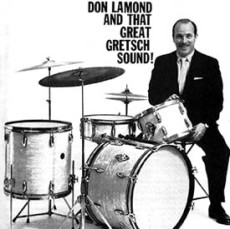
Don Lamond was born on August 18, 1920 in Oklahoma City, Oklahoma and attended the Peabody Conservatory in Philadelphia in the early ‘40s. He played with Sonny Durham and Boyd Raeburn at the outset of his career, and then took over Dave Tough’s spot in Woody Herman’s big band “First Herd” in 1945, remaining until the group disbanded at the end of 1946.
By 1947 he briefly freelanced with musicians including Charlie Parker, and then returned to duty under Herman in his Second Herd, where he remained until its 1949 dissolution. In the 1950s and 1960s Don found work as a session musician, recording in a wide variety of styles.
He performed and recorded with such jazz luminaries as Stan Getz, Zoot Sims, Johnny Smith, Benny Goodman, Ruby Braff, the Sauter-Finegan Orchestra, Sonny Stitt, Johnny Guarnieri, Jack Teagarden, Quincy Jones, George Russell and Bob Crosby among others.
Lamond recorded as a bandleader in 1962 with a tentet that included Doc Severinsen, played with George Wein’s Newport Festival band in the late ‘60s, and worked with Red Norvo, Maxine Sullivan and Bucky Pizzarelli in the Seventies. He put together his own swing group that recorded in 1977 and 1982, and recorded a quartet album with his wife Terry singing in 1981. Don Lamond, drummer, bandleader and sideman died on December 23, 2003 in Orlando, Florida at age 83.

More Posts: drums
From Broadway To 52nd Street
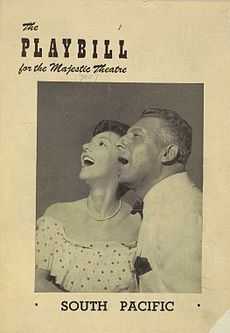
South Pacific hit the stage of the Majestic Theatre on April 7, 1949 in the first of a 1,925 performance run. Richard Rodgers and Oscar Hammerstein composed the music from the compositions “Happy Talk”, “Some Enchanted Evening” and “A Wonderful Guy” became jazz standards. The musical starred Enzio Pinza, Mary Martin, Juanita Hall, William Tabbert, Betta St. John and Myron Mccormick.
The Story: An American nurse stationed on a South Pacific island during World War II falls in love with a middle-aged French expatriate plantation owner but struggles to accept his mixed-race children. A secondary romance, between a U.S. lieutenant and a young Tonkinese woman, explores his fears of the social consequences should he marry his Asian sweetheart. The issue of racial prejudice is candidly explored throughout the musical, most controversially in the lieutenant’s song, “You’ve Got To Be Carefully Taught”. Supporting characters, including a comic petty officer and the Tonkinese girl’s mother, help to tie the stories together. However, Hammerstein’s lack of military knowledge hampered his writing that part of the script, so the director of the original production, Logan, assisted him, receiving credit as co-writer of the book.
Broadway History: The production won an unprecedented 10 Tony Awards including Best Musical, Best Score and Best Libretto. It is the only musical production to win Tony Awards in all four acting categories. Its original cast album was the bestselling record of the 1940s. Due to it’s 1,925 it was ushered into the blockbuster hall of fame surpassing it’s predecessors by more than 800 performance.
Sponsored By

www.whatissuitetabu.com
Daily Dose of Jazz…
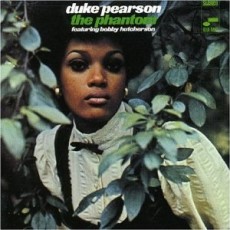
Duke Pearson was born Columbus Calvin Pearson, Jr. in Atlanta, Georgia on August 17, 1932. He first studied brass instruments at the early age of five, but dental issues forced him to pursue another instrument, the piano. His budding talent moved his uncle to give him the nickname Duke, a reference to Ellington. He attended Clark College while also playing trumpet in Atlanta area groups. In the early 50s he enlisted in the Army and continued to perform with different ensembles in Georgia and Florida prior to moving to New York in 1959.
In New York, Pearson gained the attention of trumpeter Donald Byrd, who saw him performing with the Art Farmer/Benny Golson Sextet. Shortly afterwards, Byrd asked him to join his newly formed band, the Donald Byrd-Pepper Adams Quintet. Pearson was also the accompanist for Nancy Wilson’s 1961 tour. During that same year, Pearson became ill before a Byrd-Adams show, and newcomer Herbie Hancock took the piano bench, eventually leading to Hancock’s permanent residency.
After the death of Ike Quebec in 1963, Pearson took over his position as A&R man for Blue Note. From that year until 1970, Pearson was a frequent session musician and producer for numerous Blue Note albums while also leading his own recording dates. This was odd, since Pearson also recorded with his co-led big band with Byrd for Atlantic Records; a stipulation he made sure was in his Atlantic contract. However, he was a big part in shaping the Blue Note label’s hard bop direction in the 1960s
Duke eventually retired from Blue Note, opting to teach at Clark College, tour with Carmen McRae and Joe Williams, and reforming his big band throughout the Seventies. Pianist and producer Duke Pearson passed away from complications due to multiple sclerosis on August 4, 1980 in his hometown of Atlanta.
More Posts: piano
Daily Dose of Jazz…
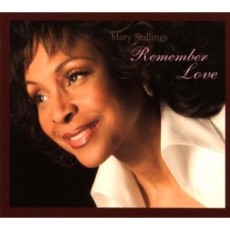
Mary Stallings was born August 16, 1939 in San Francisco, California, one of the eldest of 11 children growing up in the Laurel Heights district, where she still lives, starting as a gospel singer at the First AME Church. Her professional singing career began before she graduated from Lowell High School. Encouraged by her uncle, saxophonist Orlando Stallings, she listened closely to the great jazz singers.
As a teenager, Stallings was appearing in Bay Area nightclubs performing with Ben Webster, Cal Tjader, Earl Hines, Red Mitchell, Teddy Edwards and the Montgomery brothers. Before graduation from high school she joined R&B pioneer Louis Jordan’s Tympani Five. One night in the early Sixties at San Francisco’s Black Hawk nightclub, Dizzy Gillespie invited Ms. Stallings out of the audience and onto his bandstand to sing. By the time she was 26, Mary was playing the legendary Monterey Jazz Festival together with Gillespie in 1965.
The vocalist is perhaps best known for her 1961 collaboration with vibraphonist Cal Tjader on Cal Tjader Plays, Mary Stallings Sings on Fantasy, however, she went on to tour Asia, South America and perform stateside sharing billing with Billy Eckstine, Joe Williams, Tony Bennett and Ella Fitzgerald. From 1969 – ’72 she held a three-year residency as the Count Basie Orchestra girl singer.
After a short semi-retirement Stallings returned to full-time singing at the end of the eighties and finally came to the attention of the national jazz audience with her 1994 release of the aptly titled “I Waited for You” with the Gene Harris Quartet. She followed with Fine and Mellow, Spectrum, Manhattan Moods, Live at the Village Vanguard and Remember Love.
Over the years Mary has worked with jazz luminaries Monty Alexander, Paul Humphries, Ron Eschete, Hendrik Meurkens, Dick Oatts, Geri Allen, Ben Wolfe and Andy Simpkins. She has performed at major festivals being backed by the likes of Marcus Shelby’s Jazz Orchestra, Eric Reed Trio and Wycliffe Gordon and is the recipient of San Francisco’s SF Jazz Beacon Award. She continues to perform, tour and record.
More Posts: vocal