

Daily Dose Of Jazz…
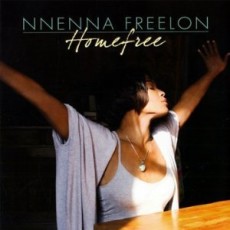
Nnenna Freelon, born Chinyere Nnenna Pierce on July 28, 1954 was raised in Cambridge, Massachusetts and sang in Union Baptist Church and St. Paul AME choirs as a young woman. She graduated from Boston’s Simmons College with a health care administration degree, worked at the Durham County Hospital in North Carolina and by 1990 had been singing for about seven years under her married name.
Attending the Southern Arts Federation conference presented her the opportunity to meet Ellis Marsalis, who became mentor and teacher. He passed her “package” on to George Butler of Columbia Records and in 1992 she was signed and dropped her debut. By 1994 Columbia ended their association and two-years later Concord picked her up.
The singer, composer, arranger, producer has been nominated for a five Grammy Awards, has performed and toured with the likes of Aretha Franklin, Ellis Marsalis, Al Jarreau, Clark Terry, Dianne Reeves, Terence Blanchard and Herbie Hancock, just to name a few. Nnenna has performed at venues such as Carnegie Hall, Montreux, Monterey and Ellington Jazz Festivals, the Kennedy Center, the Apollo Theatre and many more worldwide.
Aside from her many jazz and singing responsibilities, Freelon is the national spokesperson for the National Association of Partners in Education, an arts education organization with over 400,000 school/community partnership programs across the U.S; and her Babysong workshops teaches young mothers and healthcare providers the importance of the human voice for healing, nurturing and brain development in young children. She continues to perform, record and tour.

More Posts: vocal
From Broadway To 52nd Street
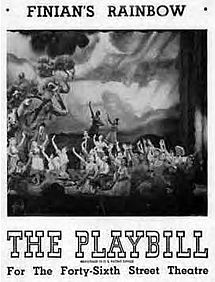
Finian’s Rainbow opened on January 10, 1947 at the 46th Street Theater starring Albert Sharpe, Ella Logan and David Wayne. Burton Lane and E.Y. Harburg composed the score for this stage production that ran 725 performances. The musical would be made into a movie some twenty-one years later to star Fred Astaire and Petula Clark. From this musical came the encores with the jazz classics Old Devil Moon, Look To The Rainbow and How Are Things In Glocca Morra.
The Story: An Irishman named Finian seeking his fortune steals a pot of leprechaun gold and arrives in America to plant it at Fort Knox and watch it grow. However, the leprechaun who follows him is threatened to become human if it is not returned. When they stop in Rainbow Valley, Finian’s daughter falls in love with a local. During his brief stay, Og the leprechaun, convinces racist Senator Rankin to turn over a new leaf by magically turning him black. The Senator recants and Finian gives back the gold and continues his wanderings.
Jazz History: Jazz was created in 1947 as an artist’s book of some one hundred prints based on paper cutouts by Henri Matisse, who was in his seventies and in poor health when he began this project. No longer able to draw or paint easily with a pencil or brush, he used scissors to cut out simple forms from brightly colored paper painted to his specifications with gouache. He then arranged them on another sheet of gouache-painted paper.
The original intention was for Matisse to illustrate poems written by a French author. As Matisse began, he used a large fluid brush to write notes to himself on construction paper about his thoughts as he created the images. The simple visual appearance of the words pleased Matisse, and he suggested using his roughly painted words in juxtaposition with the images, rather than the original poems. The publisher agreed.
None of the original copies were bound, and many of the purchasers arranged with prominent artists like Cocteau or famous graphic designers to create binders for the pages. Each of the pages is about 24 inches by 12 inches and folded in the center. The original edition of September 30, 1947 consisted of 250 sets of prints and sold for $120 each.
Sponsored By

www.whatissuitetabu.com
Daily Dose Of Jazz…
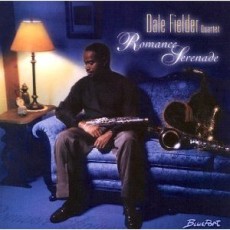
Dale Fielder was born July 27, 1956. Growing up in Midland, a small suburb outside Pittsburgh, Pennsylvania he studied oboe, bassoon and tuba in the school system and clarinet, saxophone, composition and arranging privately with Pittsburgh area tenor saxophonist Phillip Celli. An alumnus of the University of Pittsburgh Jazz Studies Program, Dale studied as an ethnomusicology major under Dr. Nathan Davis. His debut jazz performance was as a member of the Joe Harris Quartet, former drummer with the Charlie Parker Quintet and Dizzy Gillespie Orchestra.
Fielder is a recipient of a NEA grant, has completed his first large work “The Aquarian” for alto saxophone and chamber orchestra; spent eight years in NYC, moved to Los Angeles, began studying with alto legend, Charles McPherson. He has recorded a dozen CDs as a leader including the top-ten critically acclaimed “Dear Sir: Tribute To Wayne Shorter”; he received his first commission and wrote the extended eleven-movement jazz suite, “Ocean Of Love And Mercy”; was selected as BET’s 1999 Jazz Discovery winner and performs throughout Europe and Asia with his quartet.
If originality is the barometer of what truly makes a great jazz artist, Dale Fielder possesses a quality of originality in his voice. The multi-instrumentalist offers rare and obscure jazz classics to his audience coupled with his original compositions, giving the listener a variety of new concepts and presentations. He continues his performance, recording and touring.
More Posts: saxophone
Daily Dose Of Jazz…
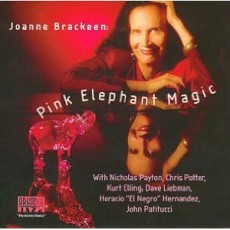
Joanne Brackeen was born Joanne Grogan on July 26, 1938 in Ventura, California but has used her married name throughout her career. The pianist and music educator attended the Los Angeles Conservatory of Music, but devoted her talents to jazz by imitating Frankie Carle albums. She was greatly influenced by Charlie Parker and bebop.
Her career began in the late 1950s while working with names like Dexter Gordon, Teddy Edwards, Harold Land, Don Cherry, Charlie Haden and Charles Lloyd. In 1969 Brackeen began to “take off” as she became the first woman to join Art Blakey’s Jazz Messengers.
In the 70s Joanne he played with Joe Henderson (1972-75) and Stan Getz (1975-1977) before leading her own trio and quartet. Brackeen established herself as a cutting edge pianist and composer through her appearances around the world, and her solo performances also cemented her reputation as one of the most innovative and dynamic of pianists. Her trios featured such noted players as Clint Houston, Eddie Gomez, John Patitucci, Jack DeJohnette, Cecil McBee and Billy Hart.
She has served on the grant panel for the National Endowment for the Arts, toured the Middle East with the US State Department as sponsor, had solo performances at Carnegie Hall and is a professor at the Berklee College of Music. With 25 albums to her credit, pianist Joanne Brackeen continues to perform and record.
More Posts: piano
Daily Dose Of Jazz…
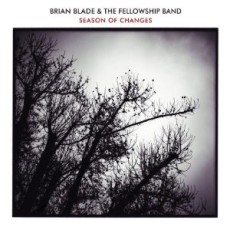
Brian Blade was born July 25, 1970 in Shreveport, Louisiana. The first music he experienced was gospel and songs of praise at the Zion Baptist Church pastored by his father, Brady L. Blade. Elementary school music appreciation classes were an important part of his development and at age nine, he began playing the violin. Inspired by his older brother, Brady, who had been the church drummer, he shifted his focus to the drums throughout middle and high school.
During high school Brian began listening to the music of John Coltrane, Charlie Parker, Miles Davis, Art Blakey, Thelonious Monk, Elvin Jones and Joni Mitchell. Upon graduation he attended Loyola University from 1988 through 1993, studying and playing with most of the master musicians living in New Orleans, such as Ellis Marsalis, George French and Alvin Red Taylor.
As a bandleader, he has released three albums under Brian Blade & the Fellowship Band and In conjunction with his leader duties Blade has been a member of Wayne Shorter’s most recent quartet and continues to record and perform with the likes of Joni Mitchell, Bill Frisell, Ellis Marsalis, Norah Jones, Emmylou Harris, Daniel Lanois, Bob Dylan, Dorothy Scott, Billy Childs, Chris Potter and David Binney, just to name a few. He has recorded for Verve, Columbia, Blue Note, Warner and Nonesuch record labels, and continues to amass a prestigious catalogue as a sideman and leader.
More Posts: drums