

Daily Dose Of Jazz…
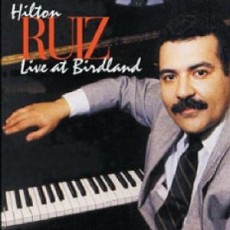
Hilton Ruiz was born in New York City on May 29, 1952 of Puerto Rican heritage. He began playing piano at the age of eight, and gigged with Freddie Hubbard and Joe Newman when he was young. Later, he was Rahsaan Roland Kirk’s main pianist from 1974 to 1977 and was featured on such records as The Case of the 3 Sided Dream in Audio Color and The Return of the 5000 Lb. Man.
Hilton recorded several solo albums between the 1980s and 2000s. On May 19, 2006, found unconscious on Bourbon Street in New Orleans, police concluded that he stumbled and fell and was not attacked. As a result of the accident, he remained in a coma until eventually passing away on June 6, 2006 at the age of 54.
Hilton Ruiz, jazz pianist steeped in Afro-Cuban music, was also a talented bebop musician.
More Posts: piano
Daily Dose Of Jazz…
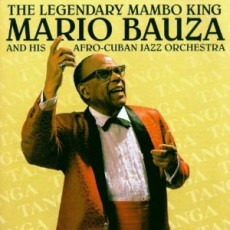
Mario Bauzá was born on April 28, 1911 in Havana, Cuba and was classically trained. By age nine he was playing clarinet in the Havana Philharmonic Orchestra and would stay there for the next three years. In 1925 he ventured to New York to record with Maestro Antonio Maria Romeu’s band “Charanga Francesca”. He was fourteen. Five years later he returned to New York and reputedly learned to play trumpet in two weeks to become a part of the Don Azpiazu Orchestra.
Bauzá became lead trumpeter and musical director for Chick Webb’s Orchestra by 1933, and it was during his time with Webb that Bauzá both met fellow trumpeter Dizzy Gillespie and discovered and brought into the band singer Ella Fitzgerald. 1938 saw Bauzá joining Cab Calloway’s band, later convincing Calloway to hire Dizzy as well, with whom Bauzá would continue to collaborate even several years after he left Calloway’s band in 1940. The fusion of Bauzá’s Cuban musical heritage and Gillespie’s advancements in bebop eventually culminated in the development of cubop, one of the first forms of what is commonly referred to as Latin jazz.
Bauzá became musical director of Machito and his Afro-Cubans in 1941, a band led by his brother-in-law, Frank Grillo, also known as Machito, and in 1942 he brought a young timbales player named Tito Puente into the fold. For the next 30 years Bauzá remained director of the band up until 1976 where he began working sparingly leading his own Afro-Cuban orchestra through the eighties and into the early 90s, where his last band made a guest appearance on The Cosby Show.
Mario Bauzá, who died in New York City on July 11, 1993, was one of the first musicians to introduce Latin music to the United States by bringing Cuban musical styles into the New York jazz scene. He was one of the most influential figures in the development of Afro-Cuban music, and his innovative work and musical contributions have many jazz historians to call him the “Founding Father of Latin Jazz”.

More Posts: bandleader,clarinet,trumpet
Daily Dose Of Jazz…
Milt Jackson was born Milton Jackson on January 1, 1923 in Detroit, Michigan. Discovered by Dizzy Gillespie and hired in 1946 for his sextet and also for his larger ensembles. He quickly acquired experience working with the most important figures in jazz of the era, including Woody Herman, Howard McGhee, Thelonious Monk and Charlie Parker.
In the Gillespie big band, Jackson fell into a pattern that led to the founding of the Modern Jazz Quartet. He was part of Gillespie’s small group swing tradition within a big band, consisting of pianist John Lewis, bassist Ray Brown and drummer Kenny Clarke. They would become a working group in their own right around 1950 and became the Milt Jackson Quartet but by the time Percy Heath replaced Ray Brown, in 1952 they became the Modern Jazz Quartet.
After some twenty years the MJQ disbanded in 1974 and Jackson pursued more money and his longed for improvisational freedom. The group reformed in 1981, however, and continued until 1993, after which Jackson toured alone, performing in various small combos, although agreeing to periodic MJQ reunions.
He recorded prolifically, his tunes, “Bluesology”, “Bags & Trane”, “The Late, Late Blues” and “Bag’s Groove” are jazz standards. He has recorded with J.J. Johnson, Roy McCurdy, B.B. King, John Coltrane, Wes Montgomery, Hank Mobley, Oscar Peterson, Stanley Turrentine, Don Sebesky, Cannonball Adderley and Ray Charles on the very short list.
A very expressive player, Bags, as he was affectionately known and referring to the bags under his eyes from staying up all night, differentiated himself from other vibraphonists in his attention to variations on harmonics and rhythm. He became one of the most significant vibist and was at the top of his game for 50 years playing bop, blues, and ballads with equal skill and sensitivity. Vibraphonist Milt Jackson, thought of as a bebop player but equally remembered for his cool swinging solos, left the jazz world on October 9, 1999 in Manhattan, New York.

More Posts: vibraphone