


Daily Dose Of Jazz…
Raymond Mantilla was born on June 22, 1934 in New York City and his early drumming inspiration came from Afro-Cuban jazz. He played with a number of Latin jazz ensembles from the 1950s including the La Playa Sextet, Xavier Cugat, Lou Perez, Rene Touzet, Miguelito Valdez and Monguito Conjunto.
He played behind Eartha Kitt in 1955 and by 1960 was touring with Herbie Mann and recording with Max Roach. He recorded with Al Cohn, Freddie Hubbard, Buddy Rich and Larry Coryell in the early Sixties and then led his own band in Puerto Rico from ’63 to ’69. This was followed with Ray becoming a founding member of Max Roach’s M’Boom percussion ensemble in 1970.
Mantilla was a member of Art Blakey’s Jazz Messengers in the 70s and toured the U.S., Europe, and Japan. He then recorded with Gato Barbieri, Joe Farrell, Richie Cole, Don Pullen, Charles Mingus, Walter Bishop, Jr., and Morgana King and toured Cuba with Dizzy Gillespie.
By the end of the decade he once again founded his own ensemble, the Ray Mantilla Space Station, and through the 1980s toured or recorded with Muhal Richard Abrams, Kenny Burrell, Shirley Scott and Warren Chiasson. In 1991 the noted session player and bandleader put together a new ensemble, the Jazz Tribe and has been recording, performing and touring ever since.

Take A Dose On The Road
More Posts: drums
Daily Dose Of Jazz…
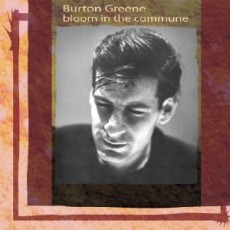
Burton Greene was born June 14, 1937 in Chicago, Illinois and rose to popularity in the Sixties on New York’s free jazz scene gigging with Alan Silva and Marion Brown. He credited the Free Form Improvisation Ensemble in 1963, then joined Bill Dixon’s and Cecil Taylor’s Jazz Composers Guild in ’64.
During this period he gigged with Rashied Ali, Albert Ayler, Gato Barbieri, Byard Lancaster, Sam Rivers, Patty Waters and others while recording two albums as a leader. Burton moved to Europe in 1969, first to Paris then to Amsterdam delving into the Klezmer medium and recording with several different group configurations into the 90s.
Since the mid-1990s Greene has often performed and recorded in New York and along the East Coast with a modest catalogue that includes eleven recordings.. His autobiography written over 20 years, Memoirs of A Musical Pesty-Mystic, was published in 2001. His recent performances and recorded groups based in New York include duets, trios, quartets and quintets with Mark Dresser, Roy Campbell, Lou Grassi, Adam Lane, Ed and George Schuller, Russ Nolan and Paul Smoker.
Take A Dose On The Road
More Posts: piano
Daily Dose Of Jazz…
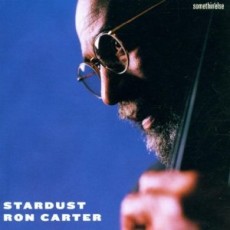
Ron Carter was born May 4, 1937 in Ferndale, Michigan and started playing the cello at the age of 10, but when his family moved to Detroit, he ran into difficulties regarding the racial stereotyping of classical musicians and instead moved to bass. He attended Cass Technical High School and later the Eastman School of Music, played in the later Philharmonic Orchestra. He received his bachelor’s degree at Eastman in 1959, and in 1961 a master’s degree in double bass performance from the Manhattan School of Music.
His first jobs as a jazz musician were with Jaki Byard and Chico Hamilton and made his first records were made with Eric Dolphy and Don Ellis in 1960. Ron led his first date as leader, “Where?”with Dolphy and Mal Waldron and a date “Out There” with Dolphy, George Duvivier and Roy Haynes playing advanced harmonies and concepts were in step with the third stream movement. He truly came to fame in the early ‘60s in the second great Miles Davis quintet with Herbie Hancock, Wayne Shorter and Tony Williams.
Over the course of his career, Carter who is also an acclaimed cellist has appeared on over 2,500 albums make him one of the most-recorded bassists in jazz history. He has played with Sam Rivers, Freddie Hubbard, Duke Pearson, Lee Morgan, McCoy Tyner, Andrew Hill, Horace Silver, Joe Henderson, Hank Jones and too many more to name.
He was a member of the New York Jazz Quartet, the Classical Jazz Quartet, was a Distinguished Professor Emeritus of the Music Department of The City College of New York after twenty years teaching and received an honorary Doctorate from the Berklee College of Music. He is currently on the faculty of the Julliard School teaching bass in the school’s Jazz Studies program, sits on the Advisory Committee of the Board of Directors of The Jazz Foundation of America.
Inspire A Young Mind
Daily Dose Of Jazz…
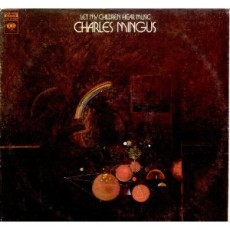
Charles Mingus Jr. was born on April 22, 1922 in Nogales, Arizona of Chinese, English, African and Swedish heritage. His mother allowed only church-related music in their home, but Mingus developed an early love for jazz, especially the music of Duke Ellington. He first studied trombone, later adding cello, which prepared him for the double bass in high school. He studied five years with H. Rheinshagen, principal bassist of the New York Philharmonic and compositional techniques with Lloyd Reese.
Beginning in his teen years, Mingus was writing quite advanced pieces incorporating elements of classical music. A number of them were recorded in 1960 with conductor Gunther Schuller and released as “Pre-Bird”, referring to Charlie “Bird” Parker. Mingus was one of many musicians whose perspectives on music were altered by Parker into “pre- and post-Bird” eras.
Gaining a reputation as a bass prodigy, his first major professional job was playing with former Ellington clarinetist Barney Bigard. This followed by a tour with Louis Armstrong in 1943 that led to his recording in a band led by Russell Jacquet that included Teddy Edwards and Chico Hamilton. He went onto record with Howard McGhee and into the late ‘40s played with Lionel Hampton’s band performing several of his pieces.
A popular Mingus trio had Red Norvo and Tal Farlow in tow in the early 50s with considerable acclaim but his mixed heritage caused problems with club owners and he left the group. Charles was briefly a member of Ellington’s band until his temper got him fired. He went on to record and play with Max Roach, Bud Powell, Dizzy Gillespie, Charlie Parker, Pepper Adams, Jaki Byard, Horace Parlan, Booker Ervin, John Handy, Charles McPherson, Eric Dolphy and Johnny Coles among others through the Sixties and into the next decade. By the mid-1970s, Mingus was suffering from Lou Gehrig’s disease that eventually stopped his playing, leaving him to continue composing and supervising recordings prior to his death on January 5, 1979 at age 56 in Cuernavaca, Mexico.
Composer, bandleader, bassist and civil rights activist Charles Mingus left a legacy of an autobiography, Mingus Big Band, Mingus Dynasty, Mingus Orchestra, the Charles Mingus High School Competition, the catalogue of Mingus compositions in the Music Division of the New York Public Library and the collected papers of Charles Mingus housed at the Library of Congress in Washington, DC.
Take A Dose On The Road
More Posts: bandleader,bass,composer
Daily Dose Of Jazz…
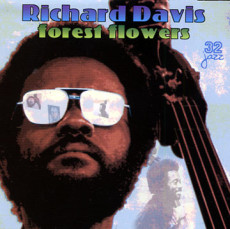
Richard Davis was born in Chicago, Illinois on April 15, 1930 who began his musical career as a singer with his brothers. Davis sang bass in his family vocal trio in addition he began studying the double bass in high school with his music theory and band director, Captain Walter Dyett. After graduation, he went on to study the double bass with Rudolf Fahsbender of the Chicago Symphony Orchestra while attending Vandercook College.
After college, Davis performed in dance bands making a name for himself around Chicago, making connections that led him to pianist Don Shirley. In 1954 he and Shirley moved to New York City, performed together until 1956, when he began playing with the Sauter-Finegan Orchestra.
Richard then toured and recorded as part of Sarah Vaighan’s band, worked with Dorothy Ashby, Jaki Byard, Booker Ervin, Charles Lloyd, Candido Camero, Jimmy Forrest and Thad Jones/Mel Lewis Jazz Orchestra among others. Some of his most famous contributions were Eric Dolphy’s 1964 “Out To Lunch”, Andrew Hill’s “Point Of Departure” and Van Morrison’s “Astral Weeks”, Laura Nyro’s “Smile” and Bruce Springsteen’s “Born To Run”.
He has recorded fifteen albums as a leader and over a hundred as a sideman. A long-time educator, he has been a professor at the University of Wisconsin-Madison since 1977 where he teaches bass, jazz history, and improvisation. Bassist Richard Davis received the 2014 NEA Jazz Masters award.
Take A Dose On The Road
More Posts: bass