


Daily Dose Of Jazz…
Horace Tapscott was born Horace Elva Tapscott in Houston, Texas, the son of a jazz musician mother on April 6, 1934. When he turned nine his family moved first to Fresno, California, eventually settling in Los Angeles. Reaching maturity at a critical time in the history of L.A. jazz, he was privy to the like of Dexter Gordon, Art Tatum and Coleman Hawkins who were playing the Central Avenue clubs in the late ‘40s.
In 1961 Horace formed the Pan Afrikan Peoples Arkestra, also known as P.A.P.A., or The Ark in 1961 and led the ensemble that included at one time or another Arthur Blythe, Stanley Crouch, Butch Morris, Wilbur Morris, David Murray and Jimmy Woods through the 1990s. In 1968 he composed and arranged saxophonist Sonny Criss’ critically acclaimed “The Birth of the New Cool”. He followed this with a decade long performance of his own works, a succession of recordings for the Nimbus label and a growing reputation and flourishing creativity that eventually leading to the recognition he deserved.
His powerful and percussive approach to playing coupled with a highly individual bop-tinged style with avant-garde leanings became somewhat of an inspiration to a new generation of L.A. based free jazz players. Horace Tapscott and his work are the subjects of the UCLA Horace Tapscott Jazz Collection. The composer and pianist passed away of lung cancer on February 27, 1999 in Los Angeles, California.
More Posts: piano
Daily Dose Of Jazz…
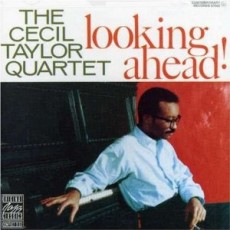
Cecil Percival Taylor was born March 25, 1929 in New York City and began playing piano and classical training at age six. He studied at the New York College of Music and New England Conservatory. After first steps in R&B and swing-styled small groups in the early 1950s, he formed his own band with soprano saxophonist Steve Lacy in 1956, in which he release his first recording Jazz Advance.
Throughout the 1950s and 1960s, Taylor’s music grew more complex and moved away from existing jazz styles. Gigs were often hard to come by, and club owners found Taylor’s approach to performance (long pieces) unhelpful in conducting business. Forming his group The Unit in 1961 with Jimmy Lyons, Sunny Murray and later Andrew Cyrille produced landmark recordings, like “Unit Structures” in 1966, they continued to record although sporadically and many of his recording sessions remained unreleased for sometimes decades.
By the 70s he was performing solo concerts and Taylor’s work began to be released for the next two decades, garnering critical if not popular acclaim. He began lecturing at universities, was awarded the Guggenheim Fellowship, performed a White House lawn concert for President Jimmy Carter, was awarded a MacArthur Fellowship, returned to the trio setting, collaborated with ballet companies and as an accomplished poet often incorporates his poems into his musical performances.
He is the co-founder of the Jazz Composers Guild to enhance the working possibilities of avant-garde musicians. Acknowledged as one of the pioneers of free jazz, his music is characterized by an extremely energetic, physical approach, producing complex improvised sounds, frequently involving tone clusters and intricate polyrhythms. His piano technique has been likened to percussion, described as “eighty-eight tuned drums” referring to the number of keys on a standard piano. He continues to perform, compose and record.
More Posts: bandleader,composer,piano,poet
Daily Dose Of Jazz…
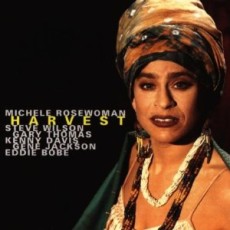
Michele Rosewoman was born on March 19, 1953 in Oakland, California. She began playing the piano at age six and as a teenager studied with organist/pianist Ed Kelly. After extensive work locally leading several jazz groups she also played with Baikida Carroll, Julius Hemphill and Julian Priester. In 1977 Michele moved to New York where she involved herself in the avant-garde scene playing and recording as a sidewoman with Oliver Lake, Billy Bang, Greg Osby, Ralph Peterson and the members of M Base among others.
Rosewoman is most notable for her work and recordings with her Quintessence ensemble as well as several trio and quartet sessions. Steeped in Cuban percussion and African music and since the early 80s for her Afro Cuban jazz big band “New Yor-Uba Ensemble” featuring Orlando “Puntilla” Rios.
Michele has played with such jazz masters as Freddie Waits, Rufus Reid, Billy Hart, Reggie Workman and Latin music greats such as Celia Cruz, Chocalate, Nicky Marrero, Paquito D’Rivera, and Daniel Ponce among others. She continues to perform and record around the world.
More Posts: piano
Daily Dose Of Jazz…
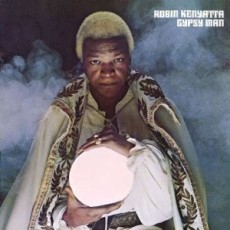
Robin Kenyatta was born Robert Prince Haynes on March 6, 1942 in Moncks Corner, South Carolina but grew up in New York City, learning to play the alto saxophone. He played with Bill Dixon in the 1960s and playing with his project “The October Revolution in Jazz”. Later that decade he played with Jazz Composer’s Orchestra, Roswell Rudd, Sonny Stitt, Archie Shepp and Buddy Miles among others.
By the 1970s he was playing with Alan Silva and Andrew Hill; for a brief time he experimented with instrumental pop music during this decade as well. He moved to Europe during the Seventies, finding it easier to make a living as a jazz musician.
Later in his career he would play with musicians such as Dizzy Gillespie, B. B. King, Dr. John and George Benson; played the Montreux Jazz Festival and went with his own groups on a European tour.
Kenyatta would go on to lead a jazz school in Lausanne, Switzerland during this period. In 2002 Kenyatta returned to the USA becoming active as a director of music in Boston. He died on October 28, 2004 at the age of 62 in Lausanne, leaving behind a catalogue of thirteen albums as a leader and eight as a sideman.
More Posts: saxophone
Daily Dose Of Jazz…
Donald Rafael Garrett was born on February 28, 1932 in El Dorado, Arkansas but was raised in Chicago, Illinois. While in high school he first studied clarinet and then bass under Captain Walter Dyett. By the late 50s he was working closely with Muhal Richard Abrams, becoming a member of his Experimental Band in the Sixties.
It was during this time that he worked with Ira Sullivan, Eddie Harris, Dewey Redman and Rahsaan Roland Kirk but by the mid-sixties he relocated to San Francisco and formed a band called Sound Circus. He stayed on the West coast into the 70s working with such jazz greats as Archie Shepp, Sonny Rollins, Pharoah Sanders and numerous more including performing and recording on four John Coltrane albums – Om, Kulu Se Mama, Selflessness and Live In Seattle.
In 1971 he formed the Sea Ensemble with Zusaan Kali Fasteau and embarked on a world tour for the next several years, the duo funding their travels with Fasteau giving music lessons and Garrett skillfully making bamboo flutes. Throughout his career he studied Turkish music, added flute to his instrumental repertoire, became an educator, writer, researcher and continued to perform and record with Johnny Griffin, Sonny Stitt, Joe Henderson, Billy Bang and other great jazz musicians.
Donald Garrett, multi-instrumentalist best known for his work with John Coltrane and the free jazz musicians and improvisers of the 60s and 70s, passed away on August 17, 1989.
More Posts: saxophone