

Daily Dose Of Jazz…
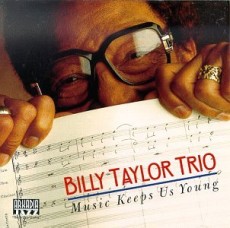
William “Billy” Taylor was born July 24, 1921 in Greenville, North Carolina but his family moved to Washington, DC when he was five years old. Growing up in a musical family, learning to play guitar, drums and saxophone as a child but most successfully on the piano. He took classical piano lessons with Henry Grant, who had educated Duke Ellington a generation earlier.
His first professional appearance was playing keyboard at the age of 13 and was paid one dollar. He attended Dunbar High School, the U.S.’s first high school for African-American students. He went to Virginia State College, majored in sociology but pianist Dr. Undine Smith Moore noticed young Taylor’s talent on piano, changed his major to music, graduating with a degree in music in 1942.
After graduation a move to New York City saw Billy playing piano professionally from 1944, first with the Ben Webster Quartet on 52nd Street. He met Art Tatum the same night, who became his mentor. He went on to perform with Machito developing his love for Latin music, a tour of Europe with the Don Redman Orchestra, and remained to work Paris and the Netherlands. Retuning to New York he worked with Bob Wyatt, Sylvia Sims and Billie Holiday in a successful show called Holiday on Broadway. A year later, he became the house pianist at Birdland performing with Charlie Parker, J. J. Johnson, Stan Getz, Dizzy Gillespie and Miles Davis. He would become the longest playing pianist ever in the history of the club.
In 1949, Taylor published his first book, a textbook about bebop piano styles. In 1952 Taylor composed one of his most famous tunes, I Wish I Knew How It Would Feel To Be Free, which subsequently achieved more popularity with the civil rights movement of the 1950s and 1960s. Nina Simone covered the song in her 1967 album Silk & Soul and the instrumental is used by the BBC for it’s long running television Film program.
Billy made dozens of recordings in the 1950s and 1960s, had a thriving broadcast career and in 1958, he became the Musical Director of NBC’s The Subject Is Jazz, the first ever television series focusing on jazz. The then new National Educational Television Network (NET) produced the 13-part series that hosted Duke Ellington, Aaron Copland, Bill Evans, Cannonball Adderley, Jimmy Rushing and Langston Hughes and others.
He founded the Jazzmobile in 1961 providing an arts education program via workshops, master classes, lecture demonstrations, arts enrichment programs, outdoor summer mobile concerts, special indoor concerts and special projects. Taylor worked as a DJ and program director on New York radio station WLIB, his trio was a regular feature of the Hickory House on West 55th Street, and from 1969 to 1972 became the first Black American to be musical director and lead a talk show band on The David Frost Show.
By the Eighties the Jazzmobile was producing shows for National Public Radio, receiving a Peabody Award for Excellence in Broadcasting Programs. In 1981, after being profiled by CBS News Sunday Morning he was hired as an on-air correspondent and conducted more than 250 interviews with musicians. He received an Emmy Award for his segment on Quincy Jones. These are just two of the many awards he has received over the course of his career.
By the end of the decade he formed his own “Taylor Made” record label to document his own music. In 1997, he received the New York state governor’s art award. Suffering from a stroke in 2002 that affected his right hand did not stop him from performing almost until his death. He died after a heart attack on December 28, 2010, in Manhattan, at the age of 89. His legacy was honored in a Harlem memorial service on January 11, 2011, featuring performances by Taylor’s final working trio – bassist Chip Jackson, drummer Winard Harper and long-time Taylor associates Jimmy Owens, Frank Wess, Geri Allen, Christian Sands and vocalist Cassandra Wilson.

Inspire A Young Mind
More Posts: piano
Daily Dose Of Jazz…
Bill Lee was born William James Edwards Lee III on July 23, 1928 in Snow Hill, Alabama the son of Alberta Grace Edwards, a concert pianist, and Arnold Wadsworth Lee, a musician. A bassist by profession, he is also a composer, arranger and conductor.
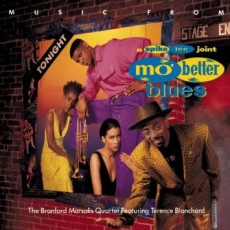
Bill scored his son’s first four movies, and was also the musical director and performer Sonny Darling in She’s Gotta Have It, the bassist in the Phyllis Hyman Quartet and the music conductor of the Natural Spiritual Orchestra for School Daze and Do The Right Thing, and appeared as Father of the Bride and also the music director for Mo’ Better Blues.
Lee was arrested in 1991 during a police drug sweep for heroin possession, fell out with his son, Spike Lee, over the arrest and subsequent interracial marriage to second wife that took place shortly after his first wife Jacquelyn, Spike’s mother, passed away from cancer. Bad blood continued as Spike made Jungle Fever that set a negative light on White/Black romantic relationships.
Along with Stuart Scharf he was the music arranger for the stage play A Hand is on the Gate. He has appeared on the Today Show, the Harry Belafonte television specials, has composed operas, stage music for the Apollo Theatre and has recorded with The Brass Company, Stanley Cowell, Richard Davis, Clifford Jordan, Harold Mabern, Pat Martino, Johnny Griffin, Aretha Franklin, Bob Dylan, Odetta, Judy Collins, Gordon Lightfoot and Peter, Paul and Mary among others. Double bassist and bass guitarist Bill Lee continues to compose, arrange and conduct.
Dose A Day – Blues Away
Daily Dose Of Jazz…
Charles Lacy Tyler was born on July 20, 1941 in Cadiz, Kentucky and spent his childhood years in Indianapolis, Indiana. He played piano as a child and clarinet at 7, before switching to alto in his early teens, and finally settled with the baritone saxophone. During the summers, he visited Chicago, New York City and Cleveland, Ohio that he met the young tenor saxophonist Albert Ayler at age 14.
After a stint in the army from 1957–1959, Tyler relocated to Cleveland in 1960 and began playing with Ayler, commuting between New York and Cleveland. During that period he got to jam with Ornette Coleman and Sunny Murray. In 1965 he recorded with Ayler’s group Bells and Spirits Rejoice.
Charles recorded his first album as leader in 1966 for ESP-Disk, returned to Indianapolis to study with David Baker at Indiana University between 1967 and 1968, then recorded a second album for ESP titled Eastern Man Alone. In 1968 he transferred to the University of California, Berkeley to study and teach. In Los Angeles, he worked with Arthur Blythe, Buddy Bradford and David Murray before heading back to New York in 1974, to lead his own freebop groups with Blythe, trumpeter Earl Cross, drummer Steve Reid and others.
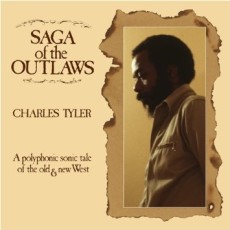
During this period he recorded on his Akba label the album Voyage from Jericho. By 1975, Tyler enrolled at Columbia University and made an extensive tour of Scandinavia releasing his second Akba album Live in Europe. The next year he performed the piece Saga of the Outlaws at Sam Rivers’ Studio Rivbea that was released two years later. He would go on to perform sideman or co-leader duties with Steve Reid, Cecil Taylor, Hal Russell, Wilbur Morris and Billy Bang.
In 1982, during a European tour with the Sun Ra Orchestra, he relocated to Denmark and three years later moved to France, recording with other expatriates like Khan Jamal in Copenhagen and Steve Lacy in Paris. Free jazz alto and baritone saxophonist CharlesTyler died in Toulon, France of heart failure on June 27, 1992.
Put A Dose In Your Pocket
More Posts: saxophone

Daily Dose Of Jazz…
Akua Dixon was born July 14th and raised in New York City, growing up in a family suffused with music, starting with her early experience singing in the Baptist church. She began playing cello in the fourth grade and soon was playing with her sister, the late violinist Gayle Dixon. By junior high they were playing little gigs and in high school she started freelancing.
After graduating from the High School of the Performing Arts, Dixon studied at the Manhattan School of Music and post graduation she joined the pit band at the Apollo Theater as an essential proving ground. There she backed such artists as Rev. James Cleveland, Barry White, James Brown and Dionne Warwick, but after Sammy Davis Jr. insisted the Westbury Music Fair include Black musicians in the orchestra she broke into Broadway pit bands and worked shows the likes of Charles Aznavour, Liza Minnelli (Liza with a Z), La Cage Aux Folles, Cats, Doonesbury, Dream Girls, and many others.
Finding a home with the Symphony of the New World, she experienced the Ellingtonian epiphany that led her to her study and immersion into jazz, spirituals and the secret s of improvising. In the Seventies she joined Noel Pointer’s String Reunion, served as director of new music and supplied the group with a steady stream of compositions and arrangements. At the same time, Akua launched her own string quartet, Quartette Indigo, which made its big league debut at the Village Gate with her sister Gayle Dixon, Maxine Roach, and John Blake Jr.
Throughout her career Dixon has worked and collaborated with Archie Shepp, Rahsaan Roland Kirk, Woody Shaw, Jimmy Heath, Frank Foster, Leroy Jenkins, Charles Burnham, Abdul Wadud, Archie Shepp, Don Cherry, Buster Williams, Carmen McRae, Dizzy Gillespie, Abbey Lincoln, Tom Harrell, and her former husband Steve Turre, She was a founding member of the Max Roach Double Quartet where she learned to phrase bebop. She’s conducted for the Alvin Ailey American Dance Theatre, lectured at the Smithsonian Institution, and composed an opera commissioned by the Rockefeller Foundation, The Opera of Marie Laveau that premiered at Henry Street New Federal Theatre in New York City.
As an educator she has spent much of her time teaching at various institutions and conducting dozens of performances through the Carnegie Hall Neighborhood Concert Series. Cellist, arranger, composer, vocalist and educator Akua Dixon stays busy composing new music for her string group, the Moving On Quartet and other ensembles in addition to performing and recording.
Take A Dose On The Road
More Posts: cello
Daily Dose Of Jazz…
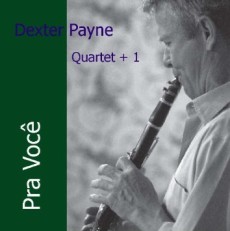
Reedman Dexter Payne was born on July 5, 1951 in Denver, Colorado. The clarinet was his first instrument and went on to master the alto and baritone saxophones adding them to his arsenal. His early influences were Artie Shaw, Buddy DeFranco, Benny Goodman, Stan Getz, Zoot Sims, Gerry Mulligan,Benny Carter, Johnny Hodges and Lester Young.
A very lyrical and melodic player, Dexter plays swing, bop, cool jazz, and Brazilian jazz as well as other forms of music including Latin. In 2000 he played with Brazilian musician Thiago de Mello, recorded the album Inspiration in 2003, with Brazilian guitarist Antonio Mello,
He followed with his sophomore release in 2005 release Another Feeling with producer Arnaldo De Souteiro on his Jazz Station label. He recorded again in 3006 and 2007 which de Mello produced and released Our Time to Remember. Clarinetist and saxophonist Dexter Payne continues to perform, record and tour.
Put A Dose In Your Pocket