

Daily Dose Of Jazz…
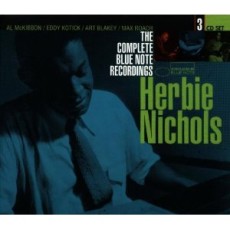
Herbie Nichols was born in San Juan Hill, Manhattan, New York City on January 3, 1919. His first known work was with the Royal Barons in 1937, a few years later performing at Minton’s Playhouse but he did not find a very happy experience due to a competitive atmosphere that did not suit his personality.
Nichols was drafted into the Infantry in 1941. After the war he worked in various setting, beginning to achieve some recognition when Mary Lou Williams recorded some of his songs in 1952. He befriended Thelonious Monk and from about 1947 persisted in trying to persuade Alfred Lion at Blue Note to sign him. Lion finally acquiesced and between 1955 and 1956 Herbie recorded less than half his 170 compositions that produced three albums, with other tracks from these sessions not being issued until the 1980s.
As a player he was capable not only of dark lyricism but also of writing melodies so harmonically adventurous that placed his music in a rhythmic league of its own. Nichols was indeed fortunate in the drummers with whom he worked Art Blakey and Max Roach. As a composer he penned such notable standards as “Serenade” that had lyrics added as well as “Lady Sings The Blues” that became synonymous with Billie Holiday, to which she set lyrics and adopted the title for her autobiography.
Jazz pianist and composer Herbie Nichols died from leukemia at the age of 44 on April 12, 1963 in New York City. Although he lived most of his life in relative obscurity, he is now highly regarded by many musicians and critics.
Daily Dose Of Jazz…
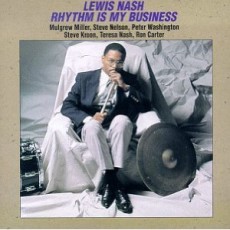
Lewis Nash was born December 30, 1958.Growing up in Phoenix, Arizona he was encouraged into jazz by his high school band teacher. By the age of 18, the drummer was a first call sideman for visiting musicians to Phoenix, and received the call to move to New York and join Betty Carter’s band at the age of 22.
he became a highly in-demand sideman during this period, and since his tenure with Carter, has gone on to record and tour with some of the most important and highly regarded jazz musicians of all time. Among them were Tommy Flanagan, Dizzy Gillespie, Sonny Stitt, Oscar Peterson, Sonny Rollins, Ron Carter, Hank Jones, Nancy Wilson, McCoy Tyner, Wynton Marsalis, Joe Williams and the list goes on and on.
A renowned master stylist, particularly in be-bop and post-bop styles, Nash is at home in a wide range of stylistic territory, including funk, free, and Latin based jazz styles. He is known for his seemingly endless depth of melodic vocabulary, drawing from all eras of jazz percussion, while adding his own unmistakably identifiable approach to the construction of his comping figures and soloing. His versatility has made him one of the foremost brush stylists of his generation.
Nash is also passionate and dedicated to jazz education, and has fostered the careers of a long list of younger players. He is in high demand as a clinician and educator at schools, workshops and major educational jazz festivals worldwide. He formed his own group in the late 1990s and currently leads several groups of varying instrumentation, from duo to septet, as well as a member of Blue Note 7.
More Posts: drums
Daily Dose Of Jazz…
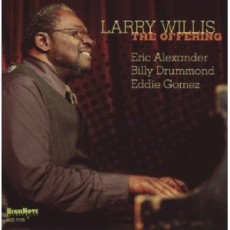
Lawrence Elliott Willis was born December 20, 1942 in Harlem, New York. He first got into music as a voice major at New York’s High School of Music and Art for gifted students and in his senior year he recorded an opera with the Music and Arts Chorale Ensemble under the direction of Leonard Bernstein.
Due to the barriers presented to Blacks in finding work in the classical arena, Willis changed directions, replacing voice with piano and concentrating on jazz. He taught himself to play piano and by the end of the winter was playing in a jazz trio with two of his classmates, Al Foster and Eddie Gomez.
He then entered and studied music theory at the Manhattan School of Music, was heard by Hugh Masekela and sent to John Mehegan for his first piano lessons ever, and by 19 began gigging regularly with altoist Jackie McLean and after graduating made his jazz recording debut on McLean’s “Right Now!” for Blue Note that featured two of Larry’s compositions.
Throughout his illustrious career pianist Larry Willis has performed and recorded as a leader and sideman on more than 300 recordings of bebop, avant-garde, jazz-fusion and rock with a wide range of musicians, Dizzy Gillespie, Lee Morgan, Carmen McRae, Clifford Jordan, Art Taylor, Shirley Horn, Stan Getz, Cannonball Adderley, Art Blakey, Woody Shaw and a stint of seven years beginning in 1972 as the keyboardist for Blood, Sweat & Tears.
He has composed and arranged for orchestras, big bands and symphonies for the Brooklyn Symphony with the Grammy-nominated Fort Apache Band, Roy Hargrove’s Grammy-winning Crisol Band, Vanessa Rubin and Joe Ford among others. He received the Don Redman award in 2011, and the Benny Golson Jazz Master Award at Howard University in 2012. He is currently still recording and touring around the world.
Daily Dose Of Jazz…
Curtis DuBois Fuller was born in Detroit, Michigan on December 15, 1934 to Jamaican parents who died when he was very young and raised in an orphanage. He took up the trombone while in Detroit and became friends with schoolmates Paul Chambers and Donald Byrd and also knew Tommy Flanagan, Thad Jones and Milt Jackson.
After two years of army service ending in 1955, where he played in a band with Chambers and the Adderley brothers, Fuller joined the quintet of another Detroit musician, Yusef Lateef. By 1957 the quintet moved to New York and Curtis recorded his first sessions as a leader for Prestige Records.
Alfred Lion of Blue Note Records heard him playing with Miles Davis in the late Fifties and featured him as a sideman on record dates led by Sonny Clark and John Coltrane. His work on Trane’s “Blue Train” album is probably his best-known recorded performance. This was followed with four Fuller led dates for Blue Note.
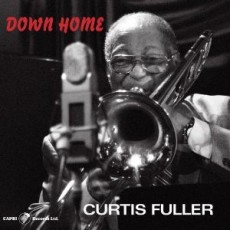
Over his career Curtis has worked with Slide Hampton, Bud Powell, Jimmy Smith, Wayne Shorter, Abbey Lincoln, Lee Morgan, Hank Mobley, Blue Mitchell and Joe Henderson, and that’s the very short list. He performed with Dizzy Gillespie’s band, toured with Count Basie, was the sixth Jazz Messenger with Art Blakey in 1961, was the first trombonist to hold membership in the Art Farmer-Benny Golson Jazztet, and has recorded for Savoy, Epic, Impulse, Status, Challenge, Timeless and Capri among others and his latest album, “Down Home” on Capri.
In addition to continuing to perform and record, he was a faculty member of the New York State Summer School of the Arts – School of Jazz Studies. Trombonist Curtis Fuller passed away on May 8, 2021.

More Posts: trombone
Daily Dose Of Jazz…
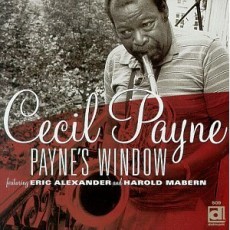
Cecil Payne was born December 14, 1922 in Brooklyn, New York. He received his first saxophone at age 13, asking his father for one after hearing Count Basie’s version of Honeysuckle Rose performed by Lester Young and took lessons from Pete Brown, a local alto sax player.
Payne began his professional recording career with J. J. Johnson on the Savoy label in 1946. During that year he played with Roy Eldridge, through whom he met Dizzy Gillespie. His earlier recordings would largely fall under the “swing” category, until Gillespie hired him, a relationship that lasted until 1949.
By the early 50s, Cecil found himself working with Tadd Dameron, Illinois Jacquet, James Moody, Machito, Woody Herman, Count Basie and freelancing around New York, frequently performing with Randy Weston. Throughout his fifty plus year career baritone saxophonist he recorded as a leader and a sideman for Decca, Savoy, the Charlie Parker label, Muse, Spotlite and Strata East, and regularly for Delmark Records in the nineties, when he was in his seventies, and on into the new millennium.
Cecil Payne, baritone and alto saxophonist and flautist, passed away on November 27, 2007. Although largely unknown to the public he was one of the pioneers in adapting the baritone saxophone to bebop and post-bop.