
Daily Dose Of Jazz…
Floyd George Smith was born on January 25, 1917 in St. Louis, Missouri and learned to play the ukulele as a child before taking up guitar. As a teenager he studied music theory and spent his early career in territory bands, playing in groups such as Eddie Johnson’s Crackerjacks, the Jeter-Pillars Orchestra, the Sunset Royal Orchestra, the Brown Skin Models, and Andy Kirk’s 12 Clouds Of Joy. His composition Floyd’s Guitar Blues, recorded with Andy Kirk’s orchestra in 1939, has been claimed as the first hit record to feature a blues solo on electric guitar.
Enlisting during World War II, Floyd was stationed in Britain as a sergeant and he had the fortune to meet and play with Django Reinhardt in Paris. Following the war, he rejoined Andy Kirk’s band before forming his own small ensembles. He went on to play with Wild Bill Davis in the 1950s, recorded occasionally with drummer Chris Columbo’s bands during the late 1950s and early 1960s. He would later settle in Indianapolis, Indiana and formed his own jazz trio.
The 1970s, had Smith moving into writing songs and record production, working with Dakar/Brunswick Records in Chicago, for which he recorded a few singles. He produced two albums with R&B star, Loleatta Holloway for Aware Records of Atlanta, as well as two unreleased with John Edwards, who later became the lead singer of the Detroit Spinners. He produced two Top 10 R&B hits on Aware with Edwards and Holloway.
In the late 1970s, he produced tracks on several albums with Loleatta Holloway for Gold Mine/Salsoul Records, managed and later married her. Guitarist Floyd Smith, sometimes credited as Floyd Guitar Smith passed away in Indianapolis, Indiana on March 29, 1982 at the age of 65.

More Posts: composer,guitar,history,instrumental,jazz,music,producer

Daily Dose Of Jazz…
Joe Albany was born Joseph Albani on January 24, 1924 in Atlantic City, New Jersey, Albany studied piano as a child and by 1943 he was working on the West Coast in Benny Carter’s orchestra. In 1946 he played with Charlie Parker and then 20-year-old Miles Davis.
Continuing to play, in 1957 recorded an album for Riverside with an unusual trio line-up with saxophonist Warne Marsh and Bob Whitlock on bass. omitting a drummer. Despite that, most of the 1950s and 1960s saw him battling a heroin addiction, or living in seclusion in Europe. He returned to jazz in the Seventies and played on more than ten albums. Modern and bebop pianist Joe Albany passed away of respiratory failure and cardiac arrest in New York City at the age of 63 on January 12, 1988.
was the focus of a 1980 documentary titled, Joe Albany… A Jazz Life. His daughter Amy-Jo wrote a memoir about her father called Low Down: Junk, Jazz, and Other Fairy Tales from Childhood. The book was adapted for the screen and released in 2014 as the biopic Low Down.
<ahref=”http: notoriousjazz.com=”” wp-content=”” uploads=”” 2017=”” 08=”” bronze-lens.jpg”=””> </ahref=”http:>
More Posts: bandleader,history,instrumental,jazz,music,piano
Daily Dose Of Jazz…
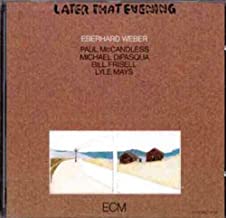
Eberhard Weber was born on January 22, 1940, in Stuttgart, Germany and began recording with several groups as a sideman in the early Sixties and released his first record under his own name The Colours of Chloë, in 1973.
From the early 1960s to the early 1970s, Weber’s closest musical association was with pianist Wolfgang Dauner. Their many mutual projects were diverse, from mainstream jazz to jazz-rock fusion to avant-garde sound experiments. During this period, Weber also played and recorded with pianists Hampton Hawes and Mal Waldron, guitarists Baden Powell de Aquino and Joe Pass, The Mike Gibbs Orchestra, violinist Stephane Grappelli, and many others.
Eberhard has released fourteen records under his own name, all under the ECM label. He has led collaborations with Gary Burton, Ralph Towner, Pat Metheny and Jan Garbarek. The mid-1970s saw Weber forming his own group, Colours, with Charlie Mariano, Rainer Brüninghaus and Jon Christensen. With John Marshall replacing Christensen they toured extensively and recorded two further records before disbanding.
Since the early 1980s, Weber has regularly collaborated with the British singer-songwriter Kate Bush, toured with Barbara Thompson’s jazz ensemble Paraphernalia, and by the Nineties touring slowed as did recording but he continued to perform until suffering a stroke in 2007, leaving him unable to play. Bassist Eberhard Weber was awarded the prestigious Albert Mangelsdorff-Preis in November 2009.
More Posts: bandleader,bass,history,instrumental,jazz,music
Daily Dose Of Jazz…
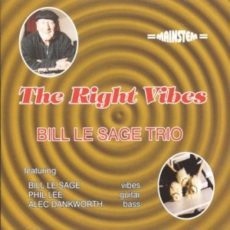
Bill Le Sage was born William A. Le Sage in London, England on January 20, 1927. His father and two uncles were musicians and he started playing the ukulele at the age of eight, drums at fifteen and taught himself to play the piano.
His career began in 1945 when he led his first sextet. He was then a member of army bands while serving with the Royal Signals. He played piano for the Johnny Dankworth Seven in 1950 but decided to switch to the vibraphone. Leaving in 1954 Bill joined the various small groups led by the drummer Tony Kinsey, until 1961 when he started playing with baritone saxophonist Ronnie Ross, with whom he co-led various line-ups until 1966. During this period, he also played with Kenny Baker’s Dozen and wrote music for television and films.
The 1960s gave Le Sage the opportunity to work with the Jack Parnell Orchestra, the Chris Barber Band, and led his group, Directions In Jazz. His composer credits included scores for the films The Tell-Tale Heart, Tarnished Heroes, The Silent Invasion, Strip Tease Murder and The Court Martial of Major Keller.
He accompanied numerous visiting American musicians, including guitarist Tal Farlow on an annual basis. In 1969, he formed the Bebop Preservation Society Quintet, which he continued for more than two decades and also worked with Barbara Thompson’s Jubiaba and others. Vibraphonist Bill Le Sage passed away in London on October 31, 2001.
More Posts: bandleader,composer,history,instrumental,jazz,music,piano,vibraphone
Daily Dose Of Jazz…
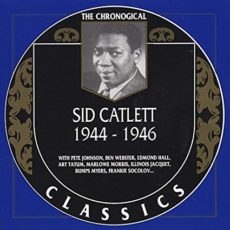
Sidney “Big Sid” Catlett, born January 17, 1910 in Evansville, Indiana, received at an early age instruction in the rudiments of piano and drums under the tutelage of a music teacher hired by his mother. When he and his family relocated to Chicago, Illinois he got his first drum kit, and immersed himself in the diverse styles and techniques of Zutty Singleton, Warren “Baby” Dodds, and Jimmy Bertrand, among others.
By 1928, Sid was playing with violinist and clarinet player Darnell Howard, before joining pianist Sammy Stewart’s Orchestra in New York City and performing at the Savoy Ballroom. After performing for several lesser established musical acts, he began recording and performing with multiple musicians including Benny Carter, McKinney’s Cotton Pickers, Fletcher Henderson, and Don Redman throughout the 1930s.
Between 1938 and 1942, he was Louis Armstrong’s drummer of choice as he was regularly featured in Armstrong’s big band, while also periodically joining Benny Goodman’s group. Following a brief stint in collaboration with Duke Ellington in 1945, Catlett led some of his own bands through the remainder of the 1940s while staying involved in Armstrong’s All-Stars between 1947 and 1949.
Catlett was one of the few drummers to successively transition into bebop, appearing on Dizzy Gillespie’s progressive recordings in 1945. In 1950 he performed with Hoagy Carmichael at the Copley Plaza Hotel. In early 1951, he began to suffer from pneumonia. On March 25, 1951 drummer Sid Catlett passed away at the age of 41 after suffering a heart attack while visiting friends backstage at a Hot Lips Page benefit concert in Chicago, Illinois. In 1996, he was inducted into the Big Band and Jazz Hall of Fame.
More Posts: bandleader,drums,history,instrumental,jazz,music