

Daily Dose Of Jazz…
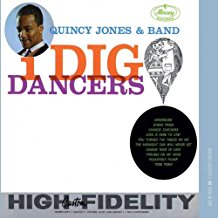
Quentin “Butter” Jackson was born January 13, 1909 in Springfield, Ohio. His brother-in-law Claude Jones, who played with McKinney’s Cotton Pickers taught him to play the trombone. During the Thirties he played with Zack White, McKinney’s Cotton Pickers and the Don Redman Orchestra.
The Forties saw Butter, as he was affectionately known, working with Cab Calloway and then Lucky Millinder, taking occasional solos with those groups, and in the early days was a ballad singer. In 1949 he became a fixture in the Duke Ellington Orchestra, becoming his best wa-wa trombonist utilizing the plunger mute. This relationship, that included recordings, lasted until 1960, both as a soloist and in the ensembles.
Jackson went on to tour of Europe and recorded with Quincy Jones, then performed and recorded with Count Basie for two years and recorded notable work with Charles Mingus in 1962-63, followed by a return to Ellington and worked with the big bands of Louie Bellson and Gerald Wilson. By the 1970s he was working with the Mel Lewis/Thad Jones Orchestra until near the end of his life.
A consummate sideman he recorded with Dorothy Ashby, Kenny Burrell, Ella Fitzgerald, Johnny Hodges, Leon Thomas, Dizzy Gillespie, Ray Charles, Aretha Franklin, Louis Armstrong, Milt Jackson, Herbie Mann, Freddie McCoy, Wes Montgomery, Shirley Scott, Jimmy Smith, Clark Terry, Billy Strayhorn, Randy Weston and Dinah Washington, who did a version of Bessie Smith’s Trombone Cholly on her album Dinah Sings Bessie Smith, enlisting Jackson on the horn, under the title “Trombone Butter”.
Trombonist Quentin Jackson, whose only session as a leader resulted in four titles in 1959 that were reissued by Swing, passed away on October 2, 1976 in New York City.
Sponsored By

www.whatissuitetabu.com

#preserving genius
More Posts: trombone
Daily Dose Of Jazz…
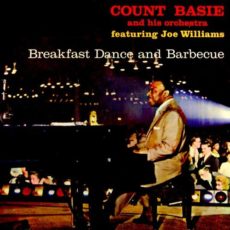
Wendell Philips Culley was born on January 8, 1906 in Worcester, Massachusetts. He performed locally in Boston, then moved to New York City in 1931 and found early work playing with Horace Henderson and Cab Calloway.
He then spent eleven years in the employ of Noble Sissle, recording with him extensively. Following this he played with Lionel Hampton from 1944 to 1949, and then briefly worked again with Sissle.
In 1951 he joined the Count Basie Orchestra and until 1959 he recorded twenty albums with the man and toured the world. After his tenure with Basie, he retired from music and pursued a career in insurance. Trumpeter Wendell Culley, who never led a session of his own, passed away on May 8, 1983 in Los Angeles, California. He was seventy-seven years old.

Give The Gift Of Knowledge
#preserving genius
More Posts: trumpet
Daily Dose Of Jazz…
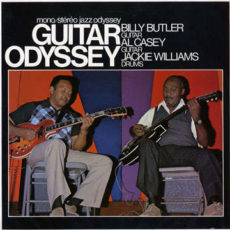
Jackie Williams was born on January 02, 1933 in Harlem, New York City, New York. Growing up in the fertile jazz atmosphere of the city, he also absorbed the dance grooves of rhythm and blues. Citing Papa Joe Jones as one of his greatest influences, by the mid 1950s he was playing for dancers and soon became a first call musician for recording sessions. He is a recipient of Yale University’s Duke Ellington Fellowship Medal
For 18 years Jackie played with Doc Cheatham at Greenwich Village’s Sweet Basil and performed and recorded with Buck Clayton on a U.S. State Department tour of the Middle East and Africa. He has also been a sideman with Bobby Hackett, Illinois Jacquet, Earl Hines, Duke Ellington, Alberta Hunter, Buddy Tate, Billy Butler, Al Casey, Stéphane Grappelli, Johnny Guarnieri, Jimmy Shirley, Buddy Tate, Slam Stewart, Barbara Morrison, Milt Hinton, Dizzy Gillespie, Maxine Sullivan, Vic Dickenson, Jay McShann, Bobby Short, Teddy Wilson and Errol Garner to name a few.
At one time or another during his career Williams was a member of The Cliff Smalls Septet, The Dan Barrett Octet, The Howard Alden / Dan Barrett Quintet, Warren Vaché Quartet, Warren Vaché, Jr. And His All-Stars, Statesmen of Jazz, The Floating Jazz Festival Trio and many others.
Drummer Jackie Williams is currently a member of the Junior Mance Trio.
Sponsored By

Voices From The Community
#preserving genius
More Posts: drums
Daily Dose Of Jazz…
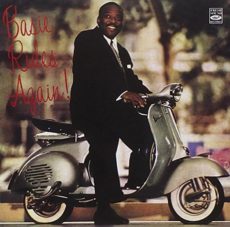
Henry Coker was born December 24, 1919 in Dallas, Texas. He studied music at Wellesley College before making his professional debut with John White in 1935. From 1937 to 1939 he played with the Nat Towles territory band, then moved to Hawaii to play with Monk McFay.
Following Pearl Harbor, Coker settled in Los Angeles, California and played with Benny Carter from 1944 to 1946. He did a stint with Illinois Jacquet in 1945, then performed with Eddie Heywood between 1946 – 1947, and with Charles Mingus in the late ’40s.
Falling ill from 1949 to 1951 Henry played little, but after recovering he worked with Sonny Rollins and then joined Count Basie’s band, playing and recording with him from 1952 to 1963.
Working as a studio musician in the Sixties, he then toured with Ray Charles from 1966 to 1971. He did freelance and film/television studio work in the mid-1970s, rejoining Basie briefly in 1973 and Charles in 1976. Osie Johnson wrote a tribute to him entitled Cokernut Tree in 1955. Coker recorded on J.J. Johnson’s Trombones Incorporated session, featuring ten trombonists.
Trombonist Henry Coker passed away in Los Angeles at the age of 59 on November 23, 1979.
Put A Dose In Your Pocket
More Posts: trombone
Daily Dose Of Jazz…
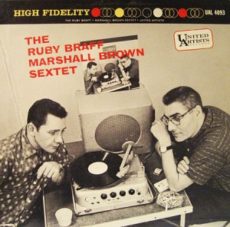
Marshall Brown was born on December 21, 1920 in Framingham, Massachusetts. Little recorded, he devoted most of his career to education, earning a music degree from New York University, as a member of the Zeta Psi Fraternity.
He was also a high school band director leading the Farmingdale New York Daler Band from the early 1950s through 1957. Brown was the first high school band director to initiate a jazz education program, which he did in his tenure at Farmingdale High. By 1956 his stage band, the Daler Dance Band, a jazz big band with an average age of 14 years old, was so formidable and impressive, boasted future jazz stars pianist Michael Abene, saxophonist Andrew Marsala, and whiz drummer Larry Ramsden. One night at the 1957 Newport Jazz Festival, Count Basie, who was late for his appearance as he entered the festival grounds heard the Daler Band performing their set and exclaimed, “Damn, they started already”, mistaking the Dalers for his band.
Marshall received some attention for performing and recording in a quartet with Pee Wee Russell in the early 1960s. While Russell was most often associated with Dixieland or swing, their quartet performed more adventurous, free jazz-oriented pieces, including pieces by Ornette Coleman and John Coltrane.
During the Sixties he was the resident trombonist at Jimmy Ryan’s, a noted dixieland venue. He also club dated with Luke O’Malley’s Irish band during this time. Brown also performed or recorded at one time or another with Ruby Braff, Beaver Harris, Lee Konitz, George Wein and Basie.
Conductor, arranger and educator Marshall Brown, who also played the valve trombone, trumpet, euphonium, electric bass and the banjo, passed away on December 13, 1983 in New York City.
Uplift Someone’s World
More Posts: banjo,bass,euphonium,trombone,trumpet,valve trombone