

Daily Dose Of Jazz…
Irving Cottler was born on February 13, 1918 in New York City, New York. Learning to play the drums, at age 14, he falsified his age to acquire a musician’s union card, and honed his chops playing the Catskills resort circuit. After stints with Red Norvo and Mildred Bailey, he toured California behind Claude Thornhill, vowing to ultimately relocate cross-country.
Stints with Larry Clinton, Tommy Dorsey, and Les Brown followed, but in 1947, finally retiring from the road, Irv settled in Los Angeles, California. He became a first-call session drummer renowned for his impeccable timekeeping, he was a sometime member of The Wrecking Crew, recording behind Nat King Cole, Louis Armstrong, Bing Crosby, Ella Fitzgerald and numerous others.
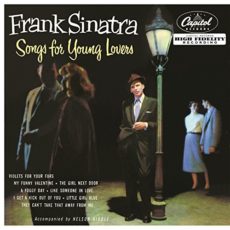
A personal favorite of arranger Nelson Riddle, he was summoned by Riddle in 1953 to play on what would become Frank Sinatra’s first LP for Capitol Records, the now-classic Songs for Young Lovers. Cottler quickly emerged as Sinatra’s drummer of choice and bandleader, remaining with Ol’ Blue Eyes in various studio and tour incarnations for more than 30 years. Crooners Sammy Davis, Jr., Dean Martin, Mel Tormé, and Bobby Darin sought out his services as well, and for the Somerset label he headlined the exotica cult classic Around the World in Percussion.
A staple of film and television, Irv highlighted his career in the medium with a 12-year stint with The Dinah Shore Show’s house band. He authored a book, I’ve Got You Under My Skins, which is a unique publication that features the original drum charts for all of the popular Frank Sinatra tunes on the CD. The charts were reprinted as a book, adding performance hints and in-studio photos.
Drummer and bandleader Irv Cottler, who also recorded with Count Basie, Hoagy Carmichael, Stan Kenton and Barney Kessel, passed away on August 8, 1989 in Rancho Mirage, California.
Sponsored By

Voices From The Community

#preserving genius
More Posts: drums
Daily Dose Of Jazz…
Sam Allen was born on January 30, 1909 in Ohio and accompanied silent films in movie palaces from the age of ten, and in the next few years seemed to have absorbed plenty of slapstick hi-jinx and derring-do from the Hollywood sagas he accompanied. In 1928 he moved to New York City, where he joined Herbert Cowans’s band at the Rockland Palace. Within a year he moved back to Ohio, where he played with Alex Jackson in 1930. Soon afterward he joined James P. Johnson‘s orchestra as the second pianist, as one piano could not play all the chords in the scores. This engagement he followed with an extended run in Teddy Hill’s band, which occupied him for most of the 1930s and included tours of Europe.
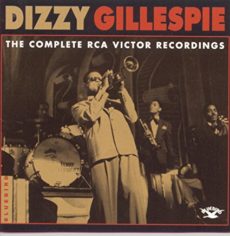
Early in the 1940s Sam worked one of his most musically satisfying collaborations as piano man in the sometimes rowdy combo of violinist Stuff Smith. He then became the pianist for the madcap jive jazz duo of Slim Gaillard and Slam Stewart, the gig for which he was best known, his years in the movie houses came in handy. His talent was further challenged with the bebop hyper-drive of trumpeter Dizzy Gillespie during the same decade.
By the end of the Forties decade Allen moved to Washington and worked locally as a solo pianist for a time, giving up being a touring sideman. Finally he relocated and settled into the Oakland, California, where he often accompanied vocalist Billie Heywood, among others.
Pianist Sam Allen passed away in September 1963.
Sponsored By
Voices From The Community
#preserving genius
More Posts: piano
Daily Dose Of Jazz…
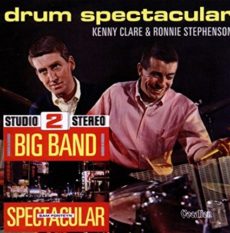
Ronnie Stephenson was born January 26, 1937 in Sunderland, England and as a boy wanted to become a tap dancer like his idol Gene Kelly, but he was persuaded by his father and his pianist brother to take up the drums. Already playing his first public gig the same week he took his first drum lesson at the age of 14, Ronnie was soon working with his elder brother Bob’s band, and then with the Ray Chester’s Sextet. Moving to Birmingham he joined the Cliff Deeley Band at the Tower Ballroom, and played for several months before going on the road.
At 16 he joined singer Lita Roza, a national star who had left the Ted Heath band to tour the variety theatre circuit as a soloist. The 10 months he spent with her garnered him great experience in the music business. Conscripted into the Army, Stephenson performed in The Royal Signals Band until he was demobbed in 1957. Having a close association with Ronnie Scott, he spent two years in Scott’s Quartet, playing the club and accompanying many visiting stars.
He toured Germany with Tom Jones in 1969 and then sat the resident drum chair with the Kurt Edelhagen Band after moving to Cologne, Germany with his wife and two children. After three years with Edelhagen, Ronnie teamed up with pianist Paul Kuhn in Berlin, Germany and toured all over Europe with a variety of bands and artists. He played on the Bond themes Diamonds Are Forever and You Only Live Twice and on other film scores, including Chitty Chitty Bang Bang. Stephenson joined the Theater des Westens Orchestra in Berlin from 1981 to 1995, and taught at the University of Berlin from 1990 to 1993. He retired from music due to poor health, settled in Scotland, and turned to golf as a restorative, becoming a member of Strathmore Golf Club.
Drummer Ronnie Stephenson, one of the most in-demand drummers of the British jazz scene, passed away on August 8, 2002. Over the course of his career he performed or recorded with Sonny Rollins, Stan Getz, Wes Montgomery, Zoot Sims, Quincy Jones, Paul Gonsalves, Johnny Griffin, Roland Kirk, Gerry Mulligan, Sonny Stitt, Barney Kessel, Benny Golson, Benny Goodman, Nelson Riddle, Ella Fitzgerald, Mel Tormé, Tony Bennett, Ronnie Ross, Stan Tracey, Ted Heath, Dick Morrissey, Terry Smith, Jack Parnell, John Dankworth, Tubby Hayes, Cleo Laine, Peter Herbolzheimer, Horst Jankowski, Paul Kuhn, Rolf Kuhn, Kenny Clarke, Victor Feldman, Heinz von Hermann and Hans Rettenbacher, among many others including pop stars Matt Monro, Engelbert Humperdinck, Cilla Black and Shirley Bassey.

Dose A Day-Blues Away
#preserving genius
More Posts: drums
Daily Dose Of Jazz..
Fred Lee Beckett was born on January 23, 1917 in Nettleton, Mississippi and began playing horn in high school. He began playing the trombone professionally in Kansas City, Missouri in the 1930s. Soon after beginning his career he landed a job with Eddie Johnson’s Crackerjacks in St. Louis, Missouri.
He went on to play with Duke Wright, Tommy Douglas, Buster Smith and Andy Kirk over the next few years. Beckett spent time as well in a territory band with Prince Stewart and played a gig in Omaha, Nebraska with Nat Towles. Towards the end of the Thirties he played with Harlan Leonard.
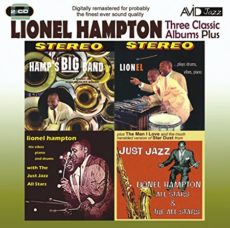
The early 1940s saw Fred performing and recording extensively with Lionel Hampton, and providing trombone support behind Dinah Washington recordings. Serving in the Army during World War II he contracted tuberculosis and passed away of the illness on January 30, 1946. He was twenty-nine years old.
Sponsored By

#preserving genius
More Posts: trombone
Daily Dose Of Jazz…
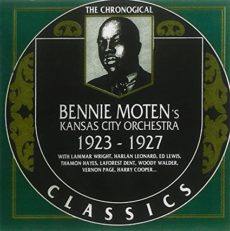
Ed Lewis was born on January 22, 1909 in Eagle City, Oklahoma. His early career saw him in Kansas City, Missouri playing with Jerry Westbrook as a baritone saxophonist, but in 1925 he switched to trumpet He played with Paul Banks and Laura Rucker before joining the Bennie Moten Orchestra, where he was the primary trumpet soloist from 1926-1932 until Hot Lips Page joined the outfit.
In the 1932 he worked with Thamon Hayes for two years followed by a three year stint with Harlan Leonard, the in 1937 played for a short time with Jay McShann. That same year Ed joined the Count Basie Orchestra, remaining until 1948 and though he recorded frequently with the orchestra, he almost never soloed.
In the 1950s Lewis led his own band in New York City for strictly local gigs, and worked for a period as a taxicab driver. He returned to play with The Countsmen in Europe in 1984, shortly before his death.
Harry “Sweets” Edison considered Lewis and Snooky Young the two greatest first trumpet players he ever played with. Trumpeter Ed Lewis, who never led his own recording session, passed away on September 18, 1985.
Give The Gift Of Knowledge
#preserving genius
More Posts: trumpet