

Daily Dose Of Jazz…
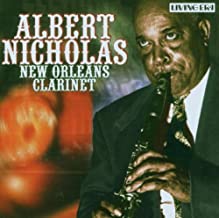
Albert Nicholas was born on May 27, 1900 in New Orleans, Louisiana and his primary instrument was the clarinet, which he studied with Lorenzo Tio in his hometown of New Orleans. Late in the 1910s he played with Buddy Petit, King Oliver, and Manuel Perez.
Spending three years in the Merchant Marines, he then joined Oliver in Chicago, Illinois from 1925 to 1927. After time in East Asia and Egypt, he returned to New York City in 1928 and played with Luis Russell until 1933. During this time in the city Albert played with Red Allen, Charlie Holmes, and J. C. Higginbotham. He would later play with Chick Webb, and Louis Armstrong with Russell and Jelly Roll Morton.
The Dixieland jazz revival of the late 1940s reinvigorated his career, playing with Art Hodes, Bunk Johnson, and Kid Ory. Nicholas had a regular gig with Ralph Sutton in 1948. In 1953 he moved to France and except for recording sessions in the U.S. in 1959-60, he remained there for the rest of his life.
Clarinetist Albert Nicholas, who was active from his teen years until his death, passed away on September 3, 1973 in Base, Switzerland.

More Posts: clarinet,history,intrumental,jazz,music
Daily Dose Of Jazz…
Herbert “Kat” Cowans, also spelled Cowens, was born May 24, 1904 in Texas. Working as a shoeshine boy as a child, his first professional engagement as a drummer was with the Satisfied Five, a local Texas ensemble. After moving to Wichita Falls, Texas he played in Frenchy’s New Orleans Jazz Band, then worked with Charlie Dixon. Quitting Dixon’s ensemble to finish high school while still in his teens, he went on to play in theater orchestras early in the 1920s.
Moving to New York City, Cowans played with Cleo Mitchell in the Shake Your Feet revue. Following this, he did work with the Kansas City Blackbirds, Jimmy Cooper’s Black and White Revue, and Eubie Blake in addition to leading his own band.
In the 1930s Herbert played with Fats Waller and Stuff Smith, before joining Eddie Heywood’s band for recordings behind Billie Holiday in 1941. He worked with Garvin Bushell in 1942, then played in the pit orchestra for the Broadway show The Pirate.
Cowans led a USO band in 1943, touring military bases worldwide, then led small ensembles for several decades thereafter. He also worked with Louis Metcalfe in 1963. He worked with USO again in East Asia in the 1970s, then retired to Dallas, Texas. Drummer Herbert Cowans passed away on January 23, 1993.
More Posts: bandleader,drums,history,instrumental,jazz,music
Daily Dose Of Jazz…
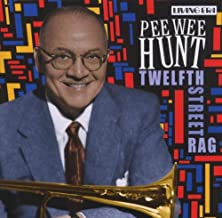
Pee Wee Hunt was born Walter Gerhardt Hunt on May 10, 1907 in Mount Healthy, Ohio. He developed a musical interest at an early age, as his mother played the banjo and his father played violin. As a teenager he was a banjoist with a local band while he was attending college at Ohio State University where he majored in electrical engineering. During his college years he switched from banjo to trombone, and graduated from the Cincinnati Conservatory of Music. He joined Jean Goldkette’s Orchestra in 1928.
Hunt was the co-founder and featured trombonist with the Casa Loma Orchestra, but he left the group in 1943 to work as a Hollywood radio disc jockey before joining the Merchant Marine near the end of World War II. Returning to the West Coast music scene in 1946, his Twelfth Street Rag was a three million-selling, number one hit in 1948. His second million-selling disc was Oh! in 1953. He was satirized as Pee Wee Runt and his All-Flea Dixieland Band in Tex Avery’s animated MGM cartoon Dixieland Droopy in 1954.
Trombonist, vocalist and bandleader Pee Wee Hunt passed away on June 22, 1979 at age 72 after a long illness in Plymouth, Massachusetts
More Posts: bandleader,history,instrumental,jazz,music,trombone,vocal
Daily Dose Of Jazz…
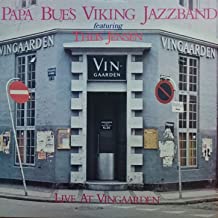
Arne Bue Jensen, known as Papa Bue, was born May 8, 1930 in Copenhagen, Denmark and at an early age became fascinated with jazz, prompted by a pile of records from his brother. The collection included Harry James, Artie Shaw, Tommy Dorsey, Glenn Miller, Bert Ambrose. Bunk Johnson and George Lewis made a strong impression.
After World War II, Jensen became a sailor, visiting ports around the world. It was around this time that he started to play jazz, buying a slide trombone with money he borrowed. Learning the basics from a musician from the Royal Danish Orchestra, he was mostly self-taught, he went on to play in clubs around Copenhagen with other young musicians and bands, including the Royal Jazzman, Henrik Johansen’s Jazz Band, and the Saint Peter Street Stompers, participating as a sideman in several recordings.
In the 1950s, Papa Bue worked with the Bonanza Jazz Band, Chris Barber, Adrian Bentzon, and Henrik Johansen. During the decade In the mid 1950s, he was part of the entertainment district in Nyhavn. With six musicians he founded the New Orleans Jazz Band in 1956, after a jam session at Cap Horn. Since Jensen was the eldest, he became the bandleader and as the only band member who was a father, was given the nickname Papa Bue.
By late 1957 he renamed the ensemble the Viking Jazz Band. The name came from American journalist and vocalist Shel Silverstein, who attended one of their concerts at Cap Horn during a stay in Copenhagen. He subsequently wrote an article about them, calling them the Danish Vikings, and adopting the new name, they released their first album as the Viking Jazz Band in 1958. In 1960 their Schlafe Mein Prinzchen sold over one million copies, and was awarded a gold disc.
At a time when many jazz musicians worked in the Bebop idiom, Bue’s style remained based on the Dixieland tradition but also with influences from early swing music. He is considered one of the most significant proponents of his genre.
The group remained active into the 1990s, and recorded with musicians such as George Lewis, Champion Jack Dupree, Art Hodes, Wild Bill Davison, Wingy Manone, Edmond Hall, Albert Nicholas. Earl Hines, Stuff Smith, and Ben Webster. In 1969, Papa Bue’s Viking Jazz Band was the only non-American band to participate in the New Orleans Jazz Festival.
While in New Orleans, he was honored with the Golden Keys to the City. In 1989 he received the Ben Webster’s Prize of Honour. Trombonist and bandleader Papa Bue, chiefly associated with the Dixieland jazz revival style, passed away on November 2, 2011 at the age of 81.
More Posts: bandleader,history,instrumental,jazz,music,trombone
Daily Dose Of Jazz…
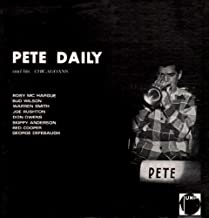
Pete Daily was born on May 5, 1911 in Portland, Indiana. He started his career in Chicago, Illinois in 1930 playing with various bands in and around the city. He was the leader of Pete Daily and his Chicagoans in the 1940s and 50s and recorded for Capitol Records as Dixie by Daily and Pete Daily’s Dixieland Band. They also recorded on the Jump and Decca labels in the 1950s.
In 1942, he moved to the West Coast and, after service in World War II, formed the Chicagoans. He played long engagements at several Hollywood night clubs in the 1950s such as Sardis, The Royal Room, and the Astors in Studio City. He continued to play during the 1970s until a stroke in 1979 forced him to retire.
During the filming of Pete Kelly’s Blues, actor Jack Webb, the cornet-playing star of the film, repeatedly went to the nightclub where Daily performed to study his mannerisms for his role in the film. The band which recorded the soundtrack appeared at Dixieland festivals supported by Pete Daily’s band.
His driving style on the cornet endeared him to generations of Dixieland Jazz enthusiasts. Cornetist and valve trombonist Pete Daily, who played swing and dixieland, passed away on August 23, 1981.
More Posts: bandleader,cornet,history,instrumental,jazz,music,valve trombone