

Daily Dose Of Jazz…
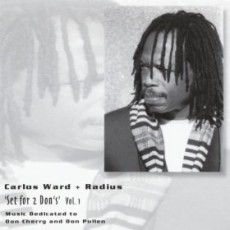
Carlos Ward was born on May 1, 1940 in Ancon, Panama and was raised in Panama City. His first instrument was the ukulele and by age 12 he took to the clarinet. His early influences were his aunt and uncle, both pianist, the former classical. He listened to Bob Crosby’s Dixieland clarinet on the radio as were as calypso.
By 1952 his family relocated to Seattle, Washington where his friend Marion Evans introduced him to the alto saxophone. Through high school he hung out with drummer Doug Robinson and the rock group The Playboys. Ward would go on to attend the Navy School of Music and worked with Albert Mangelsdorff when he was stationed in Germany.
He listened to Monk and Coltrane but it was Ornette Coleman’s “The Shape of Jazz to Come” that made the greatest impression on him. After a prophetic meeting with John Coltrane, in 1965 he took his advice and moved to New York. This led to his first major effort was his work with John Coltrane’s unrecorded octet in the period between 1965-66. He had a long-lasting association with Don Cherry from 1973 to 1980 and beyond. His duet association with pianist Abdullah Ibrahim has also been significant to his career.
Ward was a member of Cecil Taylor’s group in the period immediately after altoist Jimmy Lyons death in 1986. He also was a member of The Ed Blackwell Project and led his own quartet in 1987.
Alto saxophonist and flautist Carlos Ward has four albums as a leader and has some 15 as a sideman while working with Carla Bley, Roswell Rudd and the Jazz Composers Orchestra, Karl Berger, Abdullah Ibrahim, Paul Motian, Sunny Murray, Sam Rivers, Rashied Ali and Don Pullen & The African-Brazilian Connection.
It is unfortunate for the industry that an injury to his playing hand has sidelined this musician for many years. However, Ward is readying himself for a return to the scene and hopefully we will hear from future generations of players who will partake of the opportunity to glean knowledge from this master.

Put A Dose In Your Pocket
Daily Dose Of Jazz…
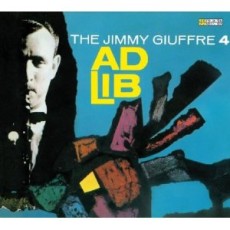
James Peter Giuffre was born on April 26, 1921 in Dallas, Texas. A graduate of Dallas Technical High School and North Texas Teachers College, he first became known as an arranger for Woody Herman. He would become a central figure in West Coast jazz and cool jazz, and was a member of Shorty Roger’s groups before going solo. Giuffre played clarinet, as well as tenor and baritone saxophones, but eventually focused on clarinet.
His first trio in 1957 consisted of Giuffre, guitarist Jim Hall and double bassist Ralph Pena, later replace by Jim Atlas. With minor hit with Giuffre’s “The Train and the River” featured on a television special The Sound of Jazz, he was matched with Pee Wee Russell for a leisurely jam session. When Atlas left the trio, Jimmy replaced him with valve trombonist Bob Brookmeyer. By 1961, Giuffre formed a new trio with Paul Bley and Steve Swallow and exploring free jazz hushed and quiet focus more resembling chamber music. The trio’s early ‘60s explorations of melody, harmony and rhythm are still as striking and radical as any in jazz.
Throughout the ‘60s Giuffre, Bley and Swallow eventually explored wholly improvised music, several years ahead of the free improvisation boom in Europe. By the early 1970s, Giuffre formed a new trio and utilized different instrumentation configurations as he ventured into electric and synthesizers. During this decade he headed the jazz ensemble at New York University, taught private lessons in saxophone and music composition. This continued through the ‘90s at the New England Conservatory of Music.
Jimmy Giuffre, who continually wrote creative and unusual arrangements and who was most notable for his development of forms of jazz which allowed for free interplay between the musicians, anticipating forms of free improvisation, passed away in Pittsfield, Massachusetts on April 24, 2008 of pneumonia, just two days shy of his 87th birthday.
Give A Gift Of Jazz – Share
Daily Dose Of Jazz…
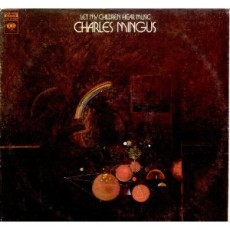
Charles Mingus Jr. was born on April 22, 1922 in Nogales, Arizona of Chinese, English, African and Swedish heritage. His mother allowed only church-related music in their home, but Mingus developed an early love for jazz, especially the music of Duke Ellington. He first studied trombone, later adding cello, which prepared him for the double bass in high school. He studied five years with H. Rheinshagen, principal bassist of the New York Philharmonic and compositional techniques with Lloyd Reese.
Beginning in his teen years, Mingus was writing quite advanced pieces incorporating elements of classical music. A number of them were recorded in 1960 with conductor Gunther Schuller and released as “Pre-Bird”, referring to Charlie “Bird” Parker. Mingus was one of many musicians whose perspectives on music were altered by Parker into “pre- and post-Bird” eras.
Gaining a reputation as a bass prodigy, his first major professional job was playing with former Ellington clarinetist Barney Bigard. This followed by a tour with Louis Armstrong in 1943 that led to his recording in a band led by Russell Jacquet that included Teddy Edwards and Chico Hamilton. He went onto record with Howard McGhee and into the late ‘40s played with Lionel Hampton’s band performing several of his pieces.
A popular Mingus trio had Red Norvo and Tal Farlow in tow in the early 50s with considerable acclaim but his mixed heritage caused problems with club owners and he left the group. Charles was briefly a member of Ellington’s band until his temper got him fired. He went on to record and play with Max Roach, Bud Powell, Dizzy Gillespie, Charlie Parker, Pepper Adams, Jaki Byard, Horace Parlan, Booker Ervin, John Handy, Charles McPherson, Eric Dolphy and Johnny Coles among others through the Sixties and into the next decade. By the mid-1970s, Mingus was suffering from Lou Gehrig’s disease that eventually stopped his playing, leaving him to continue composing and supervising recordings prior to his death on January 5, 1979 at age 56 in Cuernavaca, Mexico.
Composer, bandleader, bassist and civil rights activist Charles Mingus left a legacy of an autobiography, Mingus Big Band, Mingus Dynasty, Mingus Orchestra, the Charles Mingus High School Competition, the catalogue of Mingus compositions in the Music Division of the New York Public Library and the collected papers of Charles Mingus housed at the Library of Congress in Washington, DC.
Take A Dose On The Road
More Posts: bandleader,bass,composer

Daily Dose Of Jazz…
Horace Tapscott was born Horace Elva Tapscott in Houston, Texas, the son of a jazz musician mother on April 6, 1934. When he turned nine his family moved first to Fresno, California, eventually settling in Los Angeles. Reaching maturity at a critical time in the history of L.A. jazz, he was privy to the like of Dexter Gordon, Art Tatum and Coleman Hawkins who were playing the Central Avenue clubs in the late ‘40s.
In 1961 Horace formed the Pan Afrikan Peoples Arkestra, also known as P.A.P.A., or The Ark in 1961 and led the ensemble that included at one time or another Arthur Blythe, Stanley Crouch, Butch Morris, Wilbur Morris, David Murray and Jimmy Woods through the 1990s. In 1968 he composed and arranged saxophonist Sonny Criss’ critically acclaimed “The Birth of the New Cool”. He followed this with a decade long performance of his own works, a succession of recordings for the Nimbus label and a growing reputation and flourishing creativity that eventually leading to the recognition he deserved.
His powerful and percussive approach to playing coupled with a highly individual bop-tinged style with avant-garde leanings became somewhat of an inspiration to a new generation of L.A. based free jazz players. Horace Tapscott and his work are the subjects of the UCLA Horace Tapscott Jazz Collection. The composer and pianist passed away of lung cancer on February 27, 1999 in Los Angeles, California.
More Posts: piano
Daily Dose Of Jazz…
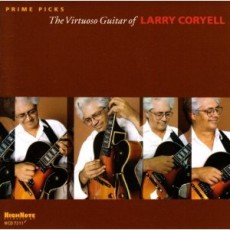
Larry Coryell was born April 2, 1943 in Galveston, Texas moved to Washington as a child. After graduating from Richland High School in eastern Washington, he moved to Seattle to attend the University of Washington.
In 1965, Coryell moved to New York City where he became part of Chico Hamilton’s quintet replacing Gabor Szabo. In the Sixties he recorded with Gary Burton, played with The Free Spirits and extended his musical landscape to include influences of rock, jazz and eastern music.
He formed his own group, “The Eleventh House” in 1973 and following the break-up of this band, Coryell played mainly acoustic guitar but returned to electric guitar later in the 1980s.
In 1979, Coryell formed “The Guitar Trio” with jazz-fusion guitarist John McLaughlin and flamenco guitarist Paco de Lucia. The group toured Europe, released “Meeting of Spirits” recorded at Royal Albert Hall in London, however, his drug addiction led to his being replaced by Al Di Meola.
By the turn of the century he settled back into a more mainstream style of playing releasing “Cedars of Avalon”, “Monk, Trane, Miles & Me”, “Tricycles”, and “Power Trio: Live In Chicago”. In 2007, Coryell published an autobiography titled “Improvising: My Life in Music”. Guitarist Larry Coryell remains active in the music industry performing, touring and recording.
More Posts: guitar