
Daily Dose Of Jazz…
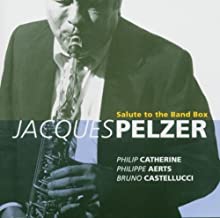
Jacques Pelzer was born in Liège, Belgium on June 24, 1924, and got his inspiration from Benny Carter, then Charlie Parker and Lee Koni. His first exposure to jazz was after World War II when he joined the Bob Shots, a legendary Belgian bop band that included at various time pioneers such as Bobby Jaspar, René Thomas, and Sadi. He also played with other historical figures of Belgian jazz such as pianist/arranger Francy Boland, guitar and harmonica player Toots Thielemans, bassist Benoît Quersin. His work with René Thomas continued for several years, leading to several recordings.
Pelzer’s evolution in the Sixties and Seventies included free jazz and fusion, recorded the soundtrack of the film “Le Départ” with Don Chery, Philip Catherine, and Gato Barbieri. He had three tours of the United States with Chet Baker, resulting in a lasting friendship and musical partnership and ultimately met Dexter Gordon, Archie Shepp, Stan Getz, Lee Konitz, Philly Joe Jones and Bill Evans.
The next two decades saw Jacques returning to straight-ahead jazz, acoustic jazz, and bebop standards, modern compositions with an accent on lyricism and expression. Moving back to the studios in 1990 to record his CD Never Let Me Go with his band the Open Sky Unit along with Barney Wilen, Michel Graillier, Eric Legnini as guests. This recording received the Sax Prize for best jazz album of the year 1991.
Three magnificent Belgian jazz musicians, guitarist Philip Catherine, bassist Philippe Aerts, and drummer Bruno Castellucci joined for his final album Salute To The Bandbox. Alto and soprano saxophonist and flutist Jacques Pelzer passed away on August 6, 1994 in his hometown.

More Posts: bandleader,history,instrumental,jazz,music
Daily Dose Of Jazz…
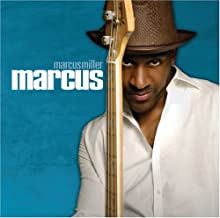
Marcus Miller, born William Henry Marcus Miller Jr. on June 14, 1959 in Brooklyn, New York and raised in a musical family. Classically trained as a clarinetist, he also plays keyboards, saxophone and guitar. He began to work regularly in New York City, eventually playing bass and writing music for jazz flutist Bobbi Humphrey and keyboardist Lonnie Liston Smith.
Spending 15 years as a session musician, he arranged and produced frequently, was a member of the Saturday Night Live band from 1979 to 1981, and co-wrote Aretha Franklin’s Jump To It along with Luther Vandross. He has played bass on over 500 recordings, appearing on over 500 albums by such artists as Herbie Hancock, The Crusaders, Wayne Shorter, McCoy Tyner, Frank Sinatra, George Benson, Michael Jackson, Beyoncé, Mariah Carey, Eric Clapton, Dr. John, Aretha Franklin, Elton John, Joe Walsh, Jean-Michel Jarre, Grover Washington Jr., Donald Fagen, Bill Withers, Bernard Wright, Kazumi Watanabe, Chaka Khan, LL Cool J, and Flavio Sala.
He won the Most Valuable Player award given by NARAS to recognize studio musicians three years in a row and was subsequently awarded Player Emeritus status and retired from eligibility. In the nineties, Miller began to write his own music and make his own records, putting a band together and touring regularly.
Between 1988 and 1990 he appeared regularly both as a musical director and as the house band bass player in the Sunday Night Band during two seasons of Sunday Night on NBC late-night television, hosted by David Sanborn.
As a composer, Miller co-wrote and produced several songs on the Miles Davis album Tutu, including its title track. He also composed Chicago Song for David Sanborn and co-wrote ‘Til My Baby Comes Home, It’s Over Now, For You To Love, and Power of Love for Luther Vandross and wrote Da Butt, which was featured in Spike Lee’s School Daze.
Miller hosts a jazz history show called Miller Time with Marcus Miller, is a film score composer, was nominated and won several Grammy Awards. Bassist Marcus Miller continues to perform, record and tour.
More Posts: bass,clarinetist,guitar,history,instrumental,jazz,keyboards,music,saxophone,vocal
Daily Dose Of Jazz…
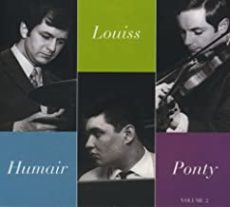
Daniel Humair was born May 23, 1938 in Geneva, Switzerland and played clarinet and drums from the age of seven and won a competition for jazz performance in his teens. By the time he was twenty he was in Paris, France accompanying visiting musicians with his most celebrated season with tenor saxophonist Lucky Thompson at a club called Le Chat Qui Pèche.
Humair became the drummer American musicians would ask to work with, despite a gig with the Swingle Singers in the early 60s. In 1967 he played on violinist Jean-Luc Ponty’s debut Sunday Walk, also contributing the title track. When alto saxophonist Phil Woods emigrated to Paris in 1968 it was natural that Humair should be the drummer in what Woods called the European Rhythm Machine.
In 1969 he won the Downbeat critics’ poll as Talent Deserving Wider Recognition. Humair was so in demand that his job-sheet reads like a list of the pre-eminent names in jazz, Herbie Mann , Roy Eldridge, Stéphane Grappelli, Chet Baker, Michel Portal, Martial Solal, Dexter Gordon, and Anthony Braxton all availed themselves of his graceful, incisive drums. He played with Gato Barbieri on the soundtrack to Last Tango In Paris in 1972.
In 1986, Daniel’s record Welcome on Soul Note, a record which listed all members of the quartet as leaders, was a perfect demonstration of his warmth and responsiveness as a drummer and continued to top drum polls in France well into the 90s. In 1991, Surrounded documented a selection of his work from 1964-87, including tracks with legends such as Eric Dolphy, Gerry Mulligan and Johnny Griffin – a neat way of giving Humair centre-stage and celebrating the breadth of his involvement with jazz history.
To date he has recorded more than four-dozen albums as a leader, became a Chevalier of the Ordre des Arts et des Lettres in 1986 and Officier in 1992. A talented painter, he describes his own work as figurative abstract. Drummer Daniel Humair continues to perform and record.

More Posts: bandleader,composer,drums,history,instrumental,jazz,music
Daily Dose Of Jazz…
Trevor Ramsey Tomkins was born May 12, 1941 in London, England. As a young teenager, he first took up the trombone before switching to the drums on which he made his first professional appearance. Although he studied extensively, mostly in the classical vein, he was deeply interested in jazz, studied harmony and music theory, and in the early 60s moved permanently into this field.
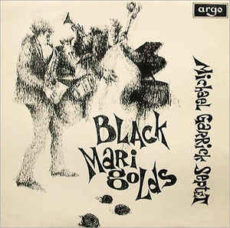
Trevor worked and recorded several albums in small groups with trumpeter Ian Carr, as well as pianist Michael Garrick and saxophonist Don Rendell in the late 1960s and early 1970s. In the Seventies, he was a member of the jazz-fusion group Gilgamesh that was part of the Canterbury scene in Kent, England. He also performed and recorded with saxophonist Barbara Thompson, pianist Mike Westbrook, and others.
After spending some time in the United States, he returned to England and became one of the most sought after jazz drummers in the UK. Tomkins worked with Ian Carr’s Nucleus, Giles Farnaby’s Dream Band, David Becker, and Henry Lowther’s Quaternity. He appears on the 1971 album First Wind by Frank Ricotti and Mike de Albuquerque and on Tony Coe’s 1978 album Coe-Existence. He is also in demand as accompanist to American jazzmen visiting the UK, amongst them Lee Konitz.
Mainstream and bop drummer Trevor Tomkins, who has never been a leader and was a member of various trios and other line-ups with Roy Budd, remains a first call drummer and much-respected teacher on the jazz scene.
More Posts: drums,history,instrumental,jazz,music

Daily Dose Of Jazz…
Louis Landon was born on May 6, 1931 in Yonkers, New York and began studying piano at age five, playing classical compositions. Shortly afterward his parents got him piano lessons. In 1960 his family relocated to Studio City, California where his father, Leo De Lyon, is the voice actor best known as Brain and Spook in the popular television cartoon, Top Cat.
In the early 1970s, Landon transferred from Stony Brook University to Berklee College of Music in Boston, Massachusetts to pursue his studies in jazz. While playing in and around Boston, Landon met saxophonist, John Payne, and toured with the John Payne Band for three years from 1974 to1977. During that period they recorded four albums, to which he contributed his songwriting skills, and incorporate a jazz fusion style into their sound and opened for Weather Report, The Tony Williams Lifetime, John McLaughlin.
Leaving Boston for Manhattan, he formed a jazz fusion band called Nightfire, and did studio work and freelanced around New York City. During the late 1970s, Landon auditioned for and landed the position of the keyboardist in the John Hall band. Appearing on Hall’s Columbia Records LP, Power, he subsequently began touring with composer and pop singer Rupert Holmes. He toured extensively during the course of the next few years across the country with Hall and Holmes as well as Mikhail Baryshnikov and Pucho & His Latin Soul Brothers.
He has also performed with The Doobie Brothers, Bonnie Raitt, and John Hall at the 1979 No Nukes concert that produced a triple live album released in 1980 that Landon is credited on as a keyboard player.
Composer, solo pianist for peace, singer-songwriter, recording artist, and touring musician from New York City, Louis Landon currently resides in Sedona, Arizona.
More Posts: bandleader,history,instrumental,jazz,music,piano,singer,songwriter