

Daily Dose Of Jazz…
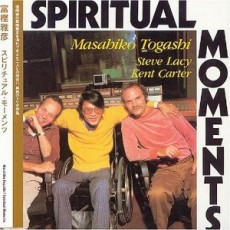
Masahiko Togashi was born in Tokyo, Japan on March 22, 1940 and began his musical education with the violin at age 6. It was some time later that the young man took up drums. He made his debut as a professional drummer at 14 with his father’s swing band and appeared on his first recording three years later with Sadao Watanabe’s Cozy quartet.
Togashi would go on to form his own quartet, releasing his group’s debut album, We Now Create, in 1969. However, a spinal injury in 1970 left the jazz percussionist permanently paralyzed from the waist down, and he would play the rest of his life seated in a specially designed wheelchair.
His physical disability limited his international travels and festival appearances, but frequently played with visiting musicians most notably saxophonist Steve Lacy who performed and recorded extensively with Togashi during his 12 tours in Japan, in particular Bura-Bura featuring Lacy along with Don Cherry and Dave Holland.
Drummer Masahiko Togashi passed away of heart failure at age 67 in his home in Kanagawa, Japan on August 22, 2007. Over the course of his career, which spanned more than 50 years, the percussionist strived to broaden the exposure of Japanese jazz and bridge Western music with the traditional sounds of eastern Asia.
More Posts: drums,percussion
Daily Dose Of Jazz…
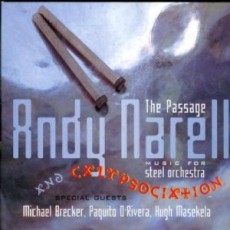
Andy Narell was born March 18, 1954 in New York City and took up the steelpan at a very young age after his father invited Ellie Mannette to bring steel pan to Queens, New York in an attempt to get kids off the street and out of gangs.
Moving with his family to California in his teens he eventually studied music at the University of California, Berkeley. He played piano with UC Jazz Ensembles and graduated in 1973. In the 1980s he worked in the project Bebop & Beyond, recording tribute albums to Dizzy Gillespie and Thelonious Monk. He has performed with the Caribbean Jazz Project, Montreux, Sakésho, and Bela Fleck and the Flecktones.
A composer and arranger Andy has created music for Trinidad’s national steelband competition Panorama, and has also performed in South Africa. He has performed and recorded with Spyro Gyra, Taj Mahal, Toto and Mike Marshall and has recorded more than two dozen albums for Windham Hill, Inner City and Heads Up record labels. Steel panist Andy Narell continues to compose, arrange, perform and tour.
More Posts: steel drums
Daily Dose Of Jazz…
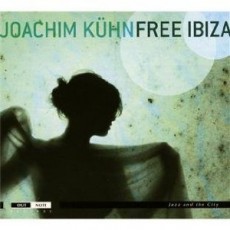
Joachim Kühn was born March 15, 1944 in Leipzig, Germany. He was a musical prodigy and made his debut as a concert pianist, having studied classical piano and composition. Influenced by his elder brother, clarinetist Rolf Kühn, he simultaneously got interested in jazz and in 1961 he became a professional jazz musician.
He put together a trio in 1964 and presented the first free jazz in East Germany. In 1966 he left the country and settled in Hamburg and together with his brother played the Newport Jazz Festival and recorded with Jimmy Garrison on the Impulse Record label.
Kühn moved to Paris in 1968 and has since worked with Don Cherry, Karl Berger, Slide Hampton, Phil Woods and Jean-Luc Ponty among others. As a member of Association P.C. he turned to electronic keyboards and during the second half of the 70’s he lived in California and joined the West Coast fusion scene. This period saw him recording with Alphonse Mouzon, Billy Cobham, Michael Brecker and Eddie Gomez.
Returning to Europe and settled near Paris again, he has played in an acoustic trio with Jean-Francois Jenny-Clark and Daniel Humair since 1985. In the summer of 1996, he joined Ornette Coleman for two concerts at the Verona and Leipzig festivals, which opened the way for his Diminished Augmented System. He continues to perform and record.
More Posts: piano
Daily Dose Of Jazz…
Norman Connors was born on March 1, 1947 in Philadelphia, Pennsylvania. He became interested in jazz as a child when he began to play drums and while in middle school once sat in for Elvin Jones at a John Coltrane performance. He continuing music studies took him to Temple University and Julliard.
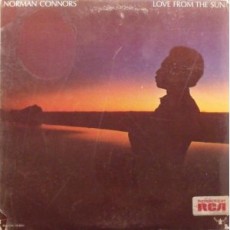
His first recording was on Archie Shepp’s 1967 release, Magic of JuJu and then played with Pharoah Sanders for the next few years. In 1972 he signed with Cobblestone Records and released his first album as a leader. He went on to front some great jazz recordings with Carlos Garnett, Gary Bartz, Dee Dee Bridgewater and Herbie Hancock such as “Love From the Sun”.
By the mid 70s Norman’s focus leaned more towards R&B, scoring several U.S. hits with songs and love ballads featuring guest vocalists such as Michael Henderson, Jean Carn and Phyllis Hyman. He also produced recordings for various artists, including collaborations with Carn and Hyman and also Norman Brown, Al Johnson, and Marion Meadows.
Norman Connors is a drummer, composer, arranger and producer who has recorded for Buddah, Arista, Capitol, Motown and Shanachie record labels; worked with Howard Hewitt, Bobby Lyle, Ray Parker Jr., Peabo Bryson and Antoinette and has since ventured into disco and smooth jazz and urban crossover arenas.
More Posts: drums
Daily Dose Of Jazz…
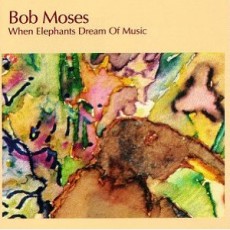
Bob Moses: The Drummer Who Helped Invent Jazz Fusion
Rakalam Bob Moses was born on January 28, 1948, in New York City, arriving just as bebop was transforming into something even more adventurous. He studied drums throughout his childhood, absorbing the rhythmic complexity of modern jazz, and by the time he was a teenager in 1964, he was already playing professionally with the wildly creative multi-instrumentalist Rahsaan Roland Kirk—a baptism by fire that would shape his fearless approach to rhythm.
Pioneering Fusion Before It Had a Name
In 1966, Moses and guitarist Larry Coryell did something revolutionary: they formed the jazz-fusion group Free Spirits, blending jazz improvisation with rock energy and electric instruments at a time when most jazz purists considered such combinations heretical. This was two years before Miles Davis’ In a Silent Way, two years before Tony Williams Lifetime—Free Spirits were genuine pioneers, exploring territory that barely had a map.
The following year, 1967, Moses began a fruitful collaboration with vibraphonist Gary Burton, with whom he would record throughout the 1970s. Burton’s innovative approach to the vibraphone and his openness to musical experimentation made him the perfect partner for Moses’ exploratory drumming.
Finding His Voice as a Leader
Moses released his first album as a leader, Bittersuite, in 1975—a deeply personal statement that showcased his compositional abilities alongside his drumming. This was followed by Devotion in 1979, further establishing him as not just a sideman but a creative force with his own vision.
During this fertile period, he was also a member of Compost, an adventurous ensemble featuring saxophonist Harold Vick, percussionist Jumma Santos, bassist Jack Gregg, and the great drummer Jack DeJohnette. The group explored Afro-Cuban rhythms, modal jazz, and free improvisation—a melting pot that reflected Moses’ wide-ranging musical interests.
A Collaborator’s Collaborator
Moses became the drummer of choice for some of the most forward-thinking musicians of the era. He worked extensively with saxophonist Dave Liebman’s Open Sky ensemble, guitarist Pat Metheny (during his early, more experimental period), pianist Hal Galper, keyboardist Gil Goldstein, bassist Steve Swallow, Swiss bandleader George Gruntz, and the brilliant guitarist Emily Remler—each collaboration revealing different facets of his musical personality.
What united all these partnerships was Moses’ ability to provide both solid grounding and adventurous color, to swing hard when needed but also to explore texture, space, and unconventional rhythmic structures.
Prolific Leadership
From the 1980s into the new millennium, Moses continued recording prolifically as a leader for Gramavision, Amulet, Navarre, Sunny Side, and Jazzwerkstat record labels. Many of these releases received significant critical acclaim, recognized for their compositional depth, rhythmic sophistication, and willingness to take chances.
Unlike some drummers who lead albums that are merely showcases for technique, Moses’ recordings are genuine compositions—thoughtfully constructed pieces that happen to feature exceptional drumming rather than drum solos searching for a musical context.
Still Creating, Still Teaching
Today, Moses continues performing alongside bassist John Lockwood, bassist Don Pate, and keyboardist John Medeski with the noted spiritual jazz guitarist Tisziji Muñoz—explorations that connect to jazz’s mystical, transcendent possibilities.
He also teaches at the prestigious New England Conservatory, where he passes on decades of hard-won knowledge to the next generation of drummers and improvisers. For Moses, teaching isn’t just about technique—it’s about opening young musicians’ ears to possibilities they haven’t yet imagined.
A Legacy of Fearless Exploration
From teenage prodigy playing with Roland Kirk to jazz-fusion pioneer with Free Spirits, from sensitive accompanist with Gary Burton to visionary bandleader with dozens of albums under his own name, Bob Moses has spent over six decades refusing to be categorized, refusing to play it safe, and refusing to believe that drums are merely a timekeeper.
He’s proven that the drum kit can be a melodic instrument, a textural palette, a conversational partner, and a compositional tool—all while never losing sight of the fundamental groove that makes jazz music move and breathe.
That’s not just a career—that’s a lifetime of pushing boundaries and expanding what’s possible behind the kit.
More Posts: drums