

Daily Dose Of Jazz…
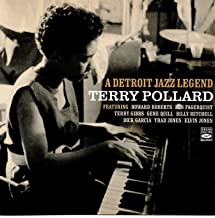
Terry Pollard (August 15, 1931 in Detroit, Michigan and began her career by collaborating with other Detroit musicians, such as Billy Mitchell and Elvin Jones, in the house band at the Blue Bird Inn. Johnny Hill, and the Emmitt Slay Trio.
Discovered by Terry Gibbs, she toured with him in the early 1950s, playing piano and vibraphone. They recorded several albums, including Terry Gibbs Quartet – Featuring Terry Pollard. Pollard appeared with Gibbs on an episode of The Tonight Show hosted by Steve Allen. Her collaborations with Gibbs from 1953 to 1957 marked the height of her career.
Pollard also performed with John Coltrane, Charlie Parker, Miles Davis, Chet Baker, Nat King Cole, Dinah Washington, Duke Ellington and Ella Fitzgerald
Recording a self-titled solo album for Bethlehem Records in 1955, Terry won Down Beat magazine’s New Artist award in 1956. She retired from her full-time music career shortly thereafter in order to raise a family, but she continued to play locally in Detroit and performed with Yusef Lateef, Dorothy Ashby, Don Fagerquist, and Diana Ross and the Supremes among others.
Her contributions to the mid-century Detroit jazz scene were recognized in the book Before Motown: A History of Jazz in Detroit 1920-1960, by Lars Bjorn and Jim Gallert. Pianist, vibraphonist Terry Pollard, who was inducted into the Michigan Jazz Hall of Fame, passed away on December 16, 2009 in Detroit.

More Posts: bandleader,history,instrumental,jazz,music,piano,vibraphone
Daily Dose Of Jazz…
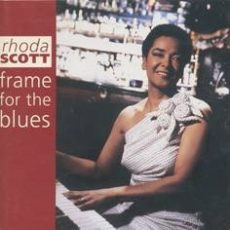
Rhoda Scott was born in Dorothy, New Jersey on July 3, 1938 the daughter of an A.M.E. pastor. She spent most of her childhood in New Jersey, where she learned to play the organ in her father’s churches from the age of seven. Soon she was organist for youth and gospel choirs in her father’s church or in other churches. Later she studied classical piano and focused more on the organ while earning a Masters in Music Theory from the Manhattan School of Music.
During this time, a choir member asked her to be in a small band as a jazz pianist. Accepting under the condition that she play the organ instead of the piano, and overtime on the Hammond organ, she became an outstanding jazz musician. She played the church organ barefoot, and continued this practice earning her the nickname “The Barefoot Lady”. It is considered a role model for many who also play the organ barefoot today. Because of her church training, Scott uses the pedals to play walking bass lines. This leaves her left hand free for more sophisticated chords.
Scott was discovered by Count Basie, who hired her for his club in Harlem, New York. In 1967 she moved to France, where her success was far greater than in the United States. She performed at the Paris Olympia and appeared on stage with many greats such as Ray Charles, George Benson , Ella Fitzgerald, Kenny Clarke and Gilbert Bécaud. In the 1970s she was frequently requested by Joe Thomas, Cees Kranenburg Jr., Bill Elliott, Kenny Clarke, Julie Saury, Sophie Alour, Lisa Cat-Berro, Anne Paceo, Géraldine Laurent, Julien Alour, and Thomas Derouineau.
Her music is a fusion of jazz, gospel, and classical and reflects both her early practice and formal training. Hard bop and soul-jazz organist Rhoda Scott, who has recorded eight albums from 1963 to today, continues to perform and record.

More Posts: bandleader,history,instrumental,jazz,music,organ
Daily Dose Of Jazz…
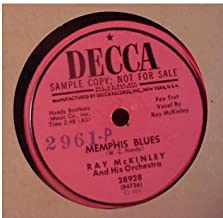
Ray Mckinney was born Raymond Patterson McKinney on June 20, 1931 in Detroit, Michigan. He was the fourth of ten children artistically gifted, and most of the children took music lessons from their mother. Starting on the Ocarina, he soon graduated to the piano, then the cello which he took to the instrument immediately. His father and English teacher encouraged him to write poetry and he became quite proficient.
During his high school years that Ray was first exposed to jazz, hearing Ella Fitzgerald with Chick Webb in 1939, also Erskine Hawkins and Jay McShann when he had Charlie Parker with him. Music in the neighborhood, there were bands made up of youngsters who played homemade instruments, such as, pails, brushes, spoons and it was where Ray learned that he only needed himself to make music.
The band director at Northwestern High School forced him to switch from cello to bass. Academically gifted, he was determined to be heard above the Northwestern band, he developed his technique. His passion for music consumed his time and he quit school in 1947 at age sixteen. He was spending time with like-minded students and other aspiring musicians from his west-side neighborhood, Maurice Wash, Claire Rockamore, Barry Harris, and Frank Foster. It was where he developed stamina, playing twelve, eighteen hours at a time. McKinney and Harris worked local jobs backing a vocal group in which Harris’ wife Christine was a member. This group recorded at least twenty titles for the New Song label in 1950.
Ray became a force to be reckoned with on the competitive Detroit scene and he worked with several Detroit piano stars. Though he liked bassists Alvin Jackson, Clarence Sherrill and Major “Mule” Holley, his major influences were Ray Brown, Oscar Pettiford, Tommy Potter and Dillon “Curly” Russell. He befriended Paul Chambers and his cousin Doug Watkins, because their playing impressed him, especially Paul’s bowing.
In 1956 he moved to New York City with harpist Dorothy Ashby’s group, however, the gig didn’t last long when Ray was fired after punching Ashby’s husband in the face during an argument. He would go on to work with Guy Warren, Barry Harris, Ben Webster, Edmund Hall, Max Roach, Walter Benton, Booker Little, Julian Priester, Coleman Hawkins, Mal Waldron, Eric Dolphy, Red Garland, Yusef Lateef, Andy Bey and spent a year with comic Nipsey Russell’s back-up band.
For a short time he experimented with heroin but by 1973 McKinney was clean and living in Oberlin, Ohio and with a new love interest before settling in San Diego, California in 1974. With not much jazz happening he took up a series of day jobs for the next four years while continuing to create poetry.
His precarious health and his lack of insurance caused his friends concern and made his last years were unsteady. He received a special Lifetime Achievement award during Baker’s Keyboard Lounge 70th anniversary celebration in 2004. It was one of his final public appearances. Bassist Ray McKinney passed away on August 3, 2004, aged 73 in San Diego.
More Posts: bandleader,bass,history,instrumental,jazz,music
Daily Dose Of Jazz…
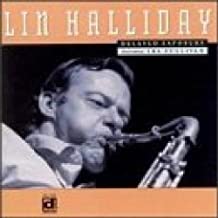
Lin Halliday was born on June 16, 1936 in De Queen, Arkansas and was raised in Little Rock, where he played the saxophone and clarinet in school. After he moved to Los Angeles, California in his teens he began playing professionally, performing with saxophonist Joe Maini.
A move to New York City in 1958, Nashville, Tennessee in 1966, and Chicago, Illinois in 1980, his style was influenced by the musical cultures of all three cities. Halliday made his debut album, Delayed Exposure, for the Chicago jazz label Delmark Records in 1991. His sophomore album the same year, East of the Sun and Where or When in 1993 with saxophonist Ira Sullivan were well received by the Chicago jazz community.
He became a staple attraction at many Chicago jazz clubs including the Green Mill, the Bop Shop, Joe Segal’s Jazz Showcase, and the Get Me High Lounge. His performance on trumpeter Brad Goode’s 1998 album Shock of the New won him greater admiration with the Chicago jazz scene. Lin was also featured on the 1995 album Stablemates with Chicago saxophonist Eric Alexander.
Saxophonist Lin Halliday, who recorded five albums as a leader and one as a sideman with Cecil Payne all on Delmark, passed away on January 25, 2000.
More Posts: bandleader,history,instrumental,jazz,music,saxophone
Daily Dose Of Jazz…
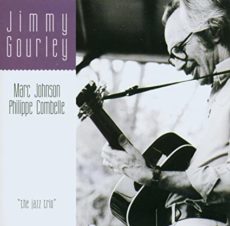
James Pasco Gourley, Jr. was born on June 9, 1926 in St. Louis, Missouri. He met saxophonist Lee Konitz in Chicago, Illinois when both were members of the same high school band, crediting Konitz with encouraging him to become a serious musician.
Jimmy’s father started the Monarch Conservatory of Music in Hammond, Indiana, and though he didn’t teach, he bought him his first guitar. Taken his first guitar classes at the school. He became interested in jazz while listening to the radio, enjoying in particular Nat King Cole. For his first professional experience as a performer, he dropped out of high school to play with a jazz band in Oklahoma City, Oklahoma.
From 1944 to 1946, Gourley served in the U.S. Navy then returned to Chicago, where he met guitarist Jimmy Raney and wanted to play like him. He worked in bars and clubs with Jackie Cain & Roy Kral, Anita O’Day, Sonny Stitt, and Gene Ammons. Through the G.I. Bill, he received tuition for three years to any college in the world.
By 1951, he spent the rest of his life in France, working with Henri Renaud, Lou Bennett, Kenny Clarke, Richard Galliano, Stéphane Grappelli, Bobby Jaspar, Eddy Louiss, Martial Solal, and Barney Wilen. He played with American musicians who were passing through, including Bob Brookmeyer, Clifford Brown, Stan Getz, Gigi Gryce, Roy Haynes, Bud Powell, Zoot Sims, Lucky Thompson, Lester Young and his friend Lee Konitz. Guitarist Jimmy Gourley passed away on December 7, 2008 in Villeneuve-Saint-Georges, France at the age of 82.
More Posts: bandleader,guitar,history,instrumental,jazz