

Daily Dose Of Jazz…
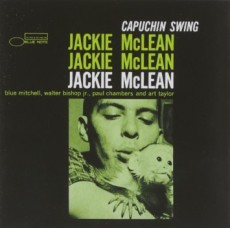
Jackie McLean was born John Lenwood McLean on May 17, 1931 in New York City. His father played the guitar in Tiny Bradshaw’s orchestra and started the young man’s musical education until he was eight when the senior John passed away. His godfather, his stepfather who owned a record store and several noted teachers continued his education. He received informal training by neighbors Thelonious Monk, Bud Powell and Charlie Parker.
In high school Jackie played in a band with Kenny Drew, Sonny Rollins and Andy Kirk Jr. By the time he was twenty he was playing alongside Rollins on Miles Davis’ Dig album and went on to record with Gene Ammons, Charles Mingus, George Wallington and to become one of Art Blakey’s Messengers, joining the group after reportedly being punched by Mingus and pulling a knife on the bassist. Fortunately for the jazz world no one was stabbed.
Throughout his early career he was addicted to heroin, which resulted in the loss of his New York City cabaret card. To make a living he undertook a large number of session dates that produced an extensive body of recorded work in the 1950s and 1960s. He recorded for Prestige, then Blue Note both as a leader and sideman. His early recordings as leader were in the hard bop school but later McLean became an exponent of modal jazz without abandoning his foundation in hard bop. His adaptation of modal jazz and free jazz innovations to his vision of hard bop made his recordings from 1962 on distinctive.
He worked with the greats of the time not limited to Donald Byrd, Sonny Clark, Lee Morgan, Ornette Coleman, Dexter Gordon, Freddie Redd, Billy Higgins, Freddie Hubbard, Grachan Moncur III, Bobby Hutcherson, Mal Waldron, Chalres Tolliver, Tony Williams, Michael Carvin, Carl Allen, Bill Hardman, Larry Wilis and Tina Brooks.
By 1967 he abandoned recording for touring and the following year started his teaching career at The Harrt School at the University of Hartford. He would establish the university’s African American Music Department that evolved into the Jackie McLean Institute of Jazz) and its Bachelor of Music degree in Jazz Studies program.
Along with his wife Dollie, they founded the Artists Collective, Inc. of Hartford, and his bands were drawn from his students including Steve Davis, his adopted son Rene and pianist Mark Berman. He received an American Jazz Masters fellowship from the National Endowment for the Arts, inducted into the DownBeat Hall of Fame, and a biography titled Sugar Free Saxophone, as well as numerous other national and international awards. McLean is the only American jazz musician to found a department of studies at a University and a community-based organization almost simultaneously and they each have existed for over three decades.
After a long illness, alto saxophonist, composer, educator and bandleader Jackie McLean passed away on March 31, 2006 in Hartford, Connecticut.

Take A Dose On The Road
Daily Dose Of Jazz…
Abdul Wadud was born Ronald DeVaughn on April 30, 1947 in Cleveland, Ohio. The son of R&B singer Raheem DeVaughn, he took up the cello and concentrated solely on the instrument from the age of nine, and never decided to double on bass.
Abdul studied at Youngstown State and Oberlin in the late ’60s and early ’70s. He played in the Black Unity Trio at Oberlin, met Julius Hemphill and the two subsequently worked together well through the Eighties. He has performed with the New Jersey Symphony Orchestra in the ’70s, earned his master’s degree in 1972, and then in 1976 played with Arthur Blythe for the first time and has maintain a working relationship.
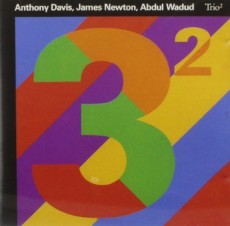
He also worked and recorded with Frank Lowe, George Lewis, Oliver Lake, Sam Rivers, Cecil Taylor, David Murray, Chico Freeman, Anthony Davis and James Newton. Along with Newton and Davis they performed as a trio and were also a part of the octet Episteme from 1982 to 1984. Abdul recorded and in a duo with Jenkins for Red in the ’70s and as a leader for Bishara and Gramavision in the ’70s and ’80s. He has been a member of the Black Swan Quartet, Human Arts Ensemble, Julius Hemphill Quartet and Muhal Richard Abrams Orchestra.
His plucking and bowed solos have been featured in jazz and symphonic/classical settings, he is easily considered the finest cellist to emerge from the ’60s and ’70s generation, playing in both jazz and classical settings. Cellist Abdul Wadud transitioned on August 10, 2022 in Cleveland, Ohio at the age of 75.
Dose A Day – Blues Away
More Posts: cello

Daily Dose Of Jazz…
George Rufus Adams was born on April 29, 1940 in Covington, Georgia and his musical style is deeply rooted in the blues and in primarily that of African-American popular music. The tenor’s greatest influences seem to have been Rahsaan Roland Kirk and the adventurous edginess of John Coltrane and Albert Ayler.
George played with tremendous intensity and passion, as well as lyricism and subtlety. At times he bent over backwards when playing, almost ending up on his back. He and Don Pullen shared a musical vision and their quartet straddled the range from R&B to the avant-garde.
One of Adams’ last recordings was America for Blue Note Records consisting of classic American songs like Tennessee Waltz, You Are My Sunshine and Take Me Out To The Ballgame as well as a few original songs that articulate his positive view of his country and the gifts it had given him. It also includes The Star Spangled Banner and America The Beautiful.
Tenor saxophonist, flautist and bass clarinetist George Adams, best known for his work with Charles Mingus, Gil Evans, Roy Haynes, and in the quartet he co-led with pianist Don Pullen, passed away on November 14, 1992 in New York City.
He was also known for his idiosyncratic singing he left for posterity two-dozen albums as a leader and another 25 as a sideman over the course of his sort career.
Take A Dose On The Road
Daily Dose Of Jazz…
Stafford James was born April 24, 1946 in Evanston, Illinois. As a young man he enlisted in the Air Force and after his discharge he studied at the University of Chicago. In 1969 he moved to New York City and studied at the Mannes College for Music. Here he met Pharoah Sanders, with whom he played his first jazz concerts in New York. He played with Monty Alexander, Sun Ra, Alice Coltrane and Albert Ayler.
James did the first road tour of the Broadway show Hair through Canada, met Melba Moore in 1971 and played the David Frost Revue with her, and went on to Rashied Ali, Roy Ayers, Al Haig, Barry Harris, Andrew Hill, Andrew Cyrille and Chico Hamilton.
In 1973 Stafford toured Europe for the first time with Gary Bartz, then became a member of Art Blakey’s Jazz Messengers. At the same time he met Woody Shaw, began a lifelong friendship with Betty Carter and started teaching at the United Nations International School in NYC. He recorded his debut album as a leader in 1975 with Enrico Rava, Dave Burrell and Beaver Harris. A year later he founded a quintet and toured Europe.
He met Dexter Gordon while on tour with Al Cohn and recorded Homecoming with him upon his return to the United States. He continued to tour through the 1980s, arranged compositions by Ellington, and composed sonatas. By the end of the decade and into the next James moved to Paris, collaborated with Pharoah, Barney Wilens and Lavelle, formed the Stafford James Project, played with his trio and continued to compose for large ensembles.
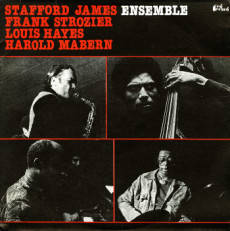
His list of collaborations, recording sessions and tours is extensive and in recent years he has recorded The Stafford James String Ensemble, taught master classes at the university level, had a two-hour program on his life and compositions, founded the Top Hat Music Society, performed with Max Roach’s percussion ensemble M’Boom and continue his tradition of performance, composing, recording and touring around the world.
Put A Dose In Your Pocket
More Posts: bass
Daily Dose Of Jazz…
Tommy Turrentine was born Thomas Walter Turrentine, Jr. on April 22, 1928 in Pittsburgh, Pennsylvania and is the older brother of saxophonist Stanley Turrentine.
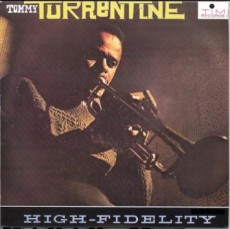
Tommy played in the bands of Benny Carter, Earl Bostic, Charles Mingus, Billy Eckstine, Dizzy Gillespie and Count Basie. While his brother had a successful career and recorded a number of albums over his lifetime, Tommy only recorded one album under his name with Julian Priester, Bob Boswell, Max Roach and Horace Parlan before retiring in the 1960s.
However, he recorded a number of sessions as a sideman with Sonny Clark, Booker Ervin, Lou Donaldson, Abbey Lincoln, Dexter Gordon, Jackie McLean, Archie Shepp, Sun Ra and his brother’s bands. In the late 1950s Turrentine began a working relationship with Max Roach that was spawned in part when he joined the Max Roach Quintet following the death of Clifford Brown.
In the 1970s he lived on the ground floor of a brownstone with his wife Jane on West 82nd Street in New York City, a street which during that period had a number of jazz luminaries living along its blocks between Broadway and Central Park, including Tommy Flanagan and Pharoah Sanders.
In the summer of 1979 Turrentine was one of several star trumpeters who appeared at the Village Gate for an all-star tribute to Blue Mitchell. He was also adept on the piano at chord blockings and was a compositional exponent of Thelonious Monk’s earlier chordal voicing. His bebop compositions combined a sophisticated and emotional fusion and poignant lyricism reminiscent of Benny Golson and with the passionate, spirited influence of the Brown/Roach Quintet. Trumpeter Tommy Turrentine passed away on May 13, 1997 in New York City.
Dose A Day – Blues Away
More Posts: trumpet