

Daily Dose Of jazz…
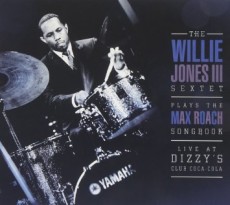
Willie Jones III was born on June 8, 1968 in Los Angeles, California. His initial exposure to music came from his father Willie Jones II, an accomplished jazz pianist. With his guidance and inspiration the young drummer began studying with acclaimed drummers and music instructors. By the time he was in his teens her was performing with numerous distinguished musicians. He completed his training at California Institute of the Arts under the tutelage of Albert “Tootie” Heath.
As a co-founder of the group Black Note, he took the West Coast bop movement and gave it a hard swing, propelling them into first place in the John Coltrane young Artist Competition in 1991. He would go on to become a semifinalist the following year at the Thelonious Monk Jazz Drum Competition, and eventually the group released four albums. He has played, toured, and/or recorded with Milt Jackson, Horace Silver, Arturo Sandoval, Roy Hargrove, Peter Zak, Hank Jones, Cedar Walton, Herbie Hancock, Eric Reed, Kurt Elling and Wynton Marsalis Jazz at Lincoln Center.
Jazz musicians appreciate his exceptional speed and control together with his use of a wide range of textures that characterize most of his playing. He is a master of many styles and moves quickly and easily between bebop, big band, avant-garde, Latin jazz grooves, hard bop and swing.
He has released several albums under his own name as a leader and on his indie label, WJ3 Records. His music has been sampled, however, he has filed a lawsuit in 2014 against California rapper Kendrick Lamar for allegedly sampling “The Thorn” illegally in Lamar’s song Rigamortis. Drummer Willie Jones III continues to perform, record and tour both as a leader and sideman.

Jazz Is Global – Share
More Posts: drums
Daily Dose Of Jazz…
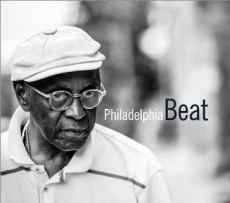
Albert “Tootie” Heath was born May 31, 1935 in Philadelphia, Pennsylvania the brother of tenor saxophonist Jimmy and bassist Percy. He first recorded in 1957 with John Coltrane but the following year started his career as a consummate sideman and for a decade an a half he performed and recorded with J. J. Johnson, Wes Montgomery, Art Farmer, Benny Golson, Cedar Walton, Bobby Timmons, Kenny Drew, Sonny Rollins, Dexter Gordon, Johnny Griffin, Herbie Hancock, Friedrich Guida, Nina Simone, Johnny Lytle, Milt Jackson, Clifford Jordan, The Young Lions and Yusef Lateef among numerous others.
In 1975, he, Jimmy and Percy formed the Heath Brothers and remained with the group until 1978, then left to freelance. Amongst his many workshop and classroom teaching assignments, Tootie Heath is a regular instructor at the Stanford Jazz Workshop.
Tootie Heath is now the producer and leader of The Whole Drum Truth, a jazz drum ensemble featuring Ben Riley, Ed Thigpen, Jackie Williams, Billy Hart, Charlie Persip, Leroy Williams and Louis Hayes. Hard bop drummer Tootie Heath has a small catalogue of four albums as a leader and more than five dozen as a sideman. He continues to perform, tour and record.
Inspire A Young Mind
More Posts: drums
Daily Dose Of Jazz…
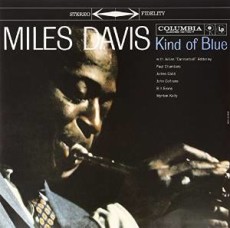
Miles Dewey Davis III was born May 26, 1926 in Alton, Illinois into an affluent family, father a dentist and his mother a blues pianist. They owned a substantial ranch in the Delta region of Pine Bluffs, Arkansas. When he was one years old the family moved to East St. Louis and it was between there and Pine Bluffs that his appreciation for music came out of the Black church.
His musical studies began at 13, when his father gave him a trumpet and arranged lessons with local musician Elwood Buchanan. He learned to play with out vibrato which gave him his clear signature tone. By age 16, Davis was a member of the music society and, when not at school, playing professionally first at the local Elks Club. At 17, he spent a year playing in Eddie Randle’s band, the Blue Devils and during this time, Sonny Stitt tried to persuade him to join the Tiny Bradshaw band, then passing through town. His mother insisted that he finish his final year of high school and he graduated from East St. Louis Lincoln High School in 1944.
In 1944, the Billy Eckstine band visited East St. Louis with Dizzy Gillespie and Charlie Parker in tow. Miles was brought in on third trumpet for a couple of weeks because the regular player, Buddy Anderson, was out sick. Even after this experience, once Eckstine’s band left town, Davis’ parents were still keen for him to continue formal academic studies.
However, In the fall of 1944, following graduation from high school, Davis moved to New York City to study at the Juilliard School of Music. His arrival marked a new chapter and he spent his first weeks attempting to contact Charlie Parker, against all advice even from Coleman Hawkins. Finally locating his idol, he became one of the cadre of musicians who held nightly jam sessions at Minton’s Playhouse and Monroe’s, both Harlem nightclubs. He was among future leaders of bebop Fats Navarro, Freddie Webster, J. J. Johnson as well as the established Thelonious Monk and Kenny Clarke.
Dropping out of Juilliard after asking permission from his father, Miles began playing professionally, performing in several 52nd Street bands led by Coleman Hawkins, and Eddie Lockjaw Davis. By 1945, he entered a recording studio for the first time, under the leadership of Herbie Field. This was the beginning of his many sideman recordings until 1946 when he recorded as a leader with the Miles Davis Sextet plus Earl Coleman and Ann Hathaway. Though a member of the groundbreaking Charlie Parker Quintet, he can be heard accompanying singers. He would play with Max Roach, Al Haig, Sir Charles Thompson, Duke Jordan, Curley Russell, Tommy Potter and Leonard Gaskin. This gave him numerous recording sessions and the beginning of what would become his cool jazz style.
After Parker’s breakdown and committal to Camarillo State Mental Hospital while on tour in Los Angeles, Davis, found himself stranded. He roomed and collaborated for some time with Charles Mingus, got a job with Billy Eckstine and eventually got back to New York. He would freelance and sideman in some of the most important combos on the New York jazz scene.
By 1948 Davis grew close to Canadian composer and arranger Gil Evans and his basement apartment had become the meeting place for several young musicians and composers such as Davis, Roach, John Lewis and Gerry Mulligan who were unhappy with the bebop scene. Together they created the tuba band sound that included French horn and tuba in the nonet line-up. The objective was to achieve a sound similar to the human voice, through carefully arranged compositions and by emphasizing a relaxed, melodic approach to the improvisations.
A contract and recording sessions between 1949-1950 with Capitol Records brought about the release of Birth Of The Cool in 1956, which gave its name to the cool jazz movement. Though met with resistance, years later it was co-opted by white musicians like Mulligan and Dave Brubeck and the critics who hailed it as a success.]
By the first half of the 1950s Davis was on tour in Paris with Tadd Dameron, Kenny Clarke and James Moody, and living the life of a black musician abroad. He was involved with French actress and singer Juliette Greco for a time and then returned to the States to be underappreciated by the critics and a liaison with the mother of his two children unraveled. This is when his heroin addiction began, with subsequent arrests. But iwas during this period that he became acquainted with Ahmad Jamal’s music and his elegant approach and use of space influenced him deeply and he definitely severed all ties to bebop.
Through the decade he would record for Prestige, work with Art Blakey, Sonny Rollins and John Coltrane, began using the Harmon mute creating a signature sound and phrasing. The most important Prestige recordings of this period were Dig, Blue Haze, Bag’s Groove, Miles Davis and the Modern Jazz Giants and Walkin’. This placed him in the center of the hard bop movement. It also hailed his period of withdrawal, being distant, cold, contempt for critics, and his quick temper.
His first great quintet included John Coltrane, Red Garland, Paul Chambers and Philly Joe Jones. This group brought forth such titles as Relaxin’, Steamin’, Workin’ and Cookin’ all with The Miles Davis Quintet. From 1957 to 1963 Davis recorded a series of albums with Gil Evans playing often trumpet and flugelhorn on Miles Ahead, Porgy and Bess, Sketches of Spain, and Quiet Nights. In 1959 with Bill Evans, Wynton Kelly, John Coltrane, Cannonball Adderley, Paul Chambers and Jimmy Cobb he recorded his magnus opus Kind Of Blue.
Through the Sixties he recoded with a number of musicians, Hank Mobley, Sonny Stitt, Jimmy Heath, George Coleman, Ron Carter, Tony Williams, Herbie Hancock and Sam Rivers. But it was Hancock, Williams, Carter and Wayne Shorter that became the nucleus of his second great quintets.
He would work with Chick Corea and Dave Holland, enter into his electric period playing with Joe Zawinul, John McLaughlin, Jack DeJohnette, Airto Moriera, Bennie Maupin and recorded the landmark Bitches Brew. He would create the Cellar Door Band before retiring in 1975. By 1979, he overcame his cocaine addiction and regained his enthusiasm for music and put together new smaller combos playing up until his death.
Miles Davis is regarded as one of the most innovative, influential and respected figures in the history of music. He has received numerous Grammy Awards, and according to the RIAA, the album is the best-selling jazz album of all time, having been certified as quadruple platinum (4 million copies sold. In 2009, the US House of Representatives voted 409–0 to pass a resolution honoring the album as a national treasure. On September 28, 1991 he passed away in Santa Monica, California.
Dose A Day – Blues Away
More Posts: flugelhorn,trumpet
Daily Dose Of Jazz…
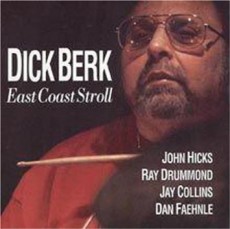
Richard Alan Berk was born on May 22, 1939 in San Francisco, California. He studied at the Berklee College of and played in the Boston area early in the 1960s.
In 1962 he moved to New York City and played with Ted Curson and Bill Barron in a quintet until 1964. Following this Dick played with Charles Mingus, Mose Allison, Freddie Hubbard, and Walter Bishop Jr. among others.
A move to Los Angeles late in the decade saw Berk playing with Milt Jackson, George Duke, Cal Tjader, John Hicks, Ray Drummond, Ted Curson, Don Friedman, . Jean-Luc Ponty and Blue Mitchell, to name a few. He went on to establish the Jazz Adoption Agency in the early 1980s, played well into the 2000s; among this group’s alumni are Andy Martin, Mike Fahn, Nick Brignola, John Noagormey, Keith Saunders, Tad Weed and John Patitucci.
He recorded eight albums as a leader and another nine as a sideman. Drummer and bandleader Dick Berk passed away on February 8, 2014 at the age of 74.
Dose A Day – Blues Away
More Posts: drums
Daily Dose Of Jazz…
Larance Marable was born on May 21, 1929 in Los Angeles, California and was related to Mississippi riverboat bandleader Fate Marable. He first had a strong career as a bop musician in the 1950s working with the likes of Dexter Gordon and Charlie Parker among others.
In the 1960s Marable started to venture into the cool jazz idiom with musicians like Zoot Sims, George Shearing, Sonny Stitt and Chet Baker, working with the latter as early as 1956 on the album Chet Baker Sings.
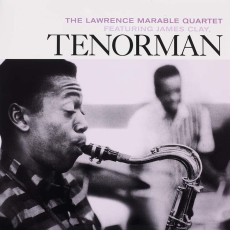
In the Seventies he toured with Supersax and Bobby Hutcherson but recorded Tenorman as a leader with James Clay. He also played with Kenny Drew, Teddy Edwards, Stan Getz, Hampton Hawes, and Milt Jackson. Earlier in his career, he was known as Lawrence but the hard bop drummer Larance Marable, best known for his work as a regular member of Charlie Haden’s Quartet West, passed away on July 4, 2012 in his hometown of Los Angeles.
Take A Dose On The Road
More Posts: bandleader,drums,history,instrumental,music