

Daily Dose Of Jazz…
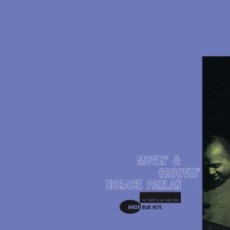
Horace Parlan was born on January 19, 1931 in Pittsburgh, PA who became an influential hard bop and post-bop pianist. Stricken with polio as a child that partially crippled his right hand, Parlan turned this would be handicap into what has been described as a “pungent left hand chord voicing style while complimenting highly rhythmic phrases with this right”.
He began playing in R&B bands in the 50’s until his move to New York where he joined Charles Mingus’ band from 1957 to 1959, a collaboration that greatly influenced Parlan’s career. Time would see him playing with Booker Ervin, Eddie Lockjaw Davis, Johnny Griffin and Rahsaan Roland Kirk; was the house rhythm section for Minton’s Playhouse in Harlem with bassist George Tucker and drummer Al Harewood while recording a strong series of sessions for Blue Note in the 60’s.
By 1973 Horace was on his way to Europe, settling in Copenhagen and gained international recognition through his Steeplechase recordings including exceptional duet dates with Archie Shepp. He also recorded with Dexter Gordon, Red Mitchell and in the 80’s with Frank Foster and Michael Urbaniak.
His later work, notably a series of duos with the tenor saxophonist Archie Shepp, including the album Goin’ Home, is steeped in gospel music. He has recorded nearly two-dozen albums as a leader and more as a sideman. In 2000 he was a recipient of the Ben Webster Prize given by the Ben Webster Foundation. Horace Parlan, the hard bop/post-bop pianist who attributes Ahmad Jamal and Bud Powell as his major influences, resided and performed regularly in Copenhagen, Denmark until his passing on February 23, 2017 in Korsør, Denmark.

More Posts: piano
Daily Dose Of Jazz…
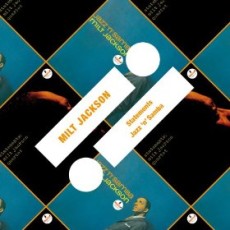
Milt Jackson was born Milton Jackson on January 1, 1923 in Detroit, Michigan. Discovered by Dizzy Gillespie and hired in 1946 for his sextet and also for his larger ensembles. He quickly acquired experience working with the most important figures in jazz of the era, including Woody Herman, Howard McGhee, Thelonious Monk and Charlie Parker.
In the Gillespie big band, Jackson fell into a pattern that led to the founding of the Modern Jazz Quartet. He was part of Gillespie’s small group swing tradition within a big band, consisting of pianist John Lewis, bassist Ray Brown and drummer Kenny Clarke. They would become a working group in their own right around 1950 and became the Milt Jackson Quartet but by the time Percy Heath replaced Ray Brown, in 1952 they became the Modern Jazz Quartet.
After some twenty years the MJQ disbanded in 1974 and Jackson pursued more money and his longed for improvisational freedom. The group reformed in 1981, however, and continued until 1993, after which Jackson toured alone, performing in various small combos, although agreeing to periodic MJQ reunions.
He recorded prolifically, his tunes, “Bluesology”, “Bags & Trane”, “The Late, Late Blues” and “Bag’s Groove” are jazz standards. He has recorded with J.J. Johnson, Roy McCurdy, B.B. King, John Coltrane, Wes Montgomery, Hank Mobley, Oscar Peterson, Stanley Turrentine, Don Sebesky, Cannonball Adderley and Ray Charles on the very short list.
A very expressive player, Bags, as he was affectionately known and referring to the bags under his eyes from staying up all night, differentiated himself from other vibraphonists in his attention to variations on harmonics and rhythm. He became one of the most significant vibist and was at the top of his game for 50 years playing bop, blues, and ballads with equal skill and sensitivity. Vibraphonist Milt Jackson, thought of as a bebop player but equally remembered for his cool swinging solos, left the jazz world on October 9, 1999 in Manhattan, New York.

More Posts: vibraphone

Daily Dose Of Jazz…
Clark Terry was born on December 14, 1920 in St. Louis, Missouri. After high school he started his professional career in the early 40s playing in local clubs, and then served as a bandsman in the U.S. Navy during World War II. He influenced both Quincy Jones and Miles Davis, teaching the later while in St. Louis.
Terry’s years with Basie and Ellington in the late 1940s and 1950s established him as a world-class jazz artist, blending the St. Louis tone with contemporary styles. After leaving Ellington, Clark’s international recognition soared when he became NBC’s first African-American staff musician. He a ten-year member of The Tonight Show band where his unique “mumbling” scat singing became famous when he scored a hit with “Mumbles.”
Terry continued to play with musicians such as J. J. Johnson and Oscar Peterson, and led a popular group with Bob Brookmeyer in the early 1960s. In the 1970s he concentrated on the flugelhorn, performed studio work and teaching at jazz workshops, toured regularly in the 1980s with small groups and performed as the leader of his Big B-A-D Band.
At the behest of Billy Taylor, early in his career he and Milt Hinton bought instruments and gave instruction to young hopefuls and the idea was planted the seed that became Jazz Mobile in Harlem. He toured with the Newport Jazz All Stars and Jazz at the Philharmonic, recorded for the Red Hot + Rhapsody and Red Hot + Indigo albums, composed more than two hundred songs, performed for seven U.S. Presidents, has been both leader and sideman on more than three hundred albums performing with Clifford Brown, Gary Burton, Charlie Byrd, Tadd Dameron, Eddie “Lockjaw” Davis, Lionel Hampton, Paul Gonsalves and Milt Jackson among others, recorded with symphonies and orchestras and established the Clark Terry Archive at William Paterson University.
Swing and bop trumpeter, pioneer of the flugelhorn and educator Clark Terry has received over 250 awards, medals and honors including a NEA Jazz Masters Award, has received a Grammy Lifetime Achievement Award, 16 honorary degrees, a knighthood, keys to several cities, the French Order of Arts and Letters and over the course of a seventy year career is the most recorded trumpet player of all time appearing on more than 900 known recording sessions.
Trumpeter, and flugelhorn player Clark Terry passed away from complications from advanced diabetes on February 21, 2015 at the age f 94 in Pine Bluffs, Arkansas.

More Posts: flugelhorn,trumpet
Daily Dose Of Jazz…
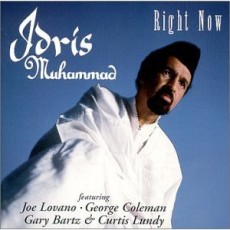
Idris Muhammad was born Leo Morris on November 13, 1939 In New Orleans, Louisiana. Learning to play drums in his youth, at fifteen he played on Fats Domino’s 1956 hit “Blueberry Hill” and by sixteen he turned professional, playing primarily soul and R&B during the early sixties. In 1965 he was a member of Lou Donaldson’s band, then went on to become the house drummer for Prestige Records from 1970-72.
As a sideman Idris would play with Johnny Griffin, Nat Adderley, George Benson, Paul Desmond, Pharoah Sanders, George Coleman and the Paris Reunion Band and record with Ahmad Jamal, Grant Green, Grover Washington, Jr., Hank Crawford, Benjamin Herman, Andrew Hill, Freddie Hubbard, Bobbi Humphrey, Gene Ammons, Rodney Jones and Houston Person among others.
Known for his funky playing style, as a leader he has recorded everything from post-bop to dance music for such labels as Prestige, Kudu, Fantasy, Theresa, and Lipstick. He changed his name in the 1960s upon his conversion to Islam and is endorsed by Istanbul Agop cymbals. Drummer Idris Muhammad continues to compose, record and perform.

More Posts: drums