Daily Dose Of Jazz…
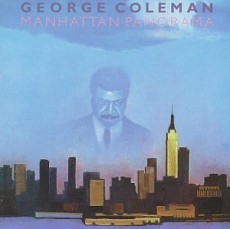
George Edward Coleman, born March 8, 1935 in Memphis, Tennessee, taught himself to play alto saxophone during his teen years inspired by Charlie Parker. Growing up his classmates were Harold Mabern, Booker Little, Frank Strozier, Hank Crawford and Charles Lloyd.
He began his career working with Ray Charles and by 1953 joined B. B. King where he switched to tenor. Moving to Chicago with Booker Little in 1956 he started working with Gene Ammons and Johnny Griffin before joining Max Roach in ’58. Coleman recorded with Jimmy Smith, Lee Morgan, Curtis Fuller, Eddie McFadden, Kenny Burrell and Donald Bailey before moving to New York with Max Roach.
Subsequent gigs with Ron Carter, Slide Hampton, Jimmy Cobb and Wild Bill Davis led him to become a part of the Miles Davis Quintet, recording among others Seven Steps to Heaven, My Funny Valentine and Four and More. This was followed up with his joining Herbie Hancock on his seminal work Maiden Voyage.
A foray into Hollywood placed Coleman on the sets of Freejack with Estevez, Jagger and Hopkins and on the Preacher’s Wife set with Denzel Washington and Whitney Houston.
The hard bop tenor, bandleader, composer and educator George Coleman has an impressive list of performances and recordings too numerous to name but suffice it to say he has worked with everyone from Mingus to Jamal to Hampton from the 60’s to the present day. He continues to lead his own groups, performing and recording regularly both as a leader and sideman.

More Posts: saxophone
Daily Dose Of Jazz…
Cleveland, Ohio was the birthplace of Tadley Ewing Peake Dameron on February 21, 1917. Tadd as he was known in the jazz world became the definitive arranger/composer of the bop era writing such standards as “Good Bait,” “Our Delight,” “Hot House,” “Lady Bird,” and “If You Could See Me Now.” Not only did he write melody lines, he also wrote full arrangements. Though he never financially prospered, Dameron was an influential force from the mid-’40s till his death.
Dameron started out in the swing era touring with the Zack Whyte and Blanche Calloway bands, he wrote for Vido Musso in New York and most importantly, contributed arrangements for Harlan Leonard’s Kansas City Orchestra, some of which were recorded.
Soon he was writing charts for such bands as Jimmie Lunceford, Count Basie, Billy Eckstine, and Dizzy Gillespie (1945-1947) in addition to Sarah Vaughan. Always very modest about his own piano playing but he did gig with Babs Gonzales’ Three Bips & a Bop in 1947 and led a sextet featuring Fats Navarro at the Royal Roost during 1948-1949.
Dameron co-led a group with Davis at the 1949 Paris Jazz Festival, stayed in Europe for a few months (writing for Ted Heath), and then returned to New York. He wrote for Artie Shaw’s last orchestra that year, played and arranged R&B for Bull Moose Jackson (1951-1952) and in ‘53 led a nonet featuring Clifford Brown and Philly Joe Jones.
He also led bands that included Dexter Gordon, Sonny Rollins and Wardell Gray. Drug problems, however, started to get in the way of his music. After recording a couple of albums including 1958’s Mating Call with John Coltrane, drug addiction caused him to spend much of 1959-1961 in jail. After he was released, Dameron wrote for Sonny Stitt, Blue Mitchell, Milt Jackson, Benny Goodman, suffered several heart attacks and diagnosed with cancer from which he would eventually succumb to on March 8, 1965 in New York City.

Daily Dose Of Jazz…
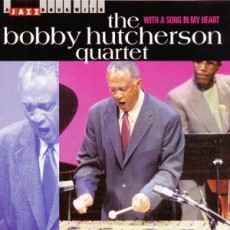
Bobby Hutcherson was born January 27, 1941 in Los Angeles, California and studied piano with his aunt as a child. Not enjoying the formality of the training he tinkered with it on his own, especially since he was already connected to jazz through a brother’s high school friendship with Dexter Gordon and a singing sister who later dated Eric Dolphy. But it was hearing Milt Jackson that made everything clicked for Hutcherson during his teen years, working until he saved up enough money to buy his own set of vibes.
He began studying with Dave Pike and playing local dances in a group led by his friend, bassist Herbie Lewis. Parlaying his local reputation into gigs with Curtis Amy and Charles Lloyd in 1960. And joined an ensemble led by Al Grey and Billy Mitchell. A year later he’s in New York at Birdland and ends up staying on the east coast as his reputation of his inventive four mallet playing spread.
Attracted foremost to more experimental free jazz and post-bop, he made early recordings in this style for Blue Note with Jackie McLean, Eric Dolphy, Andrew Hill, Granchan Moncur, but ironically his debut recording for the label in 1963, The Kicker, not released until 1999, demonstrated his background in hard bop and the blues.
His vibraphone playing is suggestive of the style of Milt Jackson in its free-flowing melodic nature, but his sense of harmony and group interaction is thoroughly modern. Easily one of jazz’s greatest vibraphonists, Bobby Hutcherson helped modernize the vibes by redefining what could be done with it — sonically, technically, melodically, and emotionally. In the process, he became one of the defining voices in the “new thing” portion of Blue Note’s glorious ’60s roster.
Throughout his career Hutcherson has performed or recorded with a who’s who list of avant-garde, free improvisation, modernist post-bop, straight-ahead, mainstream, fusion and bop jazz players on the scene, staying ever current in his message. As a leader he has recorded nearly four-dozen albums for Blue Note, Landmark, Columbia, Cadet, Timeless, Evidence, Atlantic and Verve. Vibraphonist Bobby Hutcherson maintained his reputation as one of the most advanced masters of his instrument until he passed away on August 15, 2016 in Montara, California.
More Posts: marimba,vibraphone
Daily Dose Of Jazz…
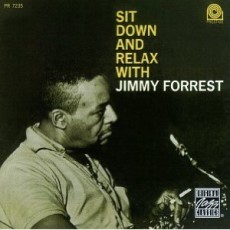
One of the many jazz musicians to come out of St. Louis, Missouri was Jimmy Robert Forrest Jr., born January 24, 1920. Working with pianist Eddie Johnson, Fate Marable and the Jeter-Pillars Orchestra while in high school, he went on the road with Dan Albert in 1938 and then the Jay McShann Orchestra from 1940 to 1942.
Forrest moved to New York and played with Andy Kirk and Duke Ellington before returning to St. Louis. His recording of “Night Train” with it’s hook and classic tenor solo reached the #1 spot on the Billboard R&B chart in 1952 and stayed for seven weeks. Gathering greater attention Jimmy recorded a series of jazz influenced R&B singles for United Records including two other hits “Hey Mrs. Jones” and “Bolo Blues”.
“Night Train” became the theme song for a nightly rhythm and blues program of the same name hosted by William A. “Rascal” McCaskill on KREL-AM in Houston market from 1954-1957 that virtually introduced white teenagers to what was called race music.
During the fifties he led his own combos and played with Miles Davis but Jimmy Forrest’s most important associations were with Harry “Sweets” Edison from ’58-’63, the Count Basie Orchestra from ’72-’77 and Al Grey with whom he co-led a quintet until his death.
Tenor saxophonist Jimmy Forrest, bandleader and sideman, died on August 26, 1980 in Grand Rapids, Michigan.

More Posts: saxophone
Daily Dose Of Jazz…
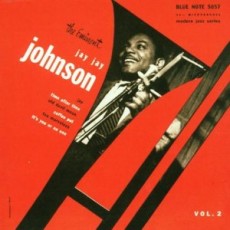
J. J. Johnson was born James Louis Johnson in Indianapolis, Indiana on January 22, 1924. He started studying piano at the age of 9 and at fourteen decided to play the trombone. By 1941 he began his professional career with Clarence Love and followed by Snookie Russell in ’42, then playing through the forties with the Benny Carter Orchestra, participating in the first Jazz At The Philharmonic organized by Norman Granz in Los Angeles.
He would tour and record with the Count Basie band, Illinois Jacquet and then began leading and recording small groups featuring Max Roach, Sonny Stitt and Bud Powell. By 1951 he took a job as a blueprint inspector but never abandoned his love for music as documented by his compositions Enigma and Kelo recorded by Miles Davis, garnering an invitation to play on the 1954 classic Davis Blue Note session, Walkin’.
Johnson went on to lead groups with Kai Winding, arranging for and backing Sarah Vaughan, following with a successful solo career touring the U.S., the U.K. and Scandinavia. He recorded a wide range of albums with notables as Bobby Jaspar, Clifford Jordan, Freddie Hubbard, Tommy Flanagan, Cedar Walton, Andre Previn and the list goes on and on.
In 1958-59 Johnson was one of three plaintiffs in a court case that hastened the abolition of the cabaret card system. By the sixties he was concentrating more on composition, writing a number of large-scale works that incorporated elements of both classical and jazz.
The 70’s saw J.J. in Hollywood scoring for film and television – Across 110th Street, Starsky & Hutch, and the Six Million Dollar Man but racism and other prejudices kept a black jazz musician from securing the amount and quality of work he was qualified to perform. However, his compositions including “Wee Dot”, “Lament” and “Enigma” have become jazz standards.
The trombonist, composer and arranger also authored a book of original exercises and etudes and a biography titled “The Musical World Of J.J. Johnson. He was voted into the Down Beat Hall of Fame in 1995. Diagnosed with prostate cancer, on February 4, 2001, he committed suicide by shooting himself.