

Daily Dose Of Jazz…
Angel ‘Cachete’ Maldonado was born in Santurce, Puerto Rico on Oct. 16, 1951 to a father who was a respected orchestra bassist. He began his musical studies with formal piano lessons, but had an early inclination to percussion and went under the tutelage of drummer Julio ‘Maco’ Rivera. His curiosity of Afro-Cuban music led him to the batá drums, and their religious and spiritual connotations, then to conga and bongo.
While on the island, he joined the popular band of Johnny El Bravo, then relocated to New York in the early 1970s. Once there he played with Carlos “Patato’ Valdés and Julito Collazo. This led him to become the featured bongo player with La Conspiración, then teamed up with pianist Larry Harlow. He remained for extensive tours of North and South America, and established his standing as a top tier percussionist. He performed with Eddie Palmieri, Louie Ramirez, Conjunto Libre, and Tipica 73, and recorded with Machito and Dizzy Gillespie.
Maldonado went on to play with Gato Barbieri, Weather Report, Freddie Hubbard, Jorge Dalto, Airto Moreira among others. In 1980 he started his seminal group Batacumbele, blending the Cuban songo beat with bomba and plena. Batacumbele had a compact but highly regarded recording output of five albums including a compilation disc. The release of the self-titled record was an instant hit and solidified his standing as a percussionist and bandleader.
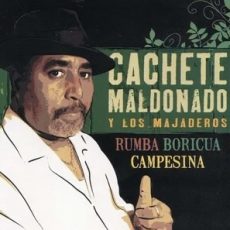
Suffering a debilitating stroke in 2005, Cachete curtailed his performances which led to further complications. However, he regained much of his vibrancy and in 2010 Cachete Maldonado y Los Majaderos released Rumba Boricua Campesina to much acclaim on the island and in New York.
Percussionist Cachete Maldonado continues to lead his band at the local gigs and advance Afro-Caribbean music.

More Posts: bandleader,history,instrumental,jazz,music,percussion
Daily Dose Of Jazz…
Fernando Álvarez Ariza was born in Santander, Columbia on October 6, 1977. He began his musical studies at the artistic culture department of Santander DICAS and continued his studies in harmony with Rito Mantilla and classical guitar with Silvio Martinez at the Universidad Industrial de Santander. He graduated with a Bachelor in music degree and took a workshop at Los Angeles International Christian University, strengthening his studies in electric guitar, jazz fundamentals, and production. He later received tutoring from guitarists Bruce Saunders and Pino Marrone.
He has done rock projects with the group Osmosis from Bucaramanga, Santander, with whom he recorded a single called Atrás de los Sueños with the collaboration of guitarist Mauricio Espinoza. His jazz projects include the staging of the work Santandereano by bassist José “Chepe” Ariza at the national festival Jazz al Parque in Bogotá.
He has shared the stage with Bruce Saunders, Eric Halvorson, Javier Colina, Héctor Martignon, Antonio Arnedo, Oscar Acevedo, Chepe Ariza, Gabriel Rondón, Sebastián Monsalve, Pacho Dávila, Ricardo Uribe, Oscar Serrano Prada, Lalo Ariza, Germán Sandoval, Sincopa Jazz Band, among others.
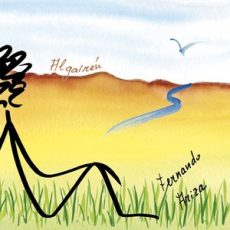
His recent album, Arquitectura Sonora, features Cuban saxophonist Leonardo Molina and trumpeter Jorge Méndez. He fuses electronic textures, improvisation, and elements of Colombian folk and urban culture. He has taught at the Gentil Montaña Foundation, Corporación Cristiana Universitaria, Los Angeles International Christian University, and is currently a professor at the Faculty of Arts and Humanities at the University of Pamplona, Colombia.
More Posts: bandleader,guitar,history,instrumental,jazz,music

Daily Dose Of Jazz…
Doug Beavers was born September 22, 1976 in Bellflower, California. He received a BA in music from California State University, East Bay, an MA in composition from the Manhattan School of Music. He is the founder of the music production company and record label, Circle 9.
As a performer Doug has worked with Eddie Palmieri, Spanish Harlem Orchestra, Mingus Big Band, Christian McBride, Paul Simon, and others. He also served as an adjunct professor at Los Medanos College and music faculty of Jazz Trombone at California State University, East Bay.
His most recent album recording,Sol, was released in 2020. In 2021, he received a New Jazz Works grant from Chamber Music America. Trombonist, arranger, composer and producer Doug Beavers, a Grammy Award-winning musician, is currently an adjunct faculty member at the College of New Jersey.

More Posts: arranger,bandleader,composer,history,instrumental,jazz,music,producer,trombone
Daily Dose Of Jazz…
Joe Quintana was born in Aguadilla, Puerto Rico on August 21, 1969 and raised in a bicultural environment as a military brat. It was a blessing for a young musician to absorb so many influences that come with international travel. His parents, being appreciative of all musical genres and styles, made sure that he and his brothers were exposed to music at home.
After his formative early years, by 1995 Joe had set up his own band and began playing in Rincon, Puerto Rico as the house band at the Calypso Café. This led to other gigs and many mutations of his bands over the years. He is still very active in the area.
Joe’s guitar styling is very much in synchronization with just the right nuance in relation to the mood he wants to portray. Adept on the acoustic as an accompanist, and is at home unplugged as he is in the electric blues setting or showcased on Latin jazz/rock numbers.
He is either a sideman for live performances or studio recordings, but usually as the leader of his own outfit. His association and collaborations with his brothers has been the catalyst for his own forays into exploring his individual direction as well.
Guitarist Joe Quintana, who is the quintessential journeyman, continues to play every weekend and many week nights and plays a full repertoire for the locals.

More Posts: bandleader,guitar,history,instrumental,jazz,music
Daily Dose Of Jazz…
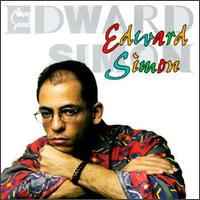
Edward Simon was born July 27, 1969 in Punta Cardón, Venezuela and when he was ten years old came to the United States to study at the Performing Arts School in Philadelphia, Pennsylvania. After graduating, he attended the University of the Arts in Philadelphia, where he studied classical piano, then the Manhattan School of Music, where he studied jazz piano.
In 1988, he recorded as a sideman with Greg Osby, then worked as a member of the band Horizon led by Bobby Watson. For the next eight years he was a member of Terence Blanchard’s band. He has also worked with Herbie Mann, Paquito D’Rivera, Bobby Hutcherson, Jerry Gonzalez, John Patitucci, Arturo Sandoval, Manny Oquendo, and Don Byron.
Simon recorded Beauty Within in 1994), his debut album as a bandleader, with Horacio Hernández and bass guitarist Anthony Jackson. That same year, he was a finalist in the Thelonious Monk International Jazz Piano Competition. Then the following year he composed Rumba Neurotica for the Relache Ensemble.
In 2003 Simon formed Ensemble Venezuela to combine jazz with the music of Venezuela. Given a commission by Chamber Music America to write Venezuelan Suite and recorded the album in 2012 with musicians from Venezuela, Colombia, and the U.S. He has played on several Grammy-nominated jazz albums. Besides his trio he leads the Sexteto Venezuela, the Afinidad Quartet, and the group Simon, Simon, & Simon with his brothers.
Wearing his educator hat he has taught at the New School for Jazz and Contemporary Music in New York City and has been artist in residence at Western Michigan University.
Pianist and composer Edward Simon continues to perform, compose and record.
More Posts: bandleader,compose,educator,history,instrumental,jazz,music,piano