


Daily Dose Of Jazz…
Jyrki Sakari Kukko was born July 8, 1953 in Kajaani, Finlan and started his career in the early 1960s as a singer participating in several singing contests and performing in radio stations, TV programs and other venues. At the age of 7, he began taking piano lessons and soon after started playing guitar and flute, then saxophone. The mid-1960s saw him forming bands, constructing a school band, playing mainly rock and roll, before forming a group of local dance bands.
He embarked his career at sixteen playing with the Kajaani Big Band, Kisu & Uniset, Markku Suominen’s Monopol, Tapiola Big Band, Oulunkylä Big Band, Maarit & Afrikan Tähti, Kalevala, SIMO Big Band, Jukka Tolonen’s band, Heikki Sarmanto’s band, Sensation Band of Addis Ababa, Mahmoud Ahmed’s Ibex Band, Etoile de Dakar, and Espoo Big Band through the Seventies. He founded the group Piirpauke in 1974.
He has performed with Youssou Ndour, John McLaughlin, Pat Metheny, Bob Mose, Lester Bowie, Charlie Mariano, Thad Jones, Paquito d’Rivera, Ted Curson, Walter Bishop Jr., Herbie Hanckock’s HeadHunters, Richie Cole, Juan Carlos Romero, and numerous Finnish musicians.
Working as a studio-musician Kukko performed as a freelancer with the Helsinki Philharmonic Orchestra, Finnish Radio Symphony Orchestra, and the Finnish National Opera. He has composed music for his own bands, EBB, Koiton Laulu and several films and theaters.
Pianist, flutist, guitarist, saxophonist, vocalist and composer Sakari Kukko continues to perform with over forty countries around the globe.

More Posts: bandleader,composer,flute,guitar,history,instrumental,jazz,music,piano,saxophone,vocal
Daily Dose Of Jazz…
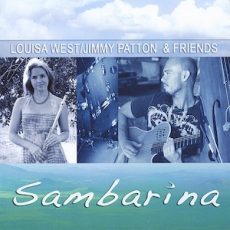
Louisa West was born in Thomasville, Georgia on June 14, 1979 and began playing flute at the age of ten. She went on to receive a Bachelor of Music Performance from the University of Georgia and while studying there she performed in numerous ensembles including an orchestra conducted by Sammy Nestico. She studied privately with classical flutists Angela Jones-Reus, William Bennett, Mary Karen Clardy, and Mimi Stillman, as well as jazz flutists Nestor Torres and Holly Hofmann.
A winner of numerous competitions, after graduating from college in 2001, she relocated to southern California where she has been performing in the musical genres of world music, jazz, Latin jazz, and classical music. Playing extensively in the U.S, Canada and Mexico, Louisa has appeared onstage with touring acts such as Persian pop star Shakila, flutist Nestor Torres, and Brazilian singer Diogo Nogueira.
West recently attended California Brazil Camp, where she delved into the history and music of Brazil through workshops and performances by Brazilian jazz artists. This experience inspired her 2010 debut release with Jimmy Patton titled Sambarina.
Flutist Louisa West continues to perform, tour and record.

More Posts: bandleader,flute,history,instrumental,jazz
Daily Dose Of Jazz…
Oscar Feldman was born on June 12, 1961 in Cordoba, Argentina listening to his father’s jazz collection. He attended Conservatorio Provincial de Musica and was soon part of the prominent music scene in his hometown, becoming a founding member of acclaimed band Los Musicos del Centro.
Beginning in 1979 when he was 19 Oscar accepted an invitation to join bandoneonist Hermeto Pascoal and Dino Saluzzi to join his group. Moving to Buenos Aires, Argentina his career took off and he became a sought after studio musician. He recorded more than 40 albums as a sideman and toured with Argentina’s most prominent artists. Winning the Outstanding Performance Award as the Best Soloist in Fusion in 1986, he went on to procure the Achievement Scholarship Award from Berklee College of Music and graduated cum laude in 1995 with a Major in Professional Music.
Realizing he could bridge two worlds he joined Dizzy Gillespie’s United Nations Orchestra conducted by Paquito D’ Rivera. Moving to New York City his reputation grew as a versatile musician, and worked with Al Di Meola, Eumir Deodato, Jeff Tain Watts, Avantango, Alex Acuna, Bebo Valdes and His All Star Latin Jazz Band. He toured and performed across the United States, Europe and Africa.
As a leader Feldman has led numerous tours Horacio Negro Hernandez, Alex Acuna, Dave Samuels, Otmaro Ruiz and Tom Kennedy. As an educator he is currently on the faculty at the New York Jazz Academy, has taught workshops and clinics at Berklee College of Music in Boston, Massachusetts. He leads his own music jam classes weekly in New York and has written an article for Down Beat Magazine.
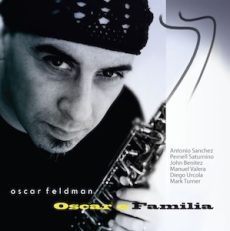
By the end of the 1990’s he recorded his debut as a leader El Angel on the Songosaurus record label. For his sophmore ten track album Oscar e Familia was released in 2009 on Sunnyside, he put together a Pan-American cast of Mexican drummer Antonio Sanchez, Cuban pianist Manuel Valera, Puerto Rican bassist John Benitez and Curacao percussion master Pernell Saturnino.
Alto saxophonist and composer Oscar Feldman. known for his splendid tonalities and melodically outstanding charts, continues to transcend his musical horizons.
More Posts: bandleader,composer,history,instrumental,jazz,music,saxophone
Daily Dose Of Jazz…
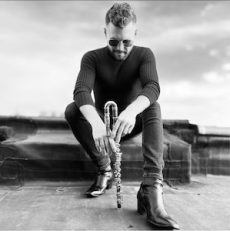
John Troy was born on June 3, 1989 in Buffalo, New York. He began playing the saxophone at age twelve. After showing exceptional ability in the classical realm throughout middle school, with the tutelage of William Eicher, his attention gradually turned toward the study of Jazz Saxophone. He honed his skills with lead alto saxophone for Concert and Jazz All-County Ensembles, and New York All-State Bands as well.
John played both lead alto and tenor in the Fredonia Jazz Ensemble, student big band. He can be heard on the 2009 release of the FJE’s, Still Kickin’ and his debut album All Ahead Flank. He led his own small groups, Jazz Quintessential, and an organ trio, the JT Trio both with significant success.
He has performed and/or studied with the likes of Eric Alexander, Grant Stewart, Ralph Lalama, Todd Coolman, Tim Armacost, Chris Potter, Tom Harrell, Stacy Dillard, Hal Galper, Arturo O’ Farrell, and Pete Malinverni, among others.
Tenor saxophonist John Troy continues to find his musical way through performance and recording in the hard bop genre..
More Posts: bandleader,history,instrumental,jazz,music,saxophone
Daily Dose Of Jazz…
Barron W. “Barry” Rogers was born on May 22, 1935 in The Bronx, New York descended from Polish Jews whose name was originally Rogenstein, and was raised in Spanish Harlem. His father and several of his uncles sang in a choir and his mother taught in Africa and Mexico, inspiring an interest in music from other nations. Mambo and jazz were popular in his neighborhood.
As a student of jazz trombonists Jack Teagarden, Lawrence Brown, and J. C. Higginbotham’s playing, he began performing Latin music in the mid-1950s and would be most associated with it from then on. He developed his style while working with Eddie Palmieri, and Willie Colón regarded Rogers as his strongest musical influence and would feature him in many of his productions. Bobby Valentín would feature Rogers in his song El Jíbaro y la Naturaleza, which led Marvin Santiago to nickname him El Terror de los Trombones for the record.
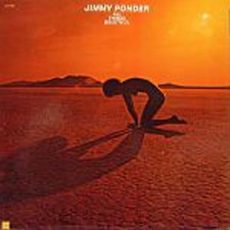
Rogers worked with Israel “Cachao” López, Machito, Manny Oquendo, Celia Cruz, Tito Puente, Cheo Feliciano, Johnny Pacheco, Chino Rodríguez, and the Fania All-Stars. He was a founding member of the band Dreams with Michael Brecker, Randy Brecker, and Billy Cobham. He also worked with George Benson, David Byrne, Ron Carter, Aretha Franklin, Don Grolnick, Bob James, Elton John, Chaka Khan, Bob Moses, Todd Rundgren, Carly Simon, Spyro Gyra, James Taylor, Jimmy Ponder and Grover Washington Jr. as well as others too numerous to name in pop, r&b and rock genres.
Trombonist Barry Rogers, who performed in the jazz and salsa mediums, died suddenly in Washington Heights, Manhattan at the age of 55 on April 18, 1991.

More Posts: history,instrumental,jazz,music,trombone