

Daily Dose Of Jazz…
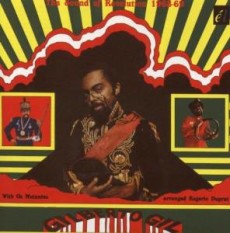
Gilberto Passos Gil Moreira was born June 26, 1942 in Salvador do Bahia, Brazil though he spent much of his childhood in the countryside of Ituaca. The offspring of a doctor and a schoolteacher, he attended the Marist Brothers school until he was nine and then returned to Salvador for secondary school.
Gil’s interest in music began when he was two and grew up listening to the forro music and the street performers of Salvador. Early on, he began to play the drums and the trumpet, and then took up the accordion before attending music school. He first played classical music, but grew more interested in the folk and popular music of Brazil, influenced by accordionist Luiz Gonzaga. He discovered the samba music of Dorival Caymmi, American big band jazz and tango.
In 1950 while still in high school he joined his first band, Os Desafinados (The Out of Tunes), playing accordion and vibraphone and singing. Soon afterwards he settled on the guitar as his instrument after hearing Joao Gilberto and started playing bossa nova. Gil met guitarist and singer Caetano Veloso at the Universidade Federal da Bahia in 1963 and immediately they began collaborating and performing together, releasing a single and EP soon afterwards. Along with Maria Bethania, Gal Costa and Tom Ze, they opened the Vila Velha Theatre with a night of bossa nova and traditional Brazilian songs in 1964.
Gilberto would go on to become musical director of the theatre’s concert series, sold bananas, composed jingles for tv ads and work for Unilever before moving to Sao Paulo in in 1965. Though he had a hit single with Louvação that was later recorded by Elis Regina, his first solo hit was the 1969 song Aquele Abraco. Arrested with Veloso he spent seven months in jail and house arrest and then instructed to leave the country. After a concert in Salvador in ’69 they left for Portugal, Paris and London where he listened to Bob Marley, Jimmy Cliff and Burning Spear. He performed with Yes, Pink Floyd and the Incredible String Band. It was in London that he recorded Gilberto Gil Nega and attended Miles Davis and Sun Ra concerts.
Over the course of his career he participated in the Aids benefit album Red, Hot + Rio, win Grammy awards, receive the Legion d’honneur from France, and was the first Latin American recipient of the Polar Music Prize in Stockholm. In between performances he turned to politics becoming the Salvador Secretary of Culture, founded the environmental protection organization Onda Azul (Blue Wave), was a Good will Ambassador for the Food and Agriculture Organization of the United Nations, became Brazil’s Minister of Culture and then retired due to a vocal cord polyp.
Tenor, baritone and falsetto vocalist, guitarist, lyricist and composer Gilberto Gil who is one of the pioneers of tropicália, and became increasing interested in the welfare of Black culture and focused on Afro-Brazilian culture. He continues to transcend the eras of dance and music trends emerging on the other side with a blend of music styles that stay true to his traditional Bahian roots while engaging with commercial markets.

Inspire A Young Mind
Daily Dose Of Jazz…
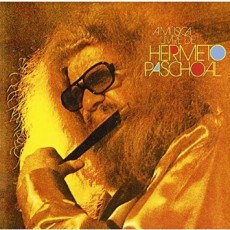
Hermeto Pascoal was born an albino on June 22, 1936 in Lagoa da Canoa, Alagoas, Brazil at a time when there was no electricity. He learned the accordion from his father and practiced for hours as his condition of birth did not allow him to work the fields.
Hermeto’s career began in 1964 with appearances on several Brazilian recordings alongside relatively unknown groups that included Edu Lobo, Elis Regina and Cesar Camargo Mariano, establishing widely influential new directions in post-bossa Brazilian jazz.
By 1966 he was playing in the Sambrasa Trio with Airto Moriera and Humberto Clayber releasing one album Em Som Maior. Then he and Airto joined Trio Novo and in 1967 renamed the group Quarteto Novo and released an album that launched the careers of Pascoal and Moreira. Pascoal would then go on to join the multi-faceted group Brazilian Octopus.
Pascoal initially caught the international public’s attention with an appearance on Miles Davis’s 1971 album Live-Evil, which featured him on three pieces he composed. Later collaborations involved fellow Brazilian musicians Airto and Flora Purim. From the late 1970s onward he has mostly led his own groups, that have included bassist Itibere Zwarg, pianist Jvino Santos-Neto and percussionists Nene, Pernambuco and Zabele.
Known as o Bruxo (the Sorcerer), Hermeto often makes music with unconventional objects such as teapots, children’s toys, and animals, as well as keyboards, button accordion, melodica, saxophone, guitar, flute, voice, various brass and folkloric instruments. Folk music from rural Brazil is another important influence in his work.
Between 1996 and 1997, Pascoal worked on a book project called the Calendário do Som, that contains a song for every day of the year, including 29 February, so that everyone would have a song for his or her birthday. He continues to perform, record and tour.
Jazz Is Global – Share
More Posts: accordion,flute,guitar,keyboard,melodica,saxophone,vocal
Daily Dose Of Jazz…
Wally Fawkes was born Walter Ernest Fawkes on June 21, 1924 in Vancouver, Canada. His family moved to Britain in 1931 and enthused by comic books he started out pursuing a career as a cartoonist, first enrolling in Sidcup Art School. Due to financial restraints he left school, took a job painting camouflage onto factory roofs at the onset of WWII but a bout of pleurisy kept him from service.
The Coal Commission employed Fawkes to work on maps and in 1942 he entered an art competition that was adjudicated by the Daily Mail and was found work in the Clement Davies ad agency and later at the Daily Mail drawing column-breaks and decorative illustrations.[1]
It was during the war years that he began playing in jazz bands and because of the amount of time spent in air raid shelters that people living in London were becoming troglodytes and adopted the name for one of his first groups – Wally Fawkes and the Troglodytes. In 1947 he joined the George Webb Dixielanders, a semi-professional revivalist jazz band that featured Humphrey Lyttelton on trumpet. The two would leave and form their own group that evolved into mainstream jazz. He would record with Sidney Bechet in 1949, George Melly and John Chilton in the early Seventies.
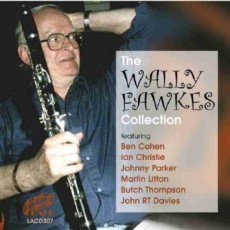
Over the years clarinetist Wally Fawkes combined playing jazz with his love of cartooning and had a successful career in both. His political satire in the comic strip he illustrated gained praise from Prime Minister Margaret Thatcher. Poor eyesight retired him from cartooning at the age of 81 and he has concentrated solely on his clarinet playing.
Put A Dose In Your Pocket
More Posts: clarinet
Daily Dose OF Jazz…
Jeff Beal was born in Hayward, California on June 20, 1963 and began trumpet studies in the third grade after attending a school music assembly at Castro Valley’s Marshall Elementary School with his father. Upon hearing the trumpet played, he chose it as his instrument and his grandmother, pianist Irene Beal, gave him a recording of Miles’ collaboration with Gil Evans, Sketches of Spain.
Beal wrote his first long-form composition for the Oakland Youth Symphony Orchestra while a student at Castro Valley High School, combining his love of jazz improvisation with an orchestral accompaniment. This merging of improvisation with classical composition has remained a hallmark of his music. He went on to matriculate through the Eastman School of Music in Rochester, New York studying composition and trumpet earning a Bachelor of Music degree.
Beal composed and recorded his debut album, Liberation, for Island Records. His jazz band went on to perform at The Blue Note and the Montreaux Jazz Festival. At the request of Chick Corea, Beal composed and recorded a concerto for the virtuosic jazz bassist, John Patitucci for Corea’s Stretch Records label.
John’s signature work, Alternate Route, was composed for improvised trumpet and orchestra. Written fifteen years after his first long form composition, this piece was again premiered by Kent Nagano for the Berkeley Symphony Orchestra, spotlighting him as trumpet soloist. He also composed improvisatory concerti for Dave Samuels, Larry Coombs, and the Turtle Island String Quartet.
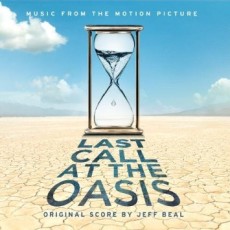
By the mid-1990s, he relocated to Los Angeles and got his first critical notice in 2001, for his minimalist Americana score to Ed Harris’ directorial debut, Pollock. He has been nominated for thirteen Emmy Awards including Carnivale, Rome and House of Cards. He has won three. Trumpeter and composer Jeff Beal continues to work in film and television, recording and performing concerts.
Jazz Is Global – Share
More Posts: trumpet
Daily Dose Of Jazz…
Mousey Alexander was born Elmer Alexander on June 19, 1922 in Gary, Indiana. He studied at the Roy Knapp School in Chicago, Illinois. It was there that he started a working relationship with Jimmy McPartland and soon afterward began playing with is wife Marian.
By the middle of the 1950s he played with the Sauter-Finegan Orchestra and performed in a small group with guitarist Johnny Smith. In 1956 he accompanied Benny Goodman on a tour of the Far EAst. Later in the decade he often worked with Bud Freeman and Eddie Condon. He would go on to play with Charlie Ventura, Billie Holiday, Red Norvo, Clark Terry, Ralph Sutton, Sy Oliver and Doc Severinsen.
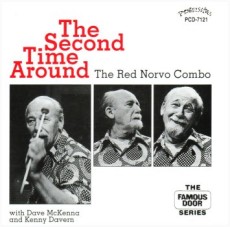
Freelancing during the 1960s with many bands, it was in the 1970s Alexander started recording for Harry Lim under the Famous Door record label. A great well-schooled drummer able to swing any band, he performed with his friend Buddy Rich, who thought highly of his playing.
Drummer Mousey Alexander had a bad stroke in 1980 but fully recovered over time, and played up until his death of heart and kidney failure on October 9, 1988 at age 66.
Inspire A Young Mind
More Posts: drums