

Daily Dose Of Jazz…
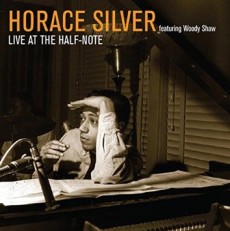
Horace Silver was born Horace Ward Martin Tavares Silva on September 2, 1928 in Norwalk, Connecticut to a mother from Connecticut and a father from Maio, Cape Verde. He began playing the piano as a child, receiving classical music lessons and Cape Verde folk music from his father. When he turned 11 he became interested in becoming a musician, after hearing the Jimmie Lunceford Orchestra.
From ninth grade Silver played tenor saxophone in the Norwalk High School band and orchestra, influenced by Lester Young. He played gigs locally on both instruments while still at school and around 1946 he moved to Hartford, Connecticut, taking a regular job as house pianist in a nightclub. His big break came around 1950, backing saxophonist Stan Getz at a Hartford club. Liking what he heard, Getz took Silver’s band on the road. With Getz he made his recording debut on the Stan Getz Quartet album, along with bassist Joe Calloway and drummer Walter Bolden.
The following year Horace left Getz, moving to New York City and worked at Birdland on Monday nights. During that year, he met the executives of Blue Note Records, eventually signed with them, and remained there until 1980. He also co-founded the Jazz Messengers with Art Blakey.
From 1951 he free-lanced around New York, recorded mostly his own compositions with his trio, featuring Blakey on drums and Gene Ramey, Curly Russell or Percy Heath on bass. Throughout his career he would record with Clifford Brown, Lou Donaldson, Kenny Dorham, Hank Mobley, Junior Cook, Blue Mitchell, Louis Hayes, Carmell Jones, Joe Henderson, Woody Shaw, Tyrone Washington, Michael and Randy Brecker, Lee Morgan, Benny Golson, Donald Byrd and Miles Davis All Stars.
He music reflected the social and cultural upheavals of the 60s and 70s as he briefly played electric piano and including lyrics in his compositions, and his interested in spiritualism also came into his music.
He received a National Endowment for the Arts Jazz Masters Award, recorded his final studio session in 1998 titled Jazz Has A Sense of Humor, was awarded the President’s Merit Award by the National Academy of Recording Arts and Sciences, penned his autobiography Let’s Get to the Nitty Gritty: The Autobiography of Horace Silver and published by University of California Press, and many of his compositions have become jazz standards.
Horace Silver, whose early influences were Bud Powell, Art Tatum, Teddy Wilson, Nat King Cole and Thelonious Monk, and who and influence for Bobby Timmons, Le McCann, Ramsey Lewis and Cecil Taylor, passed away of natural causes in New Rochelle, New York on June 18, 2014. The pianist and composer known for his distinctive playing style and pioneering compositional contributions to hard bop, featured surprising tempo shifts from aggressively percussive to lushly romantic merged with funk long before that word could be used in polite company.

Inspire A Young Mind
More Posts: piano
Daily Dose Of Jazz…
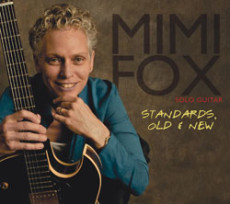
Mimi Fox was born of August 24, 1956 in New York City and started playing drums at nine and guitar when she was ten. She was inspired by a wide variety of music in her house from show tunes, classical, Dixieland, Motown pop, folk, and R&B. By fourteen she bought her first jazz album, John Coltrane’s classic Giant Steps and her course of her musical life changed. She began touring right out of high school and eventually settled in the San Francisco Bay area where she became a sought after player.
Fox has performed and recorded with Charlie Byrd, Stanley Jordan, Charlie Hunter, Mundell Lowe, Branford Marsalis, David Sanchez, Houston Person, Don Lanphere, Abbey Lincoln, Diana Krall, Kevin Mahogany, Janis Siegel, Joey DeFrancesco, Barbara Denerlein, Dr. Lonnie Smith, Terri Lyne Carrington, Stevie Wonder and John Sebastian and the list continues to grow.
Mimi has been named a winner in 6 consecutive Downbeat Magazine international critic’s polls, hit #23 on the Billboard Top Jazz Albums chart, recognized by the IAJE for her outstanding service to jazz education, has released ten albums as a leader, published several instructional books and interactive CD-Roms.
As a composer she has written and performed original scores for orchestras, documentary films and dance projects. As an educator she teaches master classes worldwide, is currently the Chair of the Guitar Department, a faculty advisor and instructor at the Jazz School for Musical Study and Performance in Berkeley, California. Guitarist Mimi Fox continues to composer, record, teach and perform at festivals around the world.
Take A Dose On The Road
More Posts: guitar
Daily Dose Of Jazz…
Eddie Shu was born Edward Shulman on March18, 1918 in New York City and learned violin and guitar as a child before picking up the saxophone as a teenager. He began his professional career in 1935 in Brooklyn and for the seven years leading up to his service in the U.S. Army, he performed in vaudeville and night clubs as a ventriloquist and played harmonica with the Cappy Barra harmonica Band.
While serving in the Army from 1942 to 1945 with Stan Harper, the two were assigned to a special unit to entertain the troops. He also played in various bans including with Maurice Evans in the Pacific. After the war and through the 1950s Eddie performed with Tadd Dameron, George Shearing, Johnny Bothwell, Buddy Rich, Les Elgart, Lionel Hampton, Charlie Barnet, Chubby Jackson, and Gene Krupa.
By the 1960s Shu moved to Florida, playing locally as well as with the Louis Armstrong All-Stars, Lionel Hampton and Gene Krupa once again. He was a member of the vocal jazz group Rare Silk in 1980. During this period, he performed with this group in and around Boulder, Colorado and also performed a 6-week Department of Defense tour. He would record his final date on the Island Jazz Label “Shu-Swings” With The Joe Delaney Trio, playing tenor and alto saxophones, clarinet, trumpet and also revisit’s his 1954 78 single “Ruby” on chromatic harmonica.
Eddie Shu died on July 4, 1986 in St. Petersburg, Florida while living in Tampa. The swing and jazz multi-instrumentalist also had a high proficiency on the accordion and was a popular comedic ventriloquist.
Dose A Day – Blues Away
Daily Dose Of Jazz…
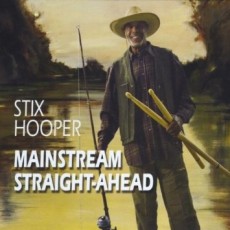
Stix Hooper was born Nesbert Hooper on August 15, 1938 in Houston, Texas. He developed an interest in music, drums and percussion at a very early age and starting in junior high, under the direction of George Magruder, the school’s band director, he began devoting much of his time to the study of all aspects of music including composition and song writing.
Studying at Phyllis Wheatley High School, spearheaded by band director, Sammy Harris, Stix eventually formed a band called the Swingsters, later on the Modern Jazz Sextet. While matriculating at Texas Southern University he received continual coaching from members of the Houston Symphony Orchestra and other local professional musicians.
A move to the West Coast, he studied music at California State University, Los Angeles and also received coaching from well-known private instructors and his personal mentors. During this time the Jazz Crusaders were formed eventually becoming the Crusaders, a world-renowned entity.
Hooper has performed, collaborated, composed with and produced for a wide range of music greats, including Arthur Fielder, George Shearing, the Royal Philharmonic Orchestra of London, B.B. King, Grant Green, Grover Washington, Jr., Quincy Jones, Marvin Gaye, Nancy Wilson, The Rolling Stones and numerous others.
He is credited with creating an original style of drumming called “Jazz Funk” that has been incorporated in jazz as well as other musical genres. In addition, Stix Hooper has contributed through his work with the National Academy of Recording Arts and Sciences serving as the National Vice Chairman and the first African American to do so, having previously served three terms as President of the Los Angeles Chapter of NARAS, the first ever three term President, and only the second African American President of that chapter.
Among the numerous acknowledgements and accolades he has garnered are 12 Grammy nominations, No. 1 awards from various music media, named one of the top drummers/musicians by Down Beat, Playboy and other publications, and has received an invitation to the White House, keys to major US cities and several international honors. Soul jazz, jazz funk and mainstream drummer Stix Hooper continues to compose, perform, record and tour.
Put A Dose In Your Pocket
More Posts: drums
Daily Dose Of Jazz…
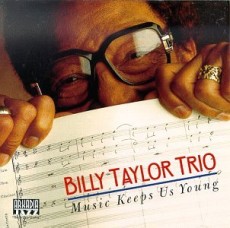
William “Billy” Taylor was born July 24, 1921 in Greenville, North Carolina but his family moved to Washington, DC when he was five years old. Growing up in a musical family, learning to play guitar, drums and saxophone as a child but most successfully on the piano. He took classical piano lessons with Henry Grant, who had educated Duke Ellington a generation earlier.
His first professional appearance was playing keyboard at the age of 13 and was paid one dollar. He attended Dunbar High School, the U.S.’s first high school for African-American students. He went to Virginia State College, majored in sociology but pianist Dr. Undine Smith Moore noticed young Taylor’s talent on piano, changed his major to music, graduating with a degree in music in 1942.
After graduation a move to New York City saw Billy playing piano professionally from 1944, first with the Ben Webster Quartet on 52nd Street. He met Art Tatum the same night, who became his mentor. He went on to perform with Machito developing his love for Latin music, a tour of Europe with the Don Redman Orchestra, and remained to work Paris and the Netherlands. Retuning to New York he worked with Bob Wyatt, Sylvia Sims and Billie Holiday in a successful show called Holiday on Broadway. A year later, he became the house pianist at Birdland performing with Charlie Parker, J. J. Johnson, Stan Getz, Dizzy Gillespie and Miles Davis. He would become the longest playing pianist ever in the history of the club.
In 1949, Taylor published his first book, a textbook about bebop piano styles. In 1952 Taylor composed one of his most famous tunes, I Wish I Knew How It Would Feel To Be Free, which subsequently achieved more popularity with the civil rights movement of the 1950s and 1960s. Nina Simone covered the song in her 1967 album Silk & Soul and the instrumental is used by the BBC for it’s long running television Film program.
Billy made dozens of recordings in the 1950s and 1960s, had a thriving broadcast career and in 1958, he became the Musical Director of NBC’s The Subject Is Jazz, the first ever television series focusing on jazz. The then new National Educational Television Network (NET) produced the 13-part series that hosted Duke Ellington, Aaron Copland, Bill Evans, Cannonball Adderley, Jimmy Rushing and Langston Hughes and others.
He founded the Jazzmobile in 1961 providing an arts education program via workshops, master classes, lecture demonstrations, arts enrichment programs, outdoor summer mobile concerts, special indoor concerts and special projects. Taylor worked as a DJ and program director on New York radio station WLIB, his trio was a regular feature of the Hickory House on West 55th Street, and from 1969 to 1972 became the first Black American to be musical director and lead a talk show band on The David Frost Show.
By the Eighties the Jazzmobile was producing shows for National Public Radio, receiving a Peabody Award for Excellence in Broadcasting Programs. In 1981, after being profiled by CBS News Sunday Morning he was hired as an on-air correspondent and conducted more than 250 interviews with musicians. He received an Emmy Award for his segment on Quincy Jones. These are just two of the many awards he has received over the course of his career.
By the end of the decade he formed his own “Taylor Made” record label to document his own music. In 1997, he received the New York state governor’s art award. Suffering from a stroke in 2002 that affected his right hand did not stop him from performing almost until his death. He died after a heart attack on December 28, 2010, in Manhattan, at the age of 89. His legacy was honored in a Harlem memorial service on January 11, 2011, featuring performances by Taylor’s final working trio – bassist Chip Jackson, drummer Winard Harper and long-time Taylor associates Jimmy Owens, Frank Wess, Geri Allen, Christian Sands and vocalist Cassandra Wilson.
Inspire A Young Mind
More Posts: piano