

Daily Dose Of Jazz…
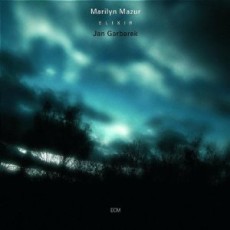
Marilyn Mazur was born on January 18, 1955 of Polish and African American descent in New York but grew up on Denmark from the age of six. Primarily a self-taught percussionist and drummer, she got a degree in percussion at the Royal Danish Academy of Music.
From 1975, Mazur has worked as a percussionist with various groups, among others, the group Six Winds with Alex Riel. She has performed with such notables as Niels-Henning Orsted Pederson, Jan Garbarek, Miles Davis, Gil Evans, Wayne Shorter Jeanne Lee and Palle Mikkelborg to mention a few.
By 1989, Marilyn founded her band Future Song, a sextet with her husband Klavs Hovman. A second project, Percussion Paradise, brought together percussionists Benita Haastrup, Lisbeth Diers and Birgit Løkke.
Marilyn Mazur is also a composer, pianist, dancer and bandleader and has been selected by Down Beat in 1989, 1990 and 1995 as a “percussion talent deserving wider recognition”. In 2001, she was awarded the Jazzpar Prize, the world’s largest international jazz prize. She continues to record, perform and tour.
More Posts: bandleader,drums
Daily Dose Of Jazz…
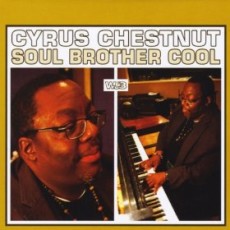
Cyrus Chestnut was born January 17, 1963 in Baltimore, Maryland. He started his musical career at the age of six, playing piano at Mount Calvary Baptist Church. By age nine, he was studying classical music at Peabody Institute and in 1985 earned a degree in jazz composition and arranging from Berklee College of Music where he was awarded the Eubie Blake Fellowship, the Quincy Jones Scholarship and the Oscar Peterson Scholarship.
A year after graduating his prolific career began with a tour with Jon Hendricks, followed by two-year stints with Terence Blanchard, Donald Harrison, Wynton Marsalis and Betty Carter. Under Betty’s tutelage, Cyrus was advised to take chances and play things she had never heard.
Signing with Atlantic Records in 1993 he released the critically acclaimed Revelation followed by The Dark Before The Dawn the next year, debuting at #6 on the Billboard charts. He has performed and/or recorded with Freddy Cole, Bette Midler, Freddie Hubbard, Jimmy Scott, Chick Corea, Isaac Hayes, Kevin Mahogany, Dizzy Gillespie, Manhattan Transfer, Vanessa L. Williams, Brian McKnight, Christian McBride, Lewis Nash, James Carter, Wycliffe Gordon and the list continues.
Never straying far from his church roots he collaborated and toured with soprano opera diva Kathleen Battle, recording the notable “So Many Stars” in 1996. Later that same year came Blessed Quietness: A Collection of Hymns, Spirituals and Carols.
Chestnut’s leadership and prowess as a soloist has also led him to be a first call for the piano chair in many big bands including the Lincoln Center Jazz Orchestra, Dizzy Gillespie Big Band and the Carnegie Jazz Orchestra. He has amassed a further string of critically acclaimed albums while continually touring with his trio, playing jazz festivals around the world as well as clubs and concert halls.
More Posts: bandleader,composer,piano
Daily Dose Of Jazz…
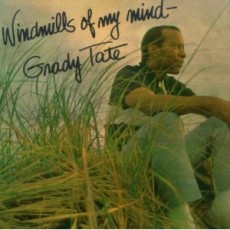
Grady Tate was born January 14, 1932 in Durham, North Carolina who began singing at age four, drums at five. However music was not in his immediate future as he earned a degree from North Carolina Central University with a degree in English literature/drama, a minor in psychology and taught English and speech in Washington, DC. Fortunately for the jazz world his desire to pursue an acting career lead him to New York City and the American Academy of Dramatic Arts and once in New York his reputation as an outstanding musician resulted in work with Quincy Jones.
Grady Tate’s drumming helped to define a particular hard bop, soul jazz and organ trio sound during the mid 1960’s and beyond. His slick, layered and intense sound is instantly recognizable for its understated style in which he integrates his trademark subtle nuances with sharp, crisp “on top of the beat” timing (in comparison to playing slightly before, or slightly after the beat). The Grady Tate sound can be heard prominently on the many classic Jimmy Smith and Wes Montgomery albums recorded on the Verve label in the 1960s.
He has been a member of the New York Jazz Quartet, the Tonight Show with Johnny Carson for six years, and his most widely heard vocal performances are the songs “I Got Six”, “Naughty Number Nine”, and “Fireworks” from Multiplication Rock and America Rock part of the Schoolhouse Rock series.
Grady Tate’s popularity as choice sideman of accomplished musicians is due to his remarkable intuitiveness and ability to make any style of music swing tastefully, and his interpretation of many different genres of music, in which he creates his own unique style of jazz led him to work with a host of talent, the short list including Lionel Hampton, Sarah Vaughan, Jimmy Smith, Grant Green, Stanley Turrentine, Lena Horne, Astrud Gilberto, Ella Fitzgerald, Cal Tjader, Bill Evans and Stan Getz.
Grady Tate, baritone vocalist and drummer has been on the faculty of Howard University since 1989.
Daily Dose Of Jazz…
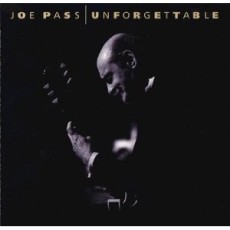
Joe Pass was born Joseph Anthony Jacobi Passalaqua on January 13, 1929 in Brunswick, New Jersey but was raised in Johnston, Pennsylvania. Inspired by Gene Autry’s portrayal of a guitar-playing cowboy. His father gave him his first guitar on his 9th birthday and encouraged him to pick up tunes by ear, play pieces not specifically written for guitar and practice scales leaving no spaces between the notes of the melody.
As early as 14, Joe started gigging with bands fronted by Tony Pastor and Charlie Barnet as he honed his guitar skills and learned the music business. He began traveling with small jazz groups, eventually ending up in New York City. Unfortunately, he fell victim to drug abuse spending a good portion of the 1950s in relative obscurity, reappearing only after a two-and-a –half year stay in rehab at Synanon that resulted in the 1962 album “The Sounds of Synanon”.
Throughout the sixties Pass recorded a series of albums for the Pacific Jazz label, received Downbeat magazine’s “New Star Award” in ’63, toured with George Shearing, was a sideman with Louis Bellson, Frank Sinatra, Sarah Vaughan, Joe Williams, Della Reese and Johnny Mathis, and worked on TV shows including The Tonight Show with Carson, Merv Griffin, Steve Allen and others.
By the early 1970s, Pass and guitarist Herb Ellis were performing together regularly at Donte’s in Los Angeles, a collaboration that led to the recording of Jazz/Concord with Ray Brown and Jake Hanna in tow. During this time he also collaborated on a series of music books, and his Joe Pass Guitar Style is considered a leading improvisation textbook for students of jazz.
In 1970 Norman Granz signed pass to his Pablo records in which he released as a leader and worked with Benny Carter, Milt Jackson, Herb Ellis, Zoot Sims, Duke Ellington, Dizzy Gillespie, Count Basie and many, many others. In 1974, along with Oscar Peterson and Niels-Henning Orsted Pederson they won a Grammy with their album “The Trio” for Best Jazz Performance by a group. Throughout the late 70sto mid 80s, Joe and Ella Fitzgerald would record six albums together as her career was nearing its end. In 1994, guitarist Joe Pass died from liver cancer in Los Angeles on May 23rd at the age of 65.
More Posts: guitar
Daily Dose Of Jazz…
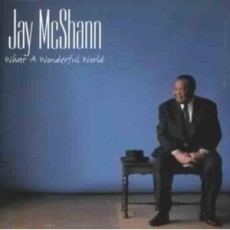
Jay McShann, born James Columbus McShann on January 12, 1916 in Muskogee, Oklahoma began played the piano from the age of 12. His primary education came from Earl “Fatha” Hines late-night radio broadcasts from the Grand Terrace Café. Leaving home he spent time at college and working with bands throughout Oklahoma, Arkansas, Arizona and New Mexico.
In the 1930 Jay moved to Kansas City working with both local groups and his own band with his 1938 band comprised of Charlie Parker, Bernard Anderson, Al Hibbler, Paul Quinichette, Earl Coleman, Ben Webster and Walker Brown, creating a music that would become known as the Kansas City sound.
Nicknamed Hootie, it was during the 1940s that he stood at the forefront of the blues and hard bop jazz musicians mainly from Kansas City. His first recordings were all with Charlie Parker, the first as “The Jay McShann Orchestra” on August 9, 1940. After World War II he began to lead small groups featuring blues shouter Jimmy Witherspoon. Witherspoon started recording with McShann in 1945, and fronting McShann’s band, and had a hit in 1949 with “Ain’t Nobody’s Business”.
Jay McShann was inducted into the Blues Hall of Fame, was nominated twice for a Grammy Award, performed regularly with violinist Claude Williams and continued to recording and touring into the nineties around Kansas City and Toronto, Ontario. The blues and jazz pianist Jay McShann, whose career spanned more than sixty years, passed on December 7, 2006, at St. Luke’s Hospital in Kansas City.