

Daily Dose Of Jazz…
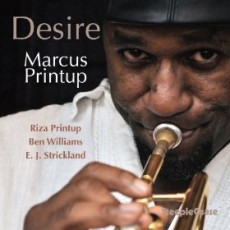
Marcus Printup was born on January 24, 1967 in Conyers, Georgia. His first musical experiences hearing the fiery gospel music his parents sang in church and didn’t discover jazz until he was a senior in high school.
He is a versatile musician who started playing trumpet in the fifth grade, played funk as a teenager, and while attending the University of North Florida on music scholarship, won the “International Trumpet Guild Jazz Trumpet Competition”, and was a member of a ten-piece group called “Soul Reason for the Blues”. In 1991 he met pianist Marcus Roberts, his mentor to this day, who introduced him to Wynton Marsalis, and was induction into the Jazz @ Lincoln Center Orchestra two years later.
Marcus has performed and/or recorded with Betty Carter, Dianne Reeves, Eric Reed, Cyrus Chestnut, Wycliffe Gordon, Carl Allen, Marcus Roberts among many others, not to mention a few of his projects as a leader, Song for the Beautiful Woman, Hub Songs, The New Boogaloo, Bird of Paradise, London Lullaby and his most recent, Desire.
Printup’s screen debut was in the 1999 movie “Playing By Heart” and also recorded on the film’s soundtrack. He tours annually with the Lincoln Center Jazz Orchestra, spending one-third of his year touring world wide, and nourishes his educator side by teaching youth and experienced musicians and contributing to several camps annually.
More Posts: trumpet
Daily Dose Of Jazz…
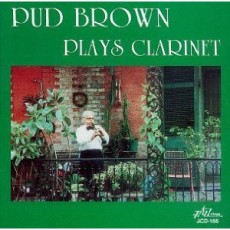
Pud Brown was born Albert Francis Brown on January 22, 1917 in Wilmington, Delaware but was raised in Shreveport, Louisiana. Brown was fluent on saxophone by age five, and toured throughout North America in a family band at the age of seven, playing the circus, nightclub and minstrel show circuits in the mid 1920s.
After moving to Chicago, Pud found work in Phil Lavant’s orchestra in 1938 and then in Lawrence Welk’s band. In 1941 he married, left music to run a motorcycle shop in Shreveport – a failed endeavor, relocated to Los Angeles and found work as a jazz musician.
Brown career exploded over the next several decades working with such jazz musicians as Les Brown, Coleman Hawkins, Doc Cheatham, Danny Barker, Kid Ory, Percy Humphrey and Louis Armstrong among others. He returned to New Orleans in 1975 and became a mainstay of the local scene playing with Clive Wilson’s Original Camelia Brass Band in the 1980s, holding a regular gig at the French Quarter’s Palm Court Jazz Cafe.
Pud Brown, clarinetist, reed player and active as an educator in local schools until his death, passed away on May 27, 1996 in Algiers, Louisiana.
Daily Dose Of Jazz…
Jason Moran was born January 21, 1975 and grew up in Houston, Texas. He began playing the piano when he was six, though he had no love for the instrument until, at the age of 13, he first heard the song “Round Midnight” by Thelonious Monk and switched his efforts from classical music to jazz. He attended Houston’s High School for the Performing and Visual Arts, and then enrolled at the Manhattan School of Music where he studied with pianist Jaki Byard. While still in college Moran also received instruction from other avant-garde pianists including Muhal Richard Abrams and Andrew Hill.
In 1997, when Moran was a senior at the Manhattan School of Music he was invited to join the band of saxophonist Greg Osby for a European tour. Osby liked his playing and Moran continued to play with the group upon their return to the United States, making his first recorded appearance on Osby’s 1997 “Further Ado” for Blue Note, subsequently appearing on several Osby albums. This led to Blue Note signing Moran and his debut “Soundtrack to Human Motion” was released in 1999.
He has since released several albums playing with contemporaries Stefon Harris, Lonnie Plaxico, Eric Harland, Tarus Mateen, Nasheet Waits, Sam Rivers and Marvin Sewell as well as collaborations with Charles Lloyd, Cassandra Wilson, Joe Lovano, Don Byron, Lee Konitz, Steve Coleman, Ravi Coltrane, Von Freeman and Christian McBride.
Jason has been commissioned to create a number of works by the Walker Art Center, the Dia Art Foundation and Jazz at Lincoln Center. He has been voted Up-n-Coming Jazz Musician by the Jazz Journalists Association, Down Beat’s critics poll voted him Rising Star Jazz Artist, Rising Star Pianist, and Rising Star Composer for three years straight from 2003-2005, named Jazz Artist of the Year in 2007 by Playboy, and was named a USA Prudential Fellow.
Pianist Jason Moran is currently working on a multimedia project “In My Mind” inspired by Thelonious Monk’s 1959 large band concert at Town Hall. He serves as music advisor to the Kennedy Center, serves on the faculty of the New England Conservatory of Music and the Manhattan School of Music, as he continues to compose, perform, tour and record.

Daily Dose Of Jazz…
Valery Ponomarev was born January 20, 1943 in Russia and the young trumpeter became interested in jazz after hearing it on Voice of America. Feeling a particular affinity for Clifford Brown, he dedicated countless hours to transcribing, studying and memorizing legendary jazz trumpet solos. Fleeing the Soviet Union in 1973 he emigrated to the U.S. where he joined Art Blakey’s Jazz Messengers, an association that lasted four years.
Valery’s tenure with Blakey afforded him the opportunity to perform the major concert venues, clubs and festivals around the world, recording eleven albums and television appearances in Europe, Japan, Brazil and the United States. After his departure from The Jazz Messengers, Valery formed his own band “Universal Language”.
Ponomarev has performed or collaborated with Max Roach, Harold Land, George Morrow, Sam Dockery, Evelyn Blakey, Curtis Fuller, Bobby Watson and others. He is currently a member of the memorial Art Blakey & The Jazz Messengers band led by Benny Golson. He also tours with his big band playing some originals and some music from the Jazz Messengers repertoire.
Considered by many as an outstanding educator and mentor, Valery teaches privately and as part of the Wells Fargo Jazz for Teens program in Newark, New Jersey. He has had a documentary made about his life, “Messenger From Russia” and released his autobiographical book “On The Flip Side of Sound” in 2009.
More Posts: trumpet
Daily Dose Of Jazz…
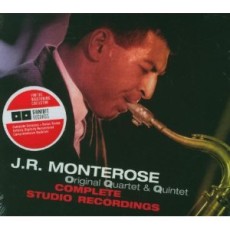
J. R. Monterose was born Frank Anthony Peter Vincent Monterose, Jr. in Detroit Michigan on January 19, 1927. A few months after his birth, the family moved to Utica, New York and this is where he began formal clarinet studies at thirteen. After hearing the Glenn Miller soloist Tex Beneke J.R. taught himself to play tenor saxophone with his early influences Coleman Hawkins and Chu Berry. He also found harmonic inspiration in pianist Bud Powell and learned chord changes from guitarist Sam Mancuso.
Monterose first stepped into the professional arena playing in upstate New York territory dance bands in the late forties. In 1950 he joined the Henry “Hot Lips” Busse touring orchestra, then the Buddy Rich band in ’51 but left for lack of soloing opportunities.
By the mid to late 50s he was in New York City as a featured soloist with Claude Thornhil’s orchestra and with vibraphonist Teddy Charles’ modernist groups, Charles Mingus’s Jazz Workshop and Kenny Dorham’s short-lived Jazz Prophets. He recorded two sessions with Alfred Lion for Blue Note as a leader, “J.R. Monterose” in 1956 and “The Message” in 1959.
Throughout his life he continued to pursue his ever-evolving craft in small time U.S. venues and during extended stays in the late 1960’s through the mid 1970’s in Belgium, The Netherlands and Denmark with occasional low-profile recordings. His preference for small group work in out of the way places would shape much of his subsequent career, contributing to the musical growth upon which he was always so intently focused but ultimately relegating him to an undeserved obscurity.
He steadfastly refused to be pigeonholed in any particular style and was quoted as saying “ I’ve tried all my life to avoid copying. If I can’t be myself, there’s no point in being in jazz”. Tenor saxophonist J.R. Monterose passed away on September 16, 1993.
More Posts: saxophone