

Daily Dose Of Jazz…
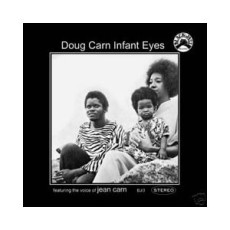
Doug Carn was born on July 14, 1948 in New York City but was raised in St. Augustine, Florida, where his mother, Gwendolyn Seniors Carn, taught music in the St. Johns County Public School System. Her unique and special teaching abilities provided a fertile ground for his future development, and he started piano lessons at the age of five but switched to the alto sax at eight.
Doug was introduced to all of the jazz of the late Forties and early Fifties by his a jazz aficionado and deejay uncle, Bill Seniors. By his early teens, Doug had formed his first group, The NuTones, that played a variety of jazz, R&B and Rock ‘n Roll hits for dances, proms and club dates all over Florida and southeast Georgia. In addition, he held down a post as organist for the A.M.E. church in its 11th Episcopal District.
During his sophomore year in high school, Doug started to play the oboe that would eventually earn him a full scholarship to Jacksonville University. Graduating valedictorian of his high school class, Carn turned down a full scholarship to the U.S. Air Force Academy to pursue his music.
After college Carn settled in Los Angeles where his creative writing abilities and spiritual ideology began to bear fruit. He was leading an organ trio and studying with Larry Young, Jr. when the word started to get around about Doug’s multi-faceted talents. He was soon discovered by Gene Russell who had heard about Doug’s innovative lyric adaptation of contemporary jazz classic, i.e., Wayne Shorter’s “Infant Eyes” Coltrane’s “A Love Supreme,” Bobby Hutcherson’s “Little B’s Poem” and Horace Silver’s “Peace.”
He garnered critical acclaim as a “jazz spatialist” for his “deft orchestrations” and horn arrangements. They were inspired by a natural ability to speak the be-bop language and a solid foundation in the classical tradition. He produced several landmark albums on the Black Jazz label such as “Adam’s Apple” and with his wife Jean “Infant Eyes” and “Search for a New Land”. He has worked with many great jazz musicians over the years, a list to numerous to name but included Lou Donaldson, Stanley Turrentine and Irene Reid and continues to record, perform and tour.
More Posts: piano
Daily Dose Of Jazz…
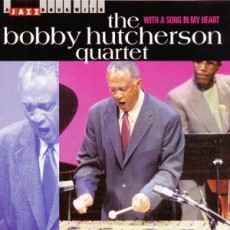
Bobby Hutcherson was born January 27, 1941 in Los Angeles, California and studied piano with his aunt as a child. Not enjoying the formality of the training he tinkered with it on his own, especially since he was already connected to jazz through a brother’s high school friendship with Dexter Gordon and a singing sister who later dated Eric Dolphy. But it was hearing Milt Jackson that made everything clicked for Hutcherson during his teen years, working until he saved up enough money to buy his own set of vibes.
He began studying with Dave Pike and playing local dances in a group led by his friend, bassist Herbie Lewis. Parlaying his local reputation into gigs with Curtis Amy and Charles Lloyd in 1960. And joined an ensemble led by Al Grey and Billy Mitchell. A year later he’s in New York at Birdland and ends up staying on the east coast as his reputation of his inventive four mallet playing spread.
Attracted foremost to more experimental free jazz and post-bop, he made early recordings in this style for Blue Note with Jackie McLean, Eric Dolphy, Andrew Hill, Granchan Moncur, but ironically his debut recording for the label in 1963, The Kicker, not released until 1999, demonstrated his background in hard bop and the blues.
His vibraphone playing is suggestive of the style of Milt Jackson in its free-flowing melodic nature, but his sense of harmony and group interaction is thoroughly modern. Easily one of jazz’s greatest vibraphonists, Bobby Hutcherson helped modernize the vibes by redefining what could be done with it — sonically, technically, melodically, and emotionally. In the process, he became one of the defining voices in the “new thing” portion of Blue Note’s glorious ’60s roster.
Throughout his career Hutcherson has performed or recorded with a who’s who list of avant-garde, free improvisation, modernist post-bop, straight-ahead, mainstream, fusion and bop jazz players on the scene, staying ever current in his message. As a leader he has recorded nearly four-dozen albums for Blue Note, Landmark, Columbia, Cadet, Timeless, Evidence, Atlantic and Verve. Vibraphonist Bobby Hutcherson maintained his reputation as one of the most advanced masters of his instrument until he passed away on August 15, 2016 in Montara, California.
More Posts: marimba,vibraphone
Daily Dose Of Jazz…
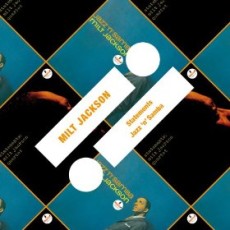
Milt Jackson was born Milton Jackson on January 1, 1923 in Detroit, Michigan. Discovered by Dizzy Gillespie and hired in 1946 for his sextet and also for his larger ensembles. He quickly acquired experience working with the most important figures in jazz of the era, including Woody Herman, Howard McGhee, Thelonious Monk and Charlie Parker.
In the Gillespie big band, Jackson fell into a pattern that led to the founding of the Modern Jazz Quartet. He was part of Gillespie’s small group swing tradition within a big band, consisting of pianist John Lewis, bassist Ray Brown and drummer Kenny Clarke. They would become a working group in their own right around 1950 and became the Milt Jackson Quartet but by the time Percy Heath replaced Ray Brown, in 1952 they became the Modern Jazz Quartet.
After some twenty years the MJQ disbanded in 1974 and Jackson pursued more money and his longed for improvisational freedom. The group reformed in 1981, however, and continued until 1993, after which Jackson toured alone, performing in various small combos, although agreeing to periodic MJQ reunions.
He recorded prolifically, his tunes, “Bluesology”, “Bags & Trane”, “The Late, Late Blues” and “Bag’s Groove” are jazz standards. He has recorded with J.J. Johnson, Roy McCurdy, B.B. King, John Coltrane, Wes Montgomery, Hank Mobley, Oscar Peterson, Stanley Turrentine, Don Sebesky, Cannonball Adderley and Ray Charles on the very short list.
A very expressive player, Bags, as he was affectionately known and referring to the bags under his eyes from staying up all night, differentiated himself from other vibraphonists in his attention to variations on harmonics and rhythm. He became one of the most significant vibist and was at the top of his game for 50 years playing bop, blues, and ballads with equal skill and sensitivity. Vibraphonist Milt Jackson, thought of as a bebop player but equally remembered for his cool swinging solos, left the jazz world on October 9, 1999 in Manhattan, New York.

More Posts: vibraphone

Daily Dose Of Jazz…
Eddie Heywood was born Edward Heywood, Jr. on December 4, 1915 in Atlanta, Georgia. Following in his father’s jazz footsteps, in through the Thirties he played with Waymon Carter, Clarence Love and Benny Carter once he moved to New York in 1939.
After starting his band, Heywood was an occasional sideman with Billie Holiday in 1941. By 1943 he was taking several classic solos on a Coleman Hawkins quartet date and put together the first sestet with Doc Cheatham and Vic Dickerson. Their version of “Begin the Beguine” became a hit in 1944 and three successful years followed.
Between 1947 and 1950, Eddie was stricken with a partial paralysis of his hands and could not play at all. However, it did not stop him when he made a comeback later in the decade. During the Fifties he composed and recorded “Land of Dreams” and “Soft Summer Breeze” and is probably best known for his 1956 recording of his composition “Canadian Sunset,” all of which he recorded with the Hugo Winterhalter Orchestra.
After a second partial paralysis in the 1960s, he made another comeback and continued his career in the 1980s. Pianist Eddie Heywood, who passed away on January 3, 1989 in Miami Beach, Florida, was awarded a star at 1709 Vine Street on the Hollywood Walk of Fame.
Eddie Heywood: 1915-1989 / Piano

More Posts: piano
Daily Dose Of Jazz…
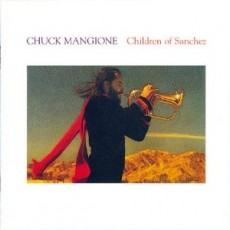
Chuck Mangione was born Charles Frank Mangione on November 29, 1940 in Rochester, New York. He attended the Eastman School of Music from 1958 to 1963, afterwards joining Art Blakey’s Jazz Messengers, for which he filled the trumpet seat.
In the late 1960s, Mangione was a member of the band The National Gallery, then served as director of the Eastman jazz ensemble from 1968 to 1972, and during this time returned to recording with the album Friends and Love, with the Rochester Philharmonic Orchestra.
Mangione’s quartet with saxophonist Gerry Niewood recorded “Bellavia” that won him a Grammy for Best Instrumental Composition. His music has been used during two Olympics, performed at the closing ceremonies, and composed the soundtrack for The Children of Sanchez starring Anthony Quinn, winning his second Grammy Award.
Chuck composed and performed the theme for The Cannonball Run among other films. Proficient on both trumpet and flugelhorn, he has performed with a 70-piece orchestra, recorded his hit album Feels So Good, and has worked with Dizzy Gillespie, Steve Gadd, and Chick Corea among other jazz luminaries.
Mangione, along with his brother Gap worked as the Jazz Brothers, recording three albums with Riverside Records. Later worked in one another’s band and orchestra. He has a recurring voice-acting role on the animated King of the Hill, and continues to perform and record with his current band.
More Posts: flugelhorn,french horn,piano,trumpet