

Daily Dose Of Jazz…
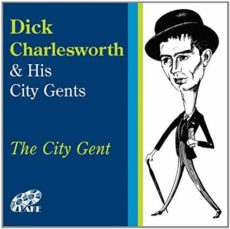
Dick Charlesworth was born Richard Anthony Charlesworth on January 8, 1932 and brought up in Sheffield. He attended King Edward VII School and at age 16 he became a clerk in the Ministry of Labour and in due course was transferred to London. He bought a clarinet and started playing jazz as a hobby in 1952-53.
Entirely self-taught, Dick became good enough to play saxophone and clarinet in a dance band and performed with jazz bands in south London including Jim Weller’s Jazzmen. While still working his day job, 1956 saw him form his first group, Dick Charlesworth’s Jazzmen and winning the South London Jazz Band Championship in 1957. The group was signed by the Melodisc label, recorded an EP in 1957 and produced an album for Doug Dobell’s 77 Records.
Leaving the Civil Service in 1959 he became a professional musician. He signed a recording contract with EMI and his group was remarketed as Dick Charlesworth’s City Gents. Light jazz was popular in the British charts and Charlesworth’s group sported pinstripes and bowler hats and had a motto, while we live, let us enjoy life. Their only chart single was Billy Boy, which reached 43 in the UK Singles Chart in 1961.
The City Gents appeared on television, worked the cruise ship circuit, disbanded the group, then settled in Spain and ran a music bar before returning to England in 1977. He went on to be active in the London jazz scene until early in the new millennium. He worked with many artists including Keith Smith, Rod Mason, Alan Littlejohn and Denny Wright. He appeared on the BBC Radio series, Jazz Score, a quiz show which encouraged its participants to relate anecdotes about their lives in jazz.
In his later years, Charlesworth lived in Thames Ditton, Surrey, and played a residency at the George and Dragon pub every Tuesday and at various other local pubs. English jazz clarinetist, saxophonist, and bandleader Dick Charlesworth passed away following a heart attack on April 15, 2008, at the age of 76.

More Posts: bandleader,clarinet,history,instrumental,jazz,music,saxophone
Daily Dose Of Jazz…
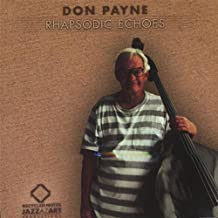
Donald Ray Payne was born on January 7, 1933 in Wellington, Texas but was raised in California, He initially played trumpet before switching to double bass in high school. His first major gigs came in the mid-1950s and he worked in the second half of the decade with Georgie Auld, Ornette Coleman, Maynard Ferguson, Calvin Jackson, Joe Maini, and Art Pepper.
1958 saw Don relocating to New York City, where he played with Tony Bennett, Chris Connor, and Mundell Lowe. He then joined Herbie Mann and Astrud Gilberto for international tours and also worked with Stan Getz around this time. He led his own ensemble with a rotating cast of sidemen, including Mike Abene, Joe Beck, and Gene Bertoncini.
Payne began playing bass guitar in 1964 and worked in popular and rock idioms as well as in jazz as a session musician for New York studio recordings. He played on releases by Loudon Wainwright III, Judy Collins, Roy Buchanan, Leonard Cohen (New Skin for the Old Ceremony, 1974), Janis Ian, Luiz Henrique, Harry Chapin, and Melanie Safka. His later jazz associations included Bobby Hackett, Jackie Cain, and Roy Kral.
Double bassist and bass guitarist Don Payne passed away on February 25, 2017 in Plantation, Florida. He was 84.
Requisites
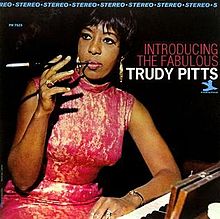
Introducing the Fabulous Trudy Pitts is the 1967 debut album that was recorded by the jazz organist and released on the Prestige label. The album is a compendium of mainstream standards and soul jazz covers.
Bill Carney composed thee songs except those indicated: Steppin’ in Minor, The Spanish Flea (Julius Wechter), Music to Watch Girls By (Sid Ramin), Something Wonderful (Oscar Hammerstein II, Richard Rodgers), Take Five (Paul Desmond), It Was a Very Good Year (Ervin Drake), Siete, Night Song (Lee Adams, Charles Strouse), Fiddlin’ and Matchmaker, Matchmaker (Jerry Bock, Sheldon Harnick).
The personnel included Trudy Pitts on organ and vocals, guitarist Pat Martino, drummer Bill Carney and Carmell Johnson on congas.

More Posts: choice,classic,collectible,collector,history,instrumental,jazz,music,organ
Daily Dose Of Jazz…
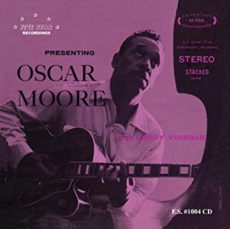
Oscar Frederic Moore was born in Austin, Texas on December 25, 1915 but grew up in Los Angeles, California. During the Thirties he often worked with his brother, Johnny, who was also a guitarist. Beginning in 1937, he spent ten years with Nat King Cole in the guitar-bass-drums trio format that influenced Oscar Peterson, Art Tatum, and Ahmad Jamal.
After he left Cole, he joined his brother in Johnny Moore’s Three Blazers through the 1950s. He recorded two solo albums in 1954, then left the field of music. During the last decades of his life, he laid bricks and ran a gas station.
Barney Kessel stated that Oscar practically created the role of the jazz guitarist in small combos. He was voted top guitarist of 1945, 1946, and 1947 in the Down Beat magazine readers’ poll.
Guitarist Oscar Moore, who performed and recorded with Lionel Hampton, Art Tatum, The Capitol International Jazzmen, Anita O’Day, Lester Young, Benny Carter, Ray Charles, Illinois Jacquet and Sonny Criss, passed away on October 8, 1981 in Las Vegas, Nevada.

More Posts: guitar
Daily Dose Of Jazz…
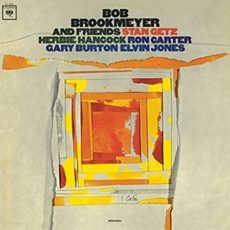
Robert Edward Brookmeyer was born an only child on December 19, 1929 in Kansas City, Missouri and began playing professionally in his teens. Attending though not graduating from the Kansas City Conservatory of Music, he played piano in big bands led by Tex Beneke and Ray McKinley, but concentrated on valve trombone from when he moved to the Claude Thornhill orchestra in the early 1950s.
He was part of small groups led by Stan Getz, Jimmy Giuffre, and Gerry Mulligan in the 1950s and during the Fifties and Sixties he played New York City clubs, television house band, studio recordings, and arranged for Ray Charles and others. In the early 1960s Brookmeyer joined flugelhorn player Clark Terry in a band and they appeared together on BBC2’s Jazz 625.
A move to Los Angeles, California in 1968 saw Bob becoming a full-time studio musician, spending 10 years on the West Coast, and sinking into a serious alcohol problem. After overcoming this debilitation he returned to New York and became musical director for the Thad Jones/Mel Lewis Orchestra in 1979. Writing for and performed with jazz groups in Europe from the early 1980s, he went on to establish and run a music school in the Netherlands, taught at the New England Conservatory of Music in Boston, Massachusetts, as well as other institutions.
Eight time Grammy nominated trombonist, composer, arranger, bandleader and educator Bob Brookmeyer, who played n the mainstream, cool, post bop and West Coast jazz genres, passed away on December 15, 2011 in New London, New Hampshire.

More Posts: trombone