

Daily Dose Of Jazz…
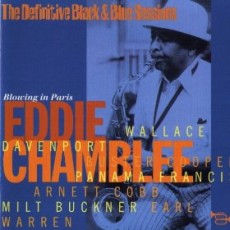
Edwin Leon Chamblee was born in Atlanta, Georgia on February 24, 1920 and grew up in Chicago, Illinois where he began learning the saxophone at the age of 12. After leaving Wendell Phillips High School he studied law at Chicago State University, playing in clubs in the evenings and on weekends.
Chamblee played in U.S. Army bands between 1941 and 1946 and after leaving the service joined Miracle Records. He played on Sonny Thompson’s hit record Long Gone in 1948, and on its follow-up Late Freight credited to the Sonny Thompson Quintet featuring Eddie Chamblee. Both records reached no. 1 on the national Billboard R&B chart and two following records also charted in 1949.
From 1947, Eddie led his own band in Chicago clubs, as well as continuing to record with Thompson, work on other sessions in Chicago, including The Four Blazes hit Mary Jo in 1952. By 1954 he switched gears joining Lionel Hampton’s band for two years, touring in Europe, before returning to lead his own group again in Chicago. He accompanied Amos Milburn, Lowell Fulson and Dinah Washington during the late 50s to early 60s. The two performed vocal duets in a style similar to that later adopted by Washington with Brook Benton.
Known also by his nickname Lone Gone, he recorded for the Mercury and EmArcy labels and with his own group in the early 1960s for Roulette and Prestige Records. In the 1970s he rejoined Hampton for tours of Europe, where he also played with Milt Buckner, recorded for the French Black & Blue label, and performed with the Count Basie Orchestra in 1982. From the 1980s until his passing at age 79 on May 1, 1999, tenor and alto saxophonist Eddie Chamblee performed with the Harlem Blues and Jazz Band.

Inspire A Young Mind
More Posts: saxophone
Daily Dose Of Jazz…
Harry Lim was born on February 23, 1919 in Batavia, Jakarta, Indonesia. He grew up in the Netherlands where he became very fond of jazz, moving to the U.S. in 1939. After working as a freelance record producer, he was the Keystone label’s jazz producer from 1943-46, putting together scores of classic sessions. His emphasis was on small-group jazz that ranged from Dixieland to bop but mostly focused on top swing all-stars.
Although he was a lifelong fan of jazz, he was primarily active in jazz during two different periods. The quality of the music under Harry’s guidance was very high but unfortunately, however, in 1946 John Hammond replaced him and Keynote subsequently declined and became defunct. Lim had his own short-lived HL label in 1949, produced a few obscure sessions for Seeco, and tried reviving Keynote in 1955, but ended up working at Sam Goody’s New York record store from 1956-73.
During his years at Keystone he was able to produce sessions by Count Basie, Roy Eldridge, Cozy Cole, Barney Bigard, George Barnes, Paul Gonsalves, Bud Freeman, Ann Hathaway, Coleman Hawkins, J.C. Heard, Neal Hefti, Earl Hines, Milt Hinton, Chubby Jackson, Ted Nash, Jonah Jones, Paul Robeson, Red Rodney, Charlie Shavers, Wilie Smith, Rex Stewart, Juan Tizol, Dinah Washington, Lennie Tristano, George Wetting, Lester Young, and the list just goes on.
Harry didn’t return to producing until 1972 when he formed the Famous Door label, a top mainstream record company that recorded a variety of valuable and now hard-to-find sessions with Bill Watrous, Red Norvo, Zoot Sims, and others up until his death.
Record producer Harry Lim passed away on July 27, 1990 in New York City. He was most active on the jazz scene between 1940s to through the 1950s, and happily was still living when Polygram reissued all of the Keynote jazz sessions on a huge LP box set in 1986.
Dose A Day – Blues Away
More Posts: record producer
Daily Dose Of Jazz…
Alec Wilder was born Alexander Lafayette Chew Wilder in Rochester, New York on February 16, 1907 into a prominent family that now has a building bearing the family name. As a young boy, he traveled to New York City with his mother and stayed at the Algonquin Hotel that would later become his home for the last 40 or so years of his life. Unhappily attending several prep schools as a teenager, he hired a lawyer and essentially “divorced” himself from his family, gaining for himself some portion of the family fortune.
Wilder was largely self-taught as a composer; he studied privately with the composers Herman Inch and Edward Royce, who taught at the Eastman School of Music in the 1920s, but never registered for classes, never received his degree but eventually was awarded an honorary degree in 1973. While there, he edited a humor magazine and scored music for short films directed by James Sibley Watson.
Alec would eventually become good friends with Frank Sinatra, Peggy Lee, Tony Bennett and others in the American pop canon. He wrote hits like his most famous song “I’ll Be Around” (lyrics also), as well as “While We’re Young”, “Where Do You Go” and “Trouble Is A Man”.
Over the years Alec worked with lyricists Loonis McGlohon, William Engvick, Fran Landesman and Johnny Mercer. Not tied to popular song, Wilder composed classical pieces, operas, jazz influenced numbers for television, songs for a theme park and arranged a series of Christmas carols. He wrote the definitive book American Popular Song: The Great Innovators, 1900–1950.
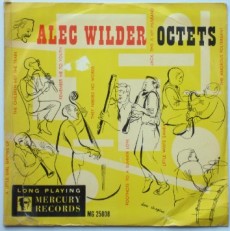
His love of puzzles led him to create his own cryptic crosswords and spend hours on jigsaw puzzles. He would compose music for twelve operas, four musicals, six films, two large ensembles, and twenty-two songs. His octet, that included Eastman classmate Mitch Miller, would record many of his compositions.
Composer Alec Wilder passed away on December 24, 1980 at age 73 in Gainesville, Florida and is buried in Avon, New York, outside his hometown of Rochester.
Dose A Day – Blues Away
More Posts: composer

Daily Dose Of Jazz…
Dena DeRose was born on born February 15, 1966 in Binghamton, New York and began playing the piano at age three and soon became a fan of jazz. As a child she also played the organ and percussion, and played the piano in school bands. By her teenage years, she would to drive to New York City to see jazz musicians like Hank Jones and Mulgrew Miller.
After high school, Dena was offered a scholarship to Concordia College but chose to attend Binghamton University. At 21,she was diagnosed with capel tunnel syndrome and arthritis cusing her suffering severe pain in her right hand. Forced to stop playing the piano for close to a year she became depressed and turned to drugs and alcohol to help her cope. One night she was in a bar listening to Doug Beardsley’s trio when someone suggested that she get up and sing and she started singing regularly with the trio.
After approximately another 18 months, she had two surgeries on her right hand that enabled her to begin playing piano again. She moved to New York City in 1991 to further her career. Her debut album Introducing Dena DeRose came in 1995 on the Amosaya Records label and a year later was renegotiated and leased to the Sharp Nine label. Her sophomore album, Another World, was released in 1998 with a septet of musicians including Steve Davis, Steve Wilson, Ingrid Jensen and Daniel Sadownick, followed by two more releases. Moving to the MaxJazzlabel she released her fifth album with Martin Wind and Matt Wilson.
She has worked with Ray Brown, Clark Terry, Benny Golson, Bill Henderson, Houston Person, Bruce Forman, Judy Neimack, John Clayton, Jeff Hamilton, Steve Turre, Mark Murphy, Gene Bertoncini, Wycliffe Gordon, Marvin Stamm, Jay Clayton, Alex Riel, Billy Hart and Ken Peplowski, to name a few.
As an educator, DeRose has been the Vocal Professor and Head of Jazz Vocals at the University of Music and Dramatic Arts in Graz, Austria, a regular teacher at the Stanford Jazz Workshop, and also teaches periodically at other summer camp and workshop programs including the Litchfield Summer Camp, Taller de Musics in Spain and the Prince Claus Conservatoire in Groningen, Holland.
Discography[edit]
Take A Dose On The Road
Daily Dose Of Jazz…
Buddy Childers was born Marion Childers in Belleville, Illinois on February 12, 1926. He came to fame in 1942 at the age of 16 when he took over the first trumpet chair in the Stan Kenton Orchestra. For years he worked with Kenton as well as performing with Tommy Dorsey, Woody Herman, Les Brown, Charlie Barnet, Dan Terry and other big bands.
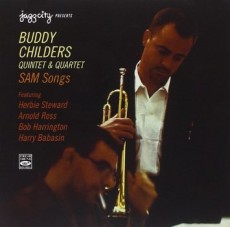
He would go on to work with Gene Ammons, Elmer Bernstein, Maynard Ferguson, Clare Fischer, Milt Jackson, Carmen McRae, Oliver Nelson and Lalo Schifrin among others. No stranger to television programs and or films, Childers put together a big band that recorded for Candid Records in the 1980s and 1990s. He also recorded quintet and quartet sessions with Herbie Steward, Arnold Ross, Bob Harrington and Harry Babasin on the Jazz City label.
Trumpeter, composer and ensemble leader Buddy Childers passed away of cancer on May 24, 2007, at the age of 81.
Jazz Is Global – Share
More Posts: trumpet