

Daily Dose Of Jazz…
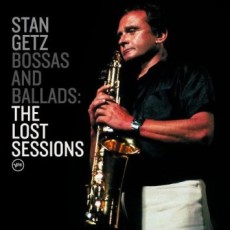
Stanley Getz was born on February 2, 1927 in Philadelphia, Pennsylvania but moved to New York City with his parents during The Depression. In school he was a straight A student finishing 6th grade close to the top of his class but his major interest was in musical instruments, and he felt a need to play every instrument in sight.
He played a number of them before his father bought him his first saxophone at the age of 13 and began practicing eight hours a day. Attending James Monroe High School, got accepted in the All City High School Orchestra of New York City, giving him a chance to receive private, free tutoring from the New York Philharmonic’s bassoonist, Simon Kovar.
By 1943 at age 16, he was accepted into Jack Teagarden’s band, becoming his ward because of his age. Getz also played along with Nat King Cole and Lionel Hampton, and after playing for Stan Kenton, Jimmy Dorsey, and Benny Goodman he became the Woody Herman’s soloist for two years in The Second Herd. Known as The Four Brothers alongside Serge Chaloff, Zoot Sims and Herbie Steward, he gained notoriety. Leaving Herman to strike out on his solo career, he led almost all of his recording sessions after 1950. However, it was during this period that having become involved with drugs and alcohol while a teenager, he was arrested in 1954 while attempting to rob a pharmacy to get a morphine fix.
Stan’s reputation was greatly enhanced by his featured status on Johnny Smith’s album Moonlight In Vermont and the single became a hit, staying on the charts for months. He went on to further popularity playing cool jazz with Horace Silver, Smith, Oscar Peterson and others. In his various bands were Roy Haynes, Al Haig, Tommy Potter, Dizzy Gillespie, Herb Ellis, Ray Brown and Max Roach.
In 1961 Getz became a central figure in introducing bossa nova to the American audience, teaming with guitarist Charlie Byrd who had just returned from Brazil. His album Jazz Samba with Charlie Byrd and Antonio Carlos Jobim became a hit, winning him a Grammy for Best Jazz Performance for Desifinado in 1963 that became his first million-copy seller. He would record Big Band Bossa Nova and Jazz Samba Encore! with Luiz Bonfa and get his second gold disc.
He recorded the album Getz/Gilberto with Jobim, Joao Gilberto and Astrud Gilberto winning two more Grammys for The Girl From Ipanema. What could have been a long partnership with his love affair with Astrud Gilberto, moving him away from bossa nova and back to cool jazz. By 1972, he recorded in the fusion idiom with Chick Corea, Tony Williams and Stanley Clarke.
In the mid-1980s he worked regularly in the San Francisco Bay area and taught at Stanford University as an artist-in-residence at the Stanford Jazz Workshop. In 1986, he was inducted into the Down Beat Jazz Hall of Fame. Tenor saxophonist Stan Getz died of liver cancer on June 6, 1991.

Dose A Day – Blues Away
More Posts: saxophone
Daily Dose Of Jazz…
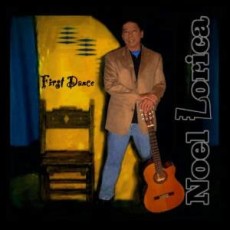
Noel Lorica was born on January 29, 1968 in Manila, Philippines and played in a rock band as a teenager. His mother urged him to take piano lessons but his love was always the acoustic guitar. Musically at that time he got exposed to the music of George Benson, Wes Montgomery, Paul Desmond, and the modern jazz instrumentalists. Leaving home he first migrated to San Francisco then went east and worked in New York and around Philadelphia.
He later moved to South Florida where he found Latin Beats and jazz influences were all around. Finding his perfect musical fit he started to concentrate on perfecting his craft through tireless practice and soulful dedication. His music today is an expression of his musical and personal journey.
Noel has received critical acclaim for his skill & artistry, has had two PBS specials, and with his band Treebo has played major festivals around the world. He has opened for Marcus Miller, has won Jazz Song of the Year and Best Jazz Instrumental solo, Best Instrumental Arrangement, and has been featured in Billboard and Italian Jazz magazines.The guitarist has released four albums and currently continues to perform jazz and Latin music.
Jazz Is Global – Share
More Posts: guitar

Daily Dose Of Jazz…
Shigeharu Mukai was born on January 21, 1949 in Nagoya, Japan. While attending Doshisha University he played trombone in the big band and won the 1970 Yamaha Light Music Contest. A move to Tokyo in 1971 saw Shigeharu career taking off in the bands of Yoshio Otomo, Fumio Itabashi, Ryo Kawasaki, Terumasa Hino, Sadao Watanabe and Yosuke Yamashita and along with Hiroshi Fukamarau, he led a band with two trombones.
In 1972 he formed his own band with which he won the Shinjuki Jazz Festival prize. Dissolving the group in 1977/78 he lived in New York City, afterwards he returned to Japan, leading various bands and working with Kazumi Watanabe, Naoya Matsuoka, Akira Sakata and again with Yosuke Yamashita. He went on to play with Elvn Jone and Billy Hart.
In 1982, he performed along with Astrud Gilberto on the album So & So: Mukai Meets Gilberto on the Denon label. He later founded the quartet Hot Session with Ryojiro Furusawa, Fumio Itabashi and Mitsuaki Furuno, and toured Japan in 1991-92.
In 1992 he released his debut album as a leader Better Day Of Shigeharu Mukai on the Japanese subsidiary label of Columbia Records along with several others by 1997. In 2004 he made the album Super 4 Records sensation, in which he created the illusion of a big band with a “horn section” of alto and tenor saxophone, trombone and trumpet.
Designated by Leonard Feather and Ira Gitler as one of the most respected trombonist on the Japanese jazz scene, Shigeharu Mukai has won several critics’ prizes from 1975-1993 in reader surveys conducted by Japan’s Swing Journal. He continues to perform, record and tour also exhibiting his mastery of Latin, Brazilian and other ethnic rhythms.
Give A Gift Of Jazz – Share
More Posts: trombone
Daily Dose Of Jazz…
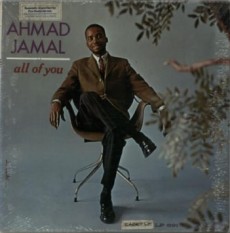
Israel Crosby was January 19, 1919 in Chicago, Illinois and was best known as the double-bassist in the Ahmad Jamal Trio from 1957 to 1962, but recorded eighteen albums with him from 1951 to 1967.
A close contemporary of Jimmy Blanton, Israel has been considered less as a pioneer, but rather for his interactive playing in Jamal’s trio and that of George Shearing. His playing exhibited how easily and fluently he displayed a modern approach to jazz double bass.
He is credited with taking the first recorded bass solo at age 16 on his 1935 recording of “Blues of Israel” with drummer Gene Krupa on the Prestige label. Beyond Jamal, Shearing and Krupa, Crosby performed and recorded with Albert Ammons, Charlie Christian, Vic Dickerson, Roy Eldridge, Herb Ellis, Edmond Hall, Coleman Hawkins, Fletcher Henderson, Horace Henderson, Sam Jones, Meade Lux Lewis, Jess Stacy and Earl Washington.
A consummate sideman, bassist Israel Crosby passed away on August 11, 1962 of a heart attack just two months after joining the Shearing Quintet.
Dose A Day – Blues Away
More Posts: bass
Daily Dose Of Jazz…
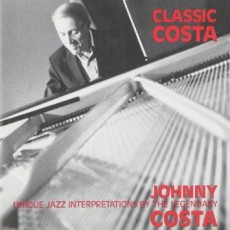
Johnny Costa was born in Arnold, Pennsylvania on January 17, 1922. He learned to play accordion at age 7 and was reading music three years later. He was encouraged by his high school music teacher, Frank Oliver, to learn the piano after discovering he had perfect pitch. Costa graduated from Carnegie Mellon University with degrees in music and education.
After college Johnny began working the same day as the house pianist for a Pittsburgh radio station and television station providing piano and organ music for many programs, eventually teaming with Fred Rogers to arrange and perform the music heard on Mister Rogers’ Neighborhood for which he served as musical director until his death. He insisted on not playing “baby” music, believing children understood good music and each day, his trio, Carl McVicker Jr. on bass and Bobby Rawsthorne on percussion played live in the studio for the taping.
Costa’s debut recording was The Amazing Johnny Costa, on the Savoy label. He gave up his lucrative career and international recognition to stay near family and friends, resigning as musical director of the Mike Douglas Show to perform only in western Pennsylvania for the remainder of his life. Costa appeared along with guitarist Joe Negri on the 1954 Ken Griffin TV series 67 Melody Lane performing After You’ve Gone and Little Brown Jug, with the latter being accompanied by Ken Griffin at the organ.
Pianist Johnny Costa, given the title “The White Tatum” by jazz legend Art Tatum, passed away of anemia on October 11, 1996, at age 74 in Pittsburgh, Pennsylvania. Much of the music heard on Mr. Rogers’ Neighborhood continued to be his and the show’s closing continued to list Costa as its Musical Director.
Give The Gift Of Knowledge