

Daily Dose Of Jazz…
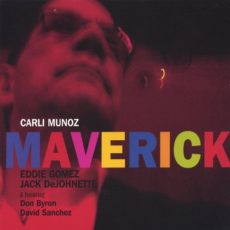
Carli Muñoz was born Carlos C. Muñoz, on October 16, 1948 in Puerto Rico. A self-taught pianist, his music of choice was jazz, European avant-garde and American pop music. Among his early influences were ragtime, early American ballads, boogie woogie and classical music, especially that of Erik Satie and Edgard Varèse.
When Carli turned 16 he headed to New York City with a rock band he co-founded with Jorge Calderon called The Living End, AKA: Space, and for 18 months was the house band at a New York club. He later moved to Los Angeles, California where he worked with Charles Lloyd, George Benson, Wilson Pickett, Jan and Dean, The Association, Chico Hamilton, Wayne Henderson, Les McCann, Peter Cetera and Evie Sands.
From 1970 through 1981, Muñoz toured with the Beach Boys, playing Hammond B3 and piano. Following this period in his career in 1985 he returned to Puerto Rico and stayed out of the spotlight. 1998 saw him opening a restaurant, Carli Cafe Concierto.
His most recent releases include a solo piano project Love Tales, Both Sides Now, with bassist Eddie Gómez, drummer Joe Chambers and flautist Jeremy Steig, Live at Carli’s Vol. 1, Live at Carli’s Vol 2 and Live at Carli’s Vol 3, recorded live at Carli Cafe Concierto, and Maverick with Eddie Gómez, drummer Jack DeJohnette, Don Byron on clarinet and tenor saxophonist David Sánchez, and a tribute album In My Soul, in memory of both Carl and Dennis Wilson.
Pianist Carli Muñoz, sometimes spelled Munoz, continues to perform jazz in his restaurant and often returns to the mainland to perform and record.

Put A Dose In Your Pocket

More Posts: piano
Daily Dose Of Jazz…
Dennis Sandole was born Dionigi Sandoli on September 29, 1913 in Philadelphia, Pennsylvania and played guitar as a child. From 1946 until the early 1950s he was John Coltrane’s mentor , introducing him to theory beyond chords and scales and exposing him to the music of other cultures.
Sandole taught advanced harmonic techniques that were applicable to any instrument, using exotic scales and creating his own. His students over half a century included saxophonists James Moody, Michael Brecker, Rob Brown, and Bobby Zankel; pianists Matthew Shipp and Sumi Tonooka; guitarists Jim Hall, Joe Diorio, Pat Martino, Joe Federico, Tony DeCaprio, Jon Herington, Larry Hoffman, and Harry Leahey, Rufus Harley, Bob deVos and Frank Gerrard.
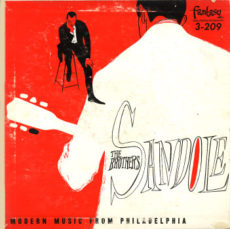
He recorded with his brother Adolph, Modern Music From Philadelphia, released by Fantasy in 1956. Guitarist, composer and music educator Dennis Sandole, who taught privately until the end of his life, passed away on September 30, 2000.
Jazz Is Global – Share
More Posts: guitar
Daily Dose Of Jazz…
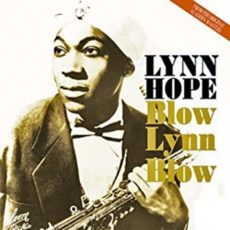
Lynn Hope was born on September 26, 1926 in Birmingham, Alabama and was noted for his apparel and instrumental remakes of established pre-rock pop anthems. He joined King Kolax’s band when he graduated from high school during the 1940s. He later converted to Islam becoming known for wearing a turban, though few ever called him by his Muslim name, Al Hajji Abdullah Rascheed Ahmed.
He signed with Miracle Records in 1950, but the contract proving invalid moved to Premium Records, There he cut Tenderly, a song that was later picked up by the Chess label. Hope recorded often for Aladdin Records between 1951 and 1957, doing interpretations of such jazz standards as September Song and Summertime. While these numbers were often performed with little or no melodic embellishment or improvisation, the flip sides were often fierce up tempo blues or jump tunes.
Tenderly earned him his only hit in 1950, reaching number eight R&B and #19 pop charts. He made his last sessions for King in 1960, then fell from sight. Tenor saxophonist Lynn Hope passed away on February 24, 1993.
Inspire A Young Mind
More Posts: saxophone
Daily Dose Of Jazz…
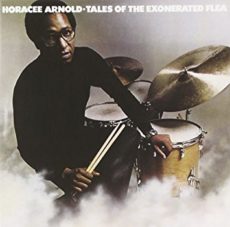
Horacee Arnold was born Horace Emmanuel Arnold on September 25, 1937 in Wayland, Kentucky. The drummer first began playing in 1957 in Los Angeles, California while holding down a position in the Coast Guard. It was in 1959, he began performing as “Horacee” when he joined the David Baker big band, and also played with Roland Kirk and Charles Mingus that year. In 1960 he became the drummer in a trio with Cecil McBee and Kirk Lightsey.
By the 1960s he was working with pianist and composer Hasaan Ibn Ali and Henry Grimes, and in 1964 with The Bud Powell Trio at Birdland. Horace also performed as part of the Alvin Ailey American Dance company on a tour of Asia. The late Sixties saw him performing with Hugh Masekela and Miriam Makeba.
Continuing his education Arnold studied composition under Heiner Stadler, Hy Gubenick, and classical guitar with Ralph Towner. In 1967 he founded his own ensemble, The Here and Now Company, with Sam Rivers, Karl Berger, Joe Farrell, and Robin Kenyatta in tow.
The 1970s was when Arnold became one of the best-known jazz fusion drummers, playing and recording with Return to Forever, Stan Getz, Archie Shepp and Billy Harper. During this period of his career he released two of his own solo albums. He later formed a three-ensemble called Colloquium III with Billy Hart and Freddie Waits.
In the 1980s Arnold became an educator conducting workshops at the New York Drummers’ Collective and a professor at William Paterson College in New Jersey. He worked as a session musician and played with Kenny Burrell. He formed a trio that featured Dave Friedman and Anthony Cox.
Sponsored By

www.whatissuitetabu.com
More Posts: drums
Daily Dose Of Jazz…
Arvin Charles Garrison was born on August 17, 1922 in Toledo, Ohio and taught himself ukulele at age nine and played guitar for dances and local functions from age twelve.
In 1941 Arv was leading his own band at a hotel in Albany, New York, then with Don Seat put together a trio that played on both the East and West coasts of the United States until 1948. After 1946 it was called the Vivien Garry Trio, after his wife and bassist.
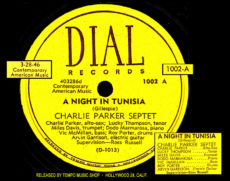
Garrison recorded on Dial Records with Charlie Parker and Dizzy Gillespie, and was actively at the forefront of the early New York City bebop scene in the 1940s. Jazz critic Leonard Feather interviewed him extensively about his time spent playing with Parker. In the 1950s he returned to his hometown of Toledo and played locally.
Some of his recordings can be heard on a few anthologies, such as, the Onyx 1974 release Central Avenue Breakdown, Vol. 1 shared with Teddy Edwards and Dodo Marmarosa and includes 6 of the 8 tracks that Arv and wife Vivien Garry’s quartet recorded for Sarco Records in 1945; Swing To Bop Guitar: Guitars In Flight 1939-1947 on the Hep label that includes Arv’s famous Five Guitars In Flight recorded for Black & White Records in 1946 with Earle Spencer’s Orchestra; and The Complete Dial Modern Jazz Sessions on Mosaic Records.
Guitarist Arv Garrison passed away on July 30, 1960 from drowning during an epileptic seizure.
Sponsored By

More Posts: guitar