

Daily Dose Of Jazz…
Essiet Okon Essiet was born on September 1, 1956 in Omaha, Nebraska to Nigerian parents. His father worked for the U.S. and Nigerian governments, moving the family from city to city. While living in Wisconsin he began studying violin at age 10 later switching to bass viola at 14.
As a child, his wide travels with his family gave him early exposure to many cultures, folkways, languages, and religions fostered his worldview of strength through diversity. This gave Essiet the ability to fluently mix styles, though he predominantly plays in the modern idiom.
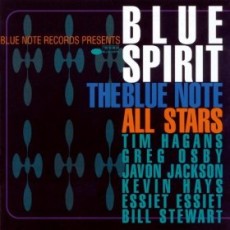
Essiet was Art Blakey’s last bassist, playing with him for 2 years and recording on three sessions. He has performed with Freddie Hubbard, Cedar Walton, Benny Golson, Mulgrew Miller, Jeff “Tain” Watts, Bobby Watson, Billy Higgins, Kenny Kirkland, Joe Henderson, Johnny Griffin, Kevin Mahogany, Kurt Elling and Geri Allen and the Blue Note All Stars to name a few.
Since 1985 he has been at the Conservancy in The Hague as a lecturer. One of the most in demand bassist in jazz, Essiet currently leads Ibo, a Nigerian jazz project.

Dose A Day – Blues Away
More Posts: bass
Daily Dose Of Jazz…
John Anthony Pompeo, better known as Johnny Rae or John Rae was born on August 11, 1934 in Saugus, Massachusetts and grew up in music, as his mother played piano in night clubs in the Boston area. His area of musical study in jazz led him to become a drummer and vibraphonist. Graduating from East Boston High School in 1952, he went on to study piano at the New England Conservatory and timpani at Berklee College of Music.
Johnny joined Herb Lee’s R&B band right out of high school, gigged with Slim Gaillard and Milt Buckner, played drums and vibes with Al Vega and Jay Migliori. Upon the recommendation of MJQ’s John Lewis, he teamed up with to play with George Shearing, alongside Toots Thielemans, Al McKibbon on bass and three Latin percussionists that included conguero Armando Peraza. It was during this period that Peraza taught him to play timbales.
He played with Johnny Smith, Ralph Sharon, Cozy Cole and Herbie Mann throughout the Fifties. The next couple of decades were equally commanding of his talents by Cal Tjader, Stan Getz, Gabor Szabo, Charlie Byrd, Earl Hines, Art Van Damme, Anita O’Day and Barney Kessel among many others. Though mainly concentrating in the context modern jazz, he never wandered far from Latin music and the Latin jazz percussion he played.
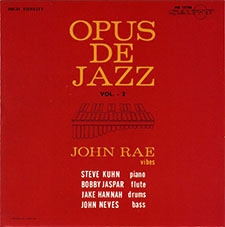
Though he was on more than three-dozen recording sessions, Johnny only recorded one as a leader, “Opus De Jazz, Volume 2” in 1960 for Savoy. A second release under his name was in actuality him fronting Herbie Mann’s band for contractual reasons.
Since the 1980s Rae has worked in music education, has authored several instruction books and was a disc jockey in San Francisco for many years. He assembled a tribute band to Tjader called Radcliff (Tjader’s middle name) and led the band until his death. Johnny Rae, drummer and vibraphonist passed away in 1993 in San Francisco, California.
Dose A Day – Blues Away
More Posts: drums,percussion,timbales,vibraphone
Daily Dose Of Jazz…
Johnny Mandel was born John Alfred Mandel on November 23, 1925 in New York, New York. His mother, an opera singer, discovered he had perfect pitch at age five. Piano lessons ensued but Johnny switched to the trumpet and later the trombone.
Johnny studied at the Manhattan School of Music and the Julliard School. By 1943 he was playing trumpet with Joe Venuti, in 1944 with Billy Rogers and then trombone in the bands of Boyd Raeburn, Jimmy Dorsey, Buddy Rich, George Auld and Chubby Jackson. In 1949 he accompanied singer June Christy in the Bob Cooper Orchestra, then with Elliot Lawrence’s outfit, followed by a stint with Count Basie and a move to Los Angeles, California to play with Zoot Sims.
In the late Forties and into the Fifties he wrote jazz compositions like “Not Really the Blues” for Woody Herman, “Hershey Bar” and “Pot Luck” for Stan Getz, “Straight Life” and “Low Life” for Count Basie as well as “Tommyhawk” for Chet Baker. Mandel composed, conducted and arranged the music for numerous movie sound tracks with his earliest credited contribution to “I Want To Live” in 1958 being nominated for a Grammy. Mandel’s most famous compositions include “Suicide Is Painless” from M*A*S*H, “Close Enough for Love”, “Emily”, “A Time for Love”, and “The Shadow Of Your Smile” which won an Oscar for Best Song and a Grammy for Song Of The Year in 1966.
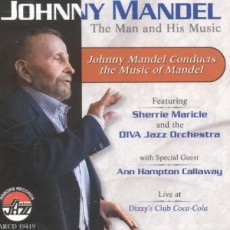
Mandel is a recipient of the 2011 NEA Jazz Masters Award, has won several Grammy Awards for Best Instrumental Arrangements Accompanying Vocals for Quincy Jones’ Velas, Natalie & Nat King Cole’s Unforgettable and Shirley Horn’s Here’s To Life. He has composed music with lyricists Alan & Marilyn Bergman, Paul Williams and Johnny Mercer; and arranged for Frank Sinatra, Tony Bennett, Barbra Streisand, Diana Krall, The Diva Jazz Orchestra and Ann Hampton Calloway among numerous others.

Daily Dose Of Jazz…
Idris Muhammad was born Leo Morris on November 13, 1939 In New Orleans, Louisiana. Learning to play drums in his youth, at fifteen he played on Fats Domino’s 1956 hit “Blueberry Hill” and by sixteen he turned professional, playing primarily soul and R&B during the early sixties. In 1965 he was a member of Lou Donaldson’s band, then went on to become the house drummer for Prestige Records from 1970-72.
As a sideman Idris would play with Johnny Griffin, Nat Adderley, George Benson, Paul Desmond, Pharoah Sanders, George Coleman and the Paris Reunion Band and record with Ahmad Jamal, Grant Green, Grover Washington, Jr., Hank Crawford, Benjamin Herman, Andrew Hill, Freddie Hubbard, Bobbi Humphrey, Gene Ammons, Rodney Jones and Houston Person among others.
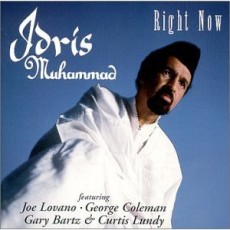
Known for his funky playing style, as a leader he has recorded everything from post-bop to dance music for such labels as Prestige, Kudu, Fantasy, Theresa, and Lipstick. He changed his name in the 1960s upon his conversion to Islam and is endorsed by Istanbul Agop cymbals. Drummer Idris Muhammad continues to compose, record and perform.

More Posts: drums
Daily Dose Of Jazz…
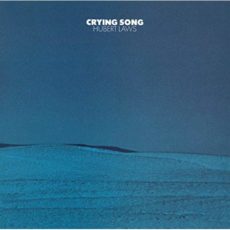
Hubert Laws was born November 10, 1939 in the Studewood section of Houston, Texas, the second of eight children. He grew up across the street from a honky-tonk called Miss Mary’s Place where his grandfather played harmonica and his mother, a pianist, played gospel music. He began playing flute in high school after volunteering to substitute for the school orchestra’s regular flutist. Becoming adept at jazz improvisation he played in the Houston-area jazz group the Swingsters, which eventually evolved into the Modern Jazz Sextet, the Night Hawks, and The Crusaders. At age 15, he was a member of the early Jazz Crusaders while in Texas from 1954–60. Multi-talented, he also played classical music during those years.
A scholarship to Juilliard School of Music in 1960 saw him studying music in the classroom and with master flutist Julius Baker. Laws went on to play with both the New York Metropolitan Opera Orchestra (member) and the New York Philharmonic Orchestra during the years 1969–72. In 971 he recorded renditions of classical compositions by Fauré, Stravinsky, Debussy, and Bach on the CTI album Rite of Spring with strings and enlisted the talents of Airto Moreira, Jack DeJohnette, Bob James, and Ron Carter.
During his years at Juilliard he played flute with Mongo Santamaría and began recording as a bandleader for Atlantic in 1964, releasing the albums The Laws of Jazz, Flute By-Laws, and Laws Cause. He has worked with In the Seventies he can also be heard playing tenor saxophone on some recordings.
The 1980’s saw the minor hit Family on CBS Records getting played on many UK soul radio stations. In the 1990s Hubert resumed his career, recording with opera singers Kathleen Battle and Jessye Norman. His albums on the Music Masters Jazz label—My Time Will Come in 1990 and Storm Then Calm in 1994 show a return to his old form of his early 1970s albums.
Over the course of his career he also recorded with Herbie Hancock, McCoy Tyner, Nancy Wilson, Quincy Jones, Paul McCartney, Paul Simon, Aretha Franklin, Ella Fitzgerald, Sarah Vaughan, Lena Horne, Leonard Bernstein, James Moody, Jaco Pastorius, Sérgio Mendes, Bob James, Carly Simon, George Benson, Clark Terry, Stevie Wonder, J. J. Johnson, The Rascals, Morcheeba Ashford & Simpson, Chet Baker, George Benson, Moondog, his brother Ronnie, Gil Scott-Heron, among others, and was a member of the New York Jazz Quartet. .
Laws has been honored with the Lifetime Achievement Awards from the National Flute Association and the National Endowment for the Arts in the field of jazz, as well as a recipient of the NEA Jazz Masters Award and three Grammy nominations. Flautist and tenor saxophonist Hubert Laws continues to compose, record and perform.
